July 17, 2024

🐘 The RNC is in full swing. Let's look into the crystal ball.
We'll be back to our regular schedule next week. From now on, look for this newsletter to land in your inbox from 1 to 2pm ET on publishing days.
1 big thing: Energy after a Trump victory
A second Trump presidency would mean seismic changes to the IRA and weakened climate regulations across government, Nick writes.
Why it matters: Donald Trump's GOP increasingly shares some common ground with President Biden on tariffs and industrial policy, but this election is seen as generationally important for climate and energy.
- "I think this is the biggest climate choice in front of us in decades," Sen. Brian Schatz told reporters.
Driving the news: In the opening weeks of a second Trump administration, we'd expect EPA to start working to undo and rewrite its power plant greenhouse gas rules and auto emission regs.
- Trump officials would likely move to reimpose their NEPA implementing regs, which the Biden administration changed to much GOP criticism.
- And they'd start approving LNG export projects again, pending any logistical hurdles with DOE's study of the issue.
- On the Hill, Republicans told Nick that the push for "permitting reform" would only intensify.
Internationally, Trump's campaign has said he'd again withdraw from the Paris climate agreement.
- He's also promising sprawling tariffs on China and other countries that would hit energy supply chains even more aggressively than Biden.
- Here's a summary from Trump ally Josh Hawley: "He ought to get rid of the stupid electric vehicle mandates, which are just decimating our auto industry, and then he ought to ratchet up tariffs."
Zoom in: A tax bill will move next year as the original Trump tax cuts expire, and there's a big Republican appetite to nix the IRA's EV tax credits and methane emissions fee.
- A GOP sweep scenario also means attempts to cap, if not fully repeal, credits for wind and solar.
Between the lines: IRA implementation would look completely different in a Trump administration.
- Agencies like DOE's loan programs office could get appointees who are stingy or intentionally slow to send money out the door.
- And Treasury would likely move to put additional anti-China safeguards on the 45X manufacturing credit and 30D EV incentive, an idea lawmakers from both parties are already discussing.
What they're saying: Trump didn't answer directly when asked by Bloomberg whether he'd undo the IRA, instead referring to it as "the green new scam" and going on a Trumpian tangent about wind and solar.
- But Sen. Kevin Cramer, a Trump confidant, told Nick he thinks Republicans would keep some parts of the law intact.
- "Donald Trump has always been open to the type of investments that build out infrastructure, that grow the economy. And certainly if there are incentives that grow energy infrastructure, I think he'd want to continue with those."
Our thought bubble: In many ways, Trump governed like a conventional Republican last time around — tax cuts, weaker regulations and conservative judicial appointments.
- But there are some real unanswered questions moving forward about the GOP's relationship with trade policy and what Trump's wing of the party might do about its stated commitments to reindustrializing America.
- "Republicans' traditional view of the role of government and the role of markets has come unmoored, and we don't know what the relationship between the next generation of Republicans and business is going to be," said Alex Flint, a former Senate GOP staffer and executive director of the Alliance for Market Solutions.
2. Staffers and advisers to watch
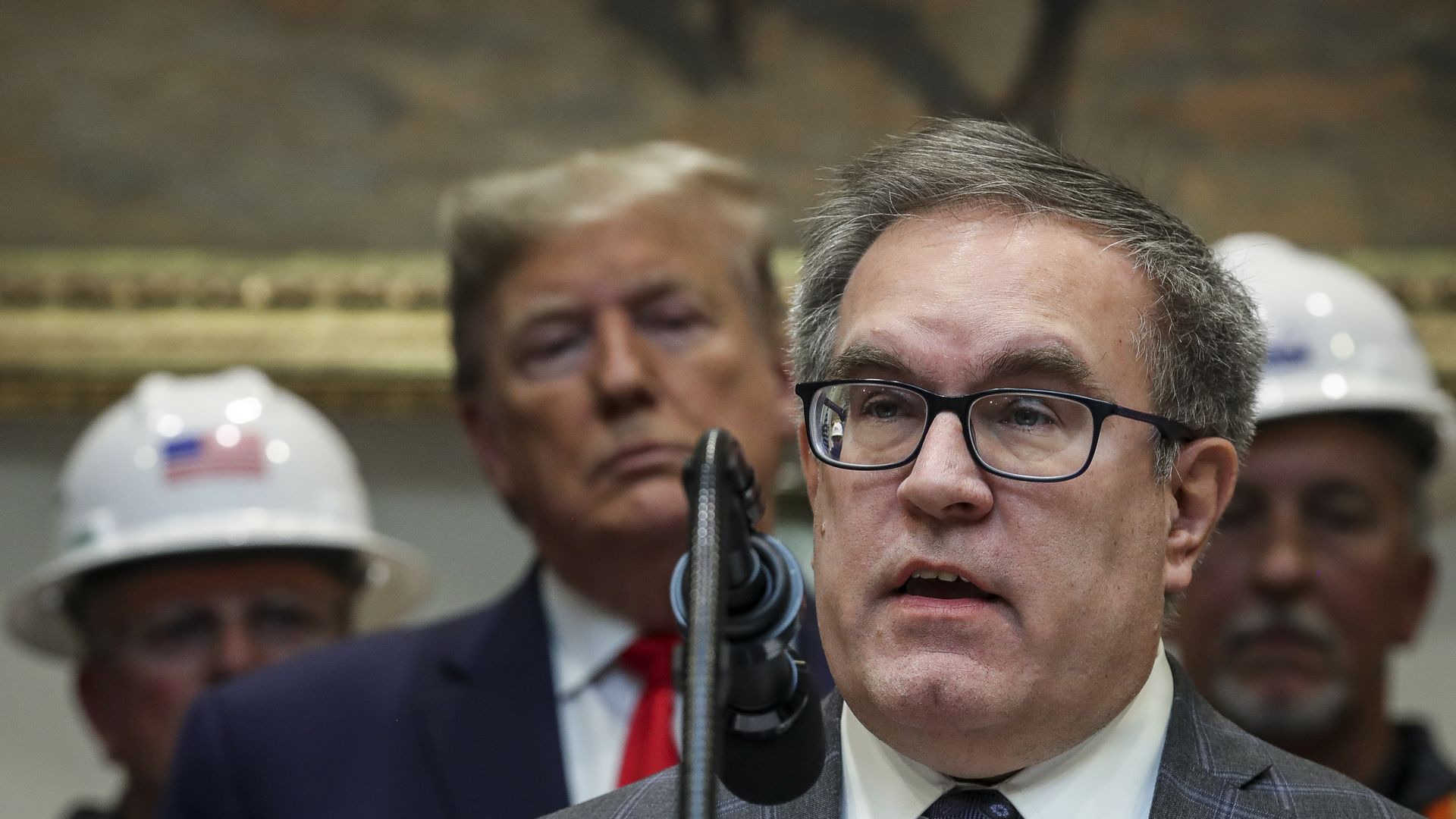
Now let's look at some of the people who might be involved in executing Trump's agenda, Nick writes.
- We're not making specific predictions. But these are people who could be influential in the transition or nab an appointment.
Andrew Wheeler, former EPA administrator
Wheeler was widely seen as an effective shepherd of the administration's ideas at EPA, and he's remained close to Trump world and Hill Republicans since leaving the agency.
- Before last month's debate, Trump posted a series of energy talking points that seemed to be written by Wheeler.
- Wheeler, now with Holland & Hart, also huddled with the Western Caucus early this year.
David Bernhard, former Interior secretary
Like Wheeler, Bernhardt is known as an effective behind-the-scenes operator who's kept close ties to Republican politics.
- He recently released book outlining how a future Republican administration could dismantle the bureaucracy.
- He now chairs the Center for American Freedom at the Trump-y think tank America First Policy Institute.
Doug Burgum, governor of North Dakota
Burgum raised his national profile by running as the energy candidate in the GOP presidential primary.
- He's since gotten close to Trump and was at one point seen as a contender for the vice presidential slot.
- He often talks about "clean energy," and his state's got a goal to be carbon neutral by 2030. That could make him a bit more confirmable than some other folks in Trump world.
Robert Lighthizer, former U.S. Trade Representative
Lighthizer did the heavy lifting to execute Trump's protectionist trade agenda in the first term. He's among the most influential pro-tariff voices in Washington right now.
- These days, he's working on trade policy at AFPI and outlining a trade agenda for Trump 2.0.
Bernard McNamee, former FERC commissioner
For an agency that doesn't get much national press, McNamee was incredibly controversial when Trump nominated him to FERC in 2018.
- But he's got deep roots in Republican politics and wrote the DOE section of Project 2025.
Mandy Gunasekara, former EPA chief of staff
Gunasekara served in this role briefly under Wheeler during the last year of the Trump administration.
- She's a prominent pro-Trump voice, appearing frequently in the media to defend his energy agenda, and is another Project 2025 author.
3. Exclusive: GOP prods FERC on AI power use

House Republicans are looking for answers from energy regulators on rising power demand driven by AI data centers, Nick writes.
Why it matters: The letter to FERC underscores divides about fossil fuel generation that are bubbling up at a time of massive change for the energy sector.
Driving the news: E&C Chair Cathy McMorris Rodgers and Rep. Jeff Duncan wrote commissioners yesterday probing what FERC's doing to tackle "demand growth from data centers and industrial sectors."
- The letter raises concerns about the retirement of fossil fuel and nuclear generation, when wind and solar account for most of the new power looking to get onto the grid.
- "Restrictions on the use and development of thermal generation, along with policies that lead to premature retirement of existing thermal resources threaten to undermine long-term planning, affordability, and strain an already taxed electric grid," the lawmakers wrote.
- Notably, they argue that colocating big generation with data centers risks "taking baseload, reliable generation off the grid at the expense of ratepayers."
Our thought bubble: The letter makes no mention of the transmission infrastructure that'll be needed to account for new demand.
- This debate is settling into a fossil fuels vs. renewables frame — but we could see that change as transmission comes increasingly into focus.
What we're watching: E&C is planning a budget hearing with FERC commissioners next week, where this is sure to come up.
✅ Thank you for reading Axios Pro Policy, and thanks to editors Chuck McCutcheon and David Nather and copy editor Brad Bonhall.
View archive