Axios Sneak Peek

June 30, 2023
Welcome back to Sneak. Smart Brevity™ count: 1,094 words ... 4 minutes.
🇮🇷 Situational awareness: The Biden administration's special envoy for Iran Rob Malley has been placed on leave due to an investigation affecting his security clearance, Malley confirmed to Axios' Barak Ravid.
1 big thing: Republicans bet big on "the education election"
Illustration: Allie Carl/Axios
A perfect storm of Supreme Court decisions, pandemic recriminations and fiery culture wars has vaulted education to the top of the 2024 presidential agenda, animating Republicans who believe they have the upper hand.
Why it matters: This election will be the first to test whether four years of heated debate over COVID-19 school policies, critical race theory and gender identity will translate at the presidential level, Axios' Stef Kight writes.
Driving the news: The Supreme Court's rejection of affirmative action at colleges today is a watershed moment for higher education — one celebrated across the board by Republican candidates and condemned by President Biden, who declared that this is "not a normal court."
- As soon as tomorrow, the high court is also expected to rule on whether Biden has the authority to grant federal student loan forgiveness — with the fate of millions of borrowers hanging in the balance.
Zoom in: Florida Gov. Ron DeSantis has staked out the most aggressive education platform of any candidate, seeking to upend school systems nationwide with the same "anti-woke" blueprint he's constructed in Florida.
- DeSantis yesterday called for abolishing the Department of Education, and last week sued the agency over its college accreditation process.
- His team has also hammered former President Trump from the right on education, tweeting out a 2015 clip of the Republican front-runner saying he's "fine with affirmative action."
What we're watching: This weekend, five presidential hopefuls — including Trump and DeSantis — are speaking at an event run by a controversial group known for promoting book bans and leading raucous school board protests.
- The national Moms for Liberty, the hosting group, has been labeled an extremist group by the Southern Poverty Law Center; an Indiana chapter recently came under fire for quoting Hitler in a newsletter.
How we got here: Conservatives' intense focus on K-12 education policy in particular has been building for years, beginning in response to prolonged school closures and mask mandates imposed over COVID.
- In 2021 and 2022, school boards became ground zero for the movement — with parents protesting at meetings and national groups coordinating efforts to replace school board members with conservatives.
- The focus then shifted to concern about curricula surrounding race and racism, with conservatives making a bogeyman out of a scholastic framework called critical race theory, or "CRT."
- More recently, self-described parental rights advocates have zeroed in on what they view as inappropriate teaching about gender and sexuality in schools.
- Republicans have also latched on to the national debate around whether transgender athletes should be allowed to compete in women's sports, passing legislation and holding hearings in Congress.
The bottom line: Republicans have dominated the education messaging war, with little engagement from Democrats. But it may not be enough to reverse the party's recent election woes, with abortion and anti-Trump sentiment remaining a significant obstacle with independents.
2. ⚖️ Biden slams Supreme Court — but nixes expansion
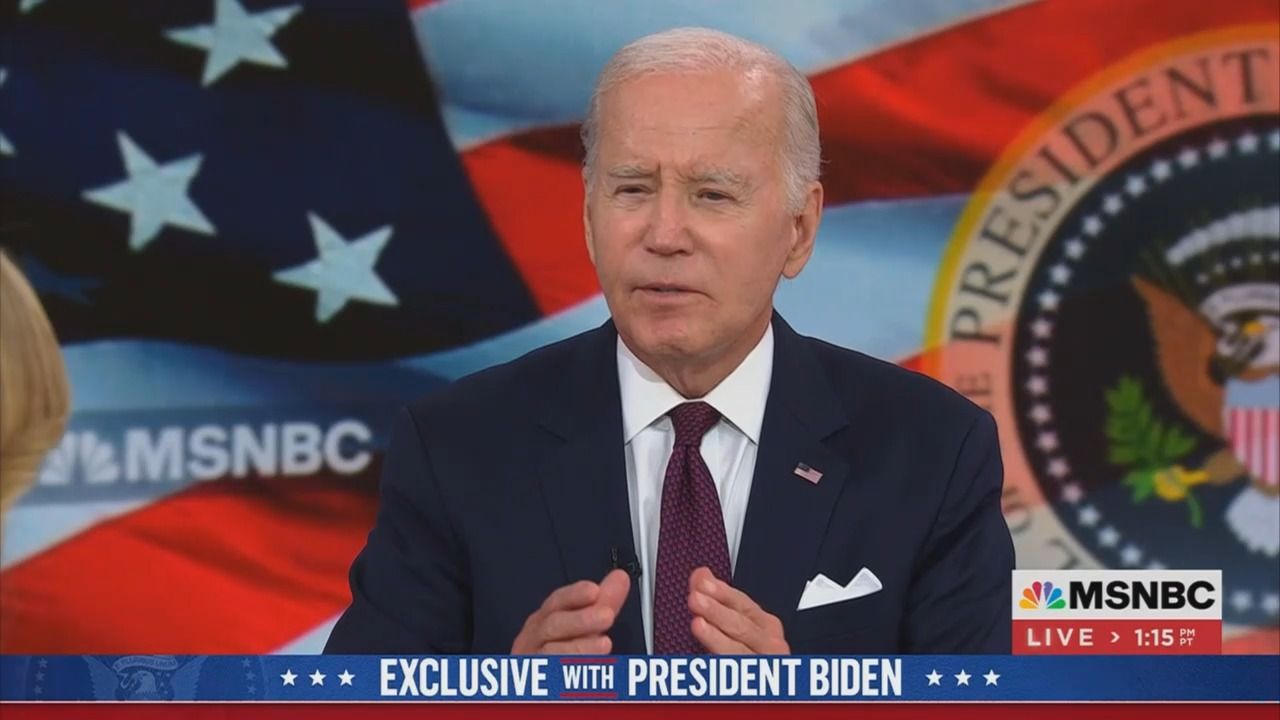
Biden sat for a rare live interview with MSNBC's Nicolle Wallace, where he was asked to explain his remark earlier today that this is not a "normal" Supreme Court.
- "What I meant by that is it's done more to unravel basic rights and basic decisions than any court in recent history," Biden said, citing last year's ruling overturning Roe v. Wade.
The big picture: Biden declined to endorse other Democrats' description of the conservative court as "anti-democratic," but said its "value system" and "respect for institutions" is different than past Supreme Court.
- Biden also once again rebuffed progressive activists' calls to expand the number of seats on the court, saying it would be "a mistake."
- "I think if we start the process of trying to expand the court, we're going to politicize it maybe forever in a way that is not healthy. That we can't get back," Biden said.
Other highlights:
- Biden stressed the importance of DOJ independence when asked about the investigation of Trump's role in Jan. 6 — delivering an answer that could apply equally to the charges against his son Hunter.
- "I've not spoken once, not one single time with the attorney general on any specific case. Not once," Biden said. "I have faith the Justice Department will move in a direction that is consistent with the law, and so it may take time, but I have faith that they're going to do the right thing."
- Asked about the 2024 election, Biden said he had faith in the American people to reject Trump and the MAGA movement: "I know the polling numbers are not good, but they were the same way when I ran and won. Everybody thought I was going to get clobbered in the primary."
3. 🔎 GOP sharply escalates Hunter Biden probe

Hunter Biden arrives at the White House for last week's state dinner for Indian Prime Minister Narendra Modi. Photo: Al Drago/Bloomberg via Getty Images
Three Republican-led House committees requested transcribed interviews with more than a dozen personnel from the Justice Department, IRS and Secret Service about the federal investigation into Hunter Biden, Axios' Andrew Solender reports.
Why it matters: The guilty plea Hunter Biden entered with federal prosecutors hasn't quashed questions about his foreign business dealings or DOJ's handling of his case; in fact, it's done the opposite, super-charging GOP investigations into the president's son.
- The sweeping requests to officials involved in the Hunter Biden probe were jointly submitted by the chairs of the House Judiciary, Oversight and Ways and Means committees, which until now had been conducting separate inquiries.
- Attorney General Merrick Garland and FBI Director Christopher Wray are already scheduled to testify to the Judiciary Committee in the coming months.
Meanwhile: The New York Times reports that a federal grand jury in Miami is still investigating aspects of the Trump classified documents case, indicating additional charges against the former president or his associates are possible.
4. 🇺🇦 Pence in Ukraine

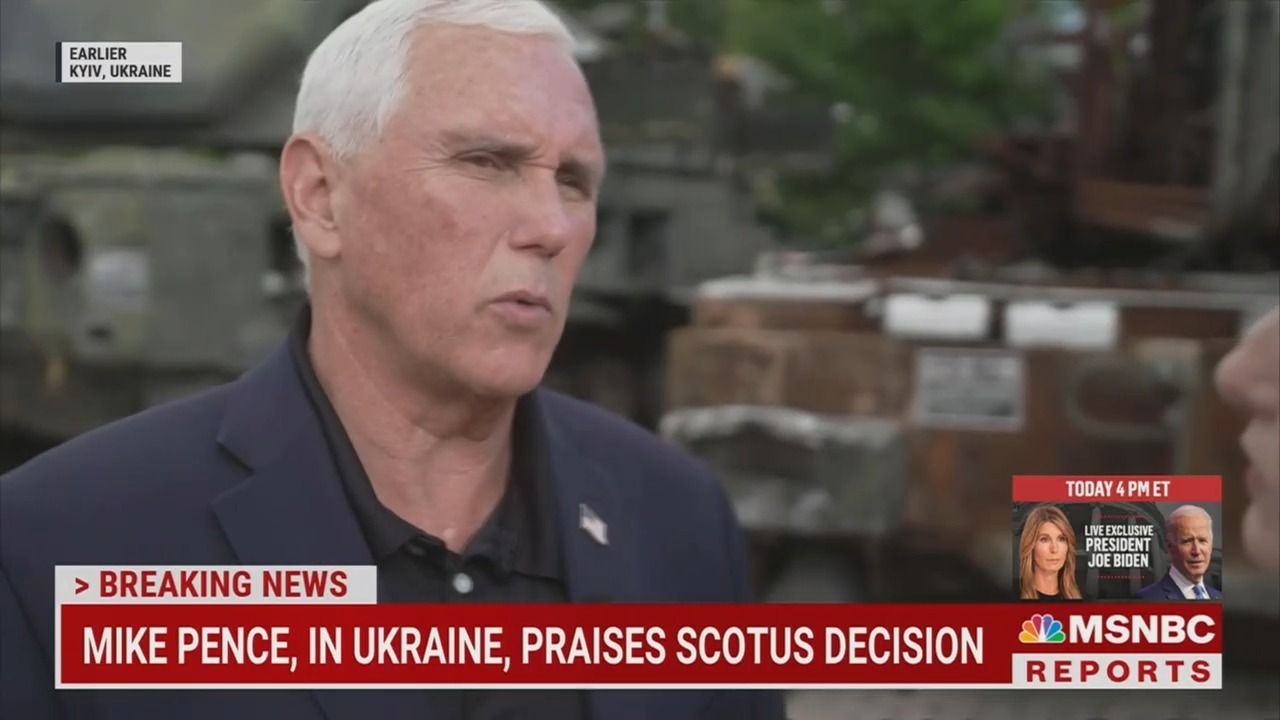
Former Vice President Mike Pence became the first Republican presidential candidate to visit Ukraine, where he met with President Volodymyr Zelensky to discuss the war effort.
Why it matters: The visit puts him significantly out of step with the Republican base, which has grown more skeptical of U.S. military aid to Ukraine as the war has dragged on.
- If Russia wins in Ukraine, Pence told NBC News, "the second half of the 21st century could look an awful lot more like the first half of the 20th century."
- Zelensky has invited both Trump and DeSantis to visit Kyiv, but neither candidate has accepted.
📬 Thanks for reading this week. This newsletter was copy edited by Kathie Bozanich.
Sign up for Axios Sneak Peek

Take a look at both ends of Penn Ave — and our best scoops