Axios Media Trends

March 15, 2022
Today's Media Trends is 1,491 words, a 5.5-minute read. Sign up here.
🚨 Gina Chua, executive editor of Reuters, is joining Ben Smith's and Justin Smith's unnamed media startup as executive editor.
⚡️The Axios Pro Media Deals newsletter, co-authored by Tim Baysinger and Kerry Flynn, has officially launched. Start your free trial.
1 big thing: Barstool's big bet
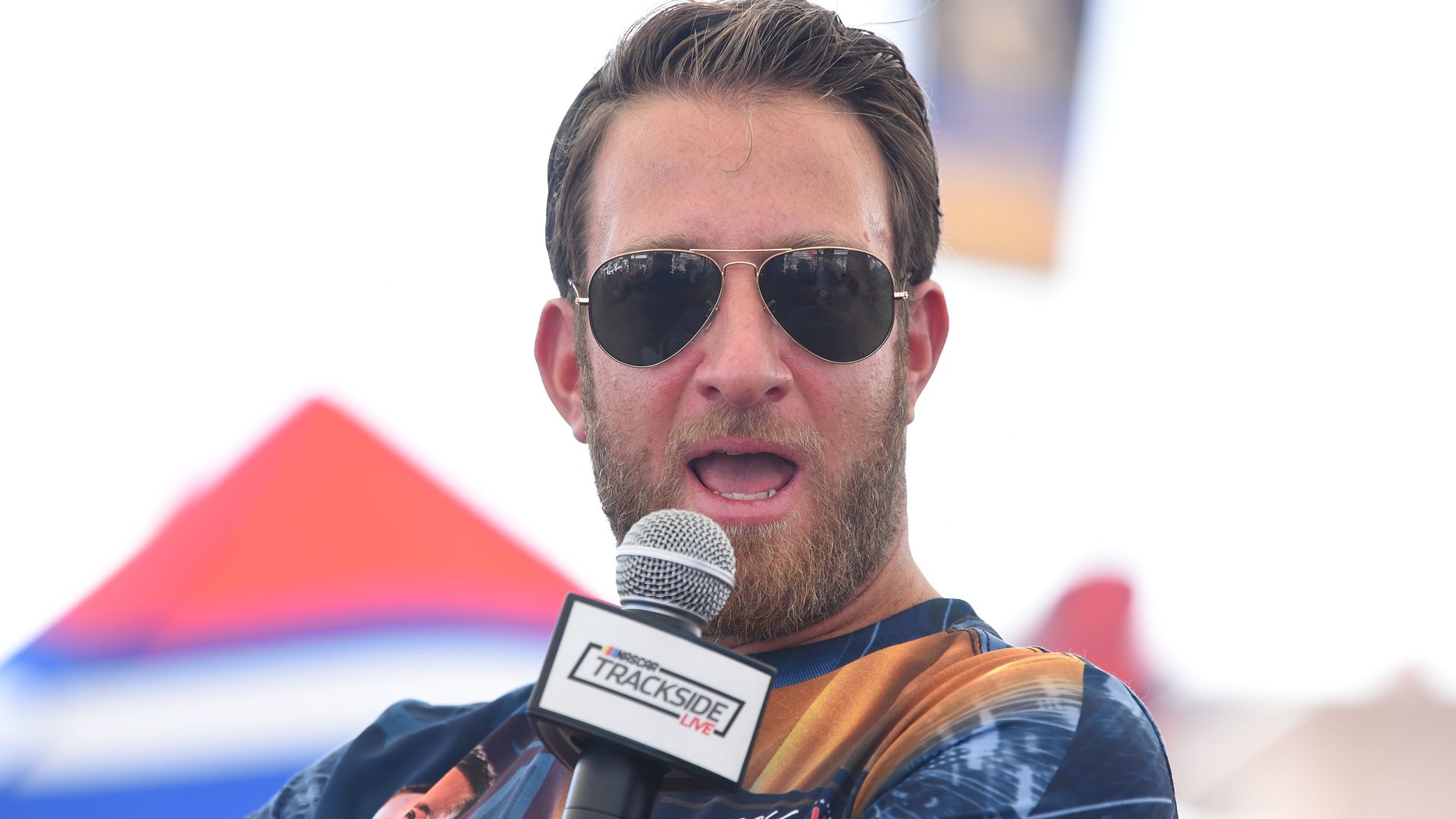
Barstool Sports founder Dave Potnoy, Photo by Chris WIlliams/Icon Sportswire via Getty Images
Barstool Sports, the sports blog turned viral social community, is launching a new philanthropy arm called "Barstool Difference."
- The arm is pegged to its existing "Barstool Fund," which raised $41 million during COVID-19 for small businesses.
Why it matters: The company, which is forecasting $230 million in revenue for 2022, sees a business opportunity in converting more of its audience into philanthropy partners and creating match opportunities for brands.
- It also could provide a reputational boost for Barstool, which has long been accused by the online press of bullying and misogyny.
- Barstool CEO Erika Nardini told Axios on stage at South by Southwest: "Barstool is oddly the least sexist place I’ve worked."
- "We're a company that eats other people’s lunch and does so fairly arrogantly and quite often, and so we have a very, very large target on our back as individuals and as a collective."
Details: The initiative will have four parts, one to help women-run businesses, one for veterans, one to support youth service and one for sobriety.
- Tonya Dressel, formerly the director of Steve Ballmer's philanthropy and a longtime Microsoft executive, has been hired to run the new effort.
By the numbers: Dressel noted the effort will be a huge engagement driver for Barstool's audience, which has already shown a high propensity to participate in Barstool's charitable giving efforts.
- More than 230,000 people donated to the Barstool Fund during the pandemic.
- Barstool has signed more than 140,000 college athletes to its athlete promotion arm since the passage of the NCAA's name, image and likeness (NIL) policy.
- Nardini says they will play a huge role in this effort.
Between the lines: Barstool Sports founder Dave Portnoy has long been considered a controversial figure, but recent drama around stories about him published by Insider alleging sexual misconduct has reignited the debate around Barstool's image and values. (Portnoy has since sued Insider for defamation.)
- Nardini addressed the controversy, calling Insider's story "shoddy journalism" for not correcting inaccuracies about the story that were presented by Portnoy.
- Insider said in response to Portnoy, "We published our stories on Dave Portnoy because we consider them to be in the public interest and newsworthy."
The big picture: So far, Barstool's business hasn't been affected by the controversy, Nardini said.
- The company expects to grow revenues by 15% this year and has shifted away from being reliant on advertising from brands by building up its commerce and licensing businesses.
What to watch: Barstool is exploring a foray into live sports rights. Nardini noted it will focus on sports that have a highly-engaged betting community, like football, college basketball and baseball.
- "We had a bunch of conversations with Major League Baseball. Obviously they would deny that but it did happen," she joked. "We saved ourselves $85 million."
2. Two years of information chaos

Public awareness around misinformation and disinformation has soared over the past two years, bringing information warfare and content moderation issues to the center of public conversation, Axios' Ashley Gold and I write.
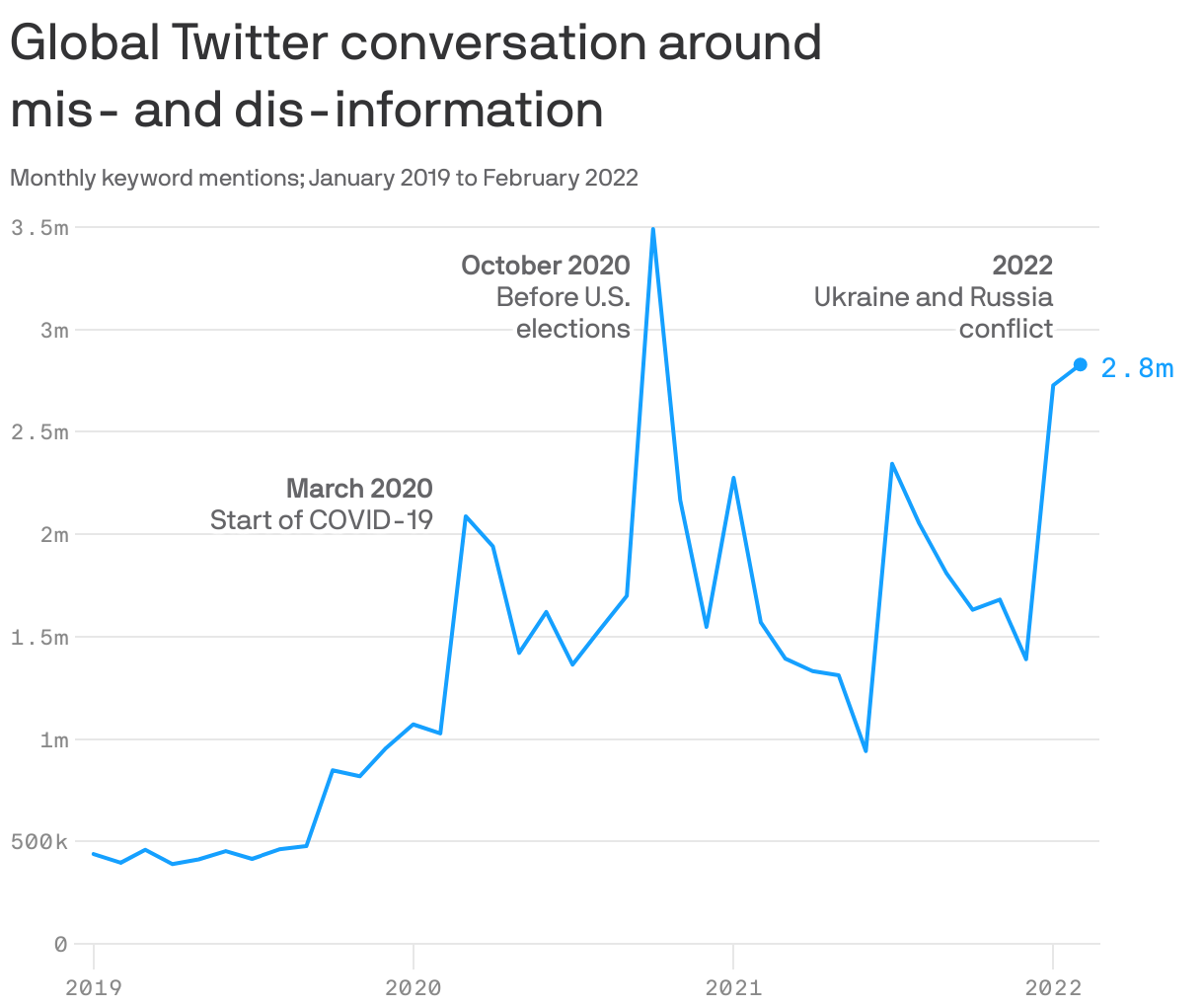
New data from Zignal Labs, a media intelligence firm, found that conversations surrounding misinformation and disinformation have become more frequent since 2020.
- There have been more than 53 million mentions of misinformation and disinformation on Twitter since the start of 2019. Those mentions increased by 221% in 2020, compared to 2019.
- Today, the topic is a big part of public debate about any major news event, from COVID to elections to racial justice issues — and now the invasion of Ukraine.
What to watch: As the public conversation around mis- and disinformation becomes more prevalent, social media firms have been forced to act faster to address public concerns.
3. Journalists under fire in Ukraine
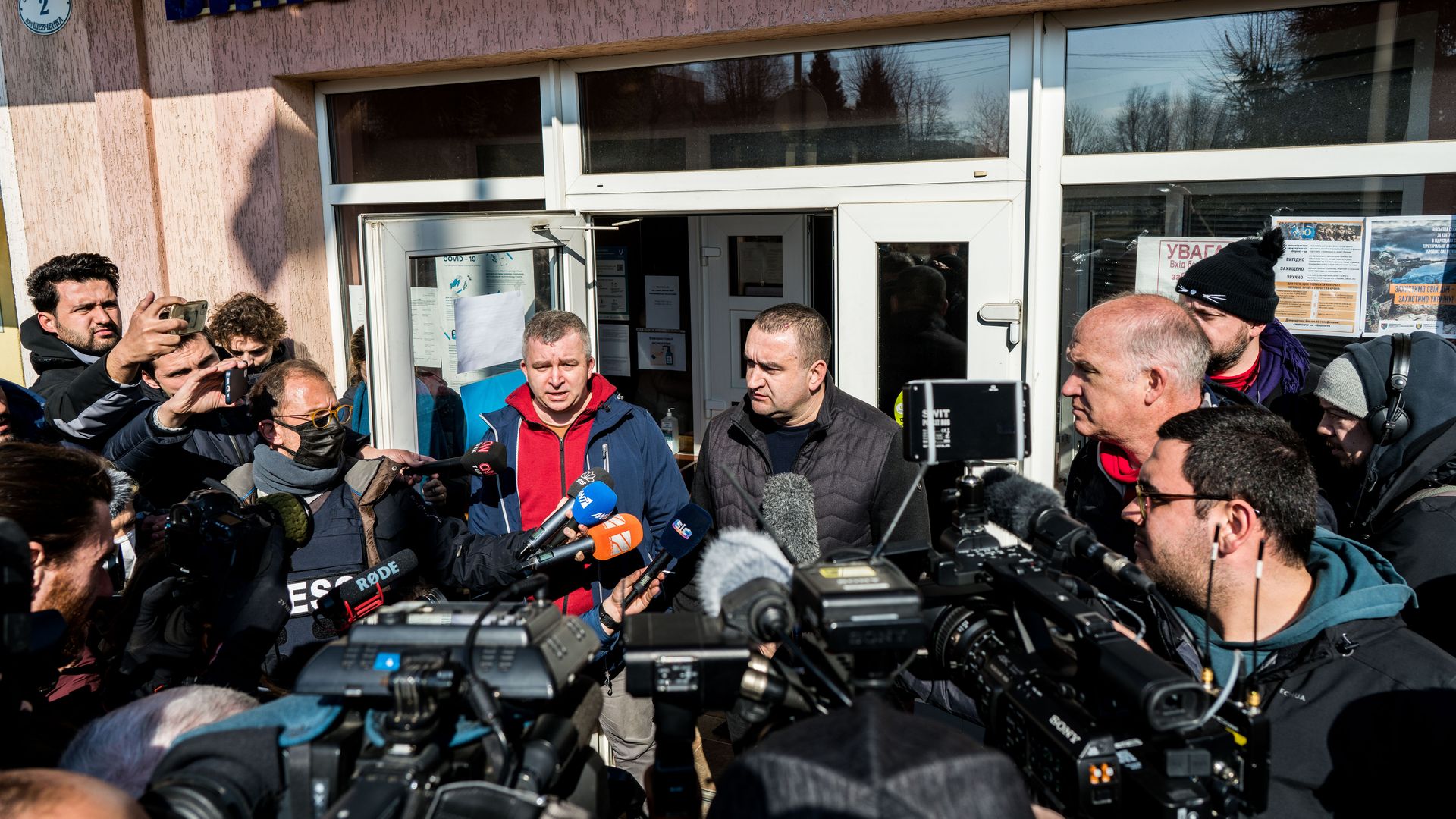
Journalists surround Volodymyr Matseliukh, mayor of the Ukrainian city of Novoiavorivsk (right), with his interpreter (left) at a press conference following a missile attack in the region. Photo: Vincenzo Circosta/SOPA Images/LightRocket via Getty Images
An increasing number of journalists are being killed, attacked, or threatened covering the covering the war in Ukraine.
- Independent journalists are also facing threats trying to cover the conflict factually from Russia.
Why it matters: Journalists covering the invasion are considered civilians under international humanitarian law. Targeting them can be considered a war crime.
Driving the news: Fox News journalist Benjamin Hall was injured while reporting outside of Kyiv on Monday and is hospitalized, the network said Monday.
- The news came just one day after the killing of Brent Renaud, a Peabody award-winning U.S. filmmaker who was on assignment for Time in Ukraine.
- News leaders are calling for an investigation into Renaud's death as a possible war crime.
The big picture: Renaud was the second journalist confirmed to have been killed in Ukraine since Russian forces invaded the country on Feb. 24.
- A Ukrainian camera operator was killed when a TV tower was shelled last week.
- Russian forces opened fire on Western journalists from Sky News last week.
- Other journalists "have been shot at, shelled, robbed, and detained by Russian forces" the Committee to Protect Journalists (CPJ) notes.
Between the lines: For independent journalists in Russia, a new "fake news" law has made it impossible to do their jobs without risking up to 15 years of jail time.
- The CPJ said Russian authorities had so far detained at least 14 journalists covering anti-war protests.
4. Nielsen may go private

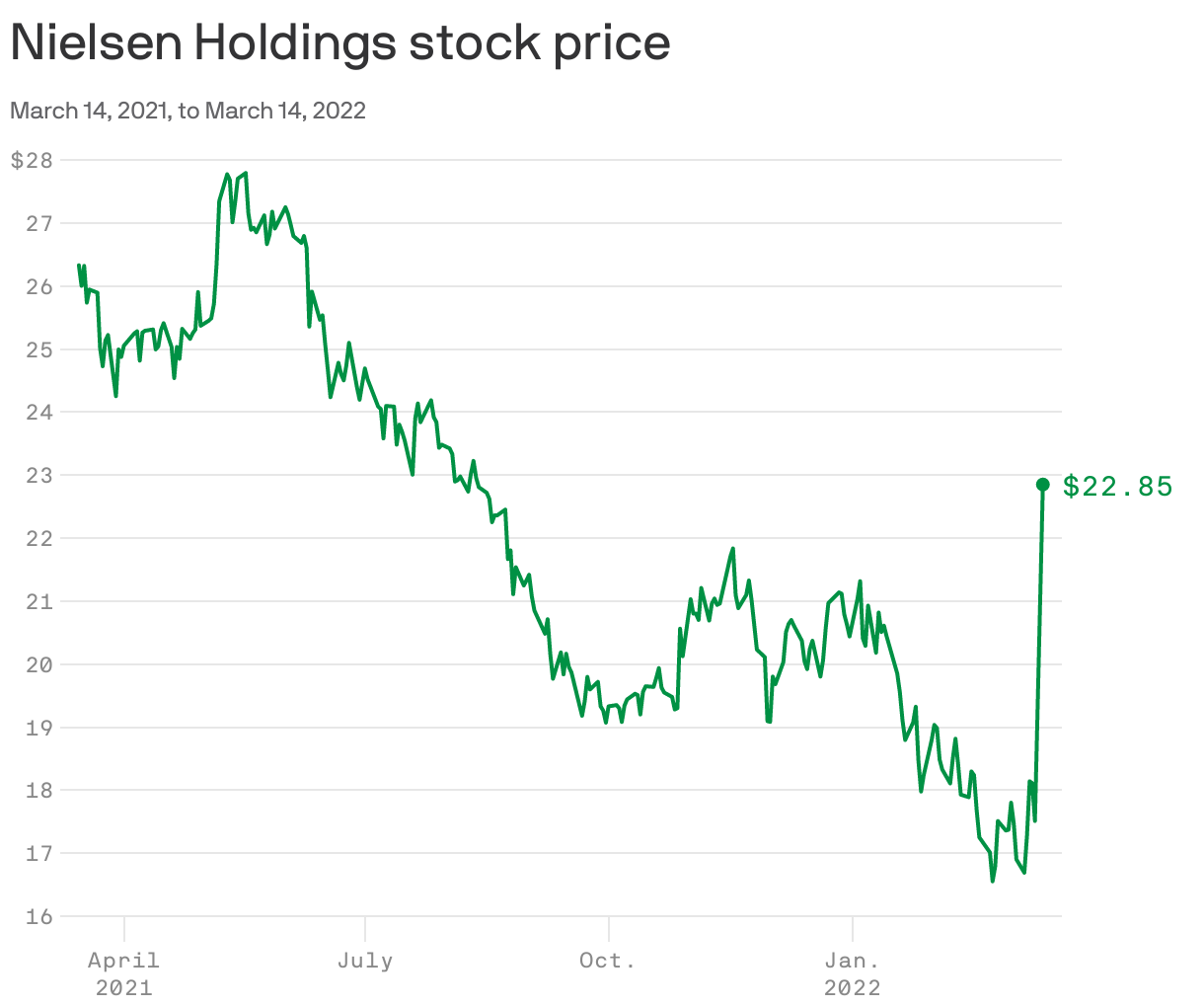
Nielsen Holdings's stock was up more than 40% Monday in response to a Wall Street Journal report that a consortium of private investors, including activist investor Elliott Management, is in advanced talks to buy the media measurement company for around $15 billion.
- Sources confirm those talks to Axios.
Why it matters: Nielsen is under extraordinary pressure to modernize its media measurement capabilities as dozens of new firms launch to take its market share, Axios' Dan Primack, Tim Baysinger and I write.
Be smart: A private buyout would help Nielsen continue to transition from linear to digital media measurement without the hot spotlight of the private markets.
Plus, Elliott may feel it's out of options.
- It's been involved with Nielsen for around four years, during which time there's been a CEO change, board changes, share repurchases and a strategic spinoff; none of which moved the stock nearly as much as the WSJ's report of a possible sale.
- Nielsen sold its retail measurement arm for $2.7 billion last year, following pressure from Elliot to alleviate debt.
Sources say Elliott has been working on this deal for some time, and has most of the $10 billion-plus of financing lined up.
5. One less streaming service
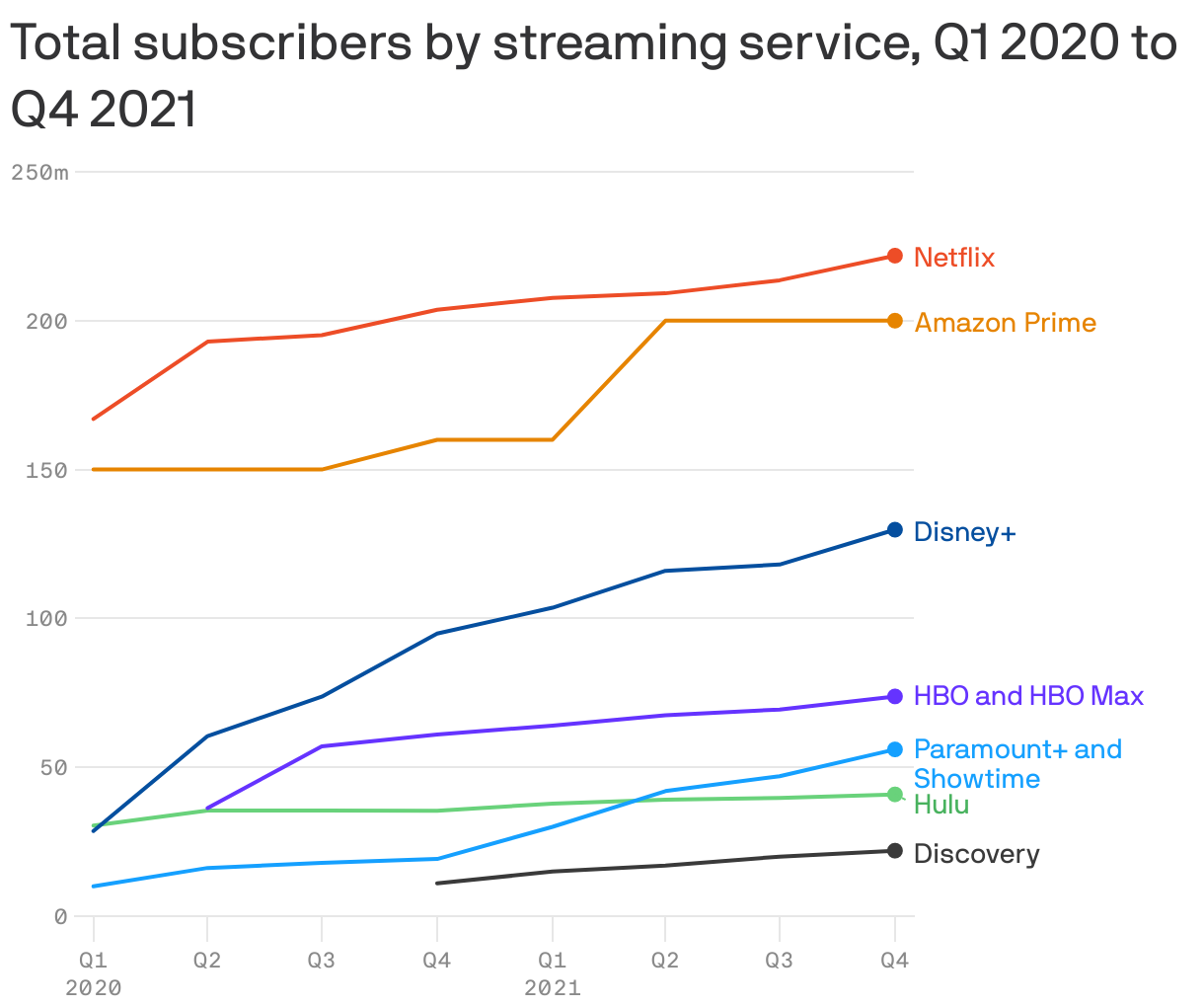
HBO Max, the general entertainment streaming service from WarnerMedia, and Discovery+, the streaming service from Discovery that includes mostly non-scripted shows, will combine after WarnerMedia and Discovery merge next month.
- Be smart: For smaller players like Peacock and Paramount+, this could force a re-thinking of ambitions, as consumers are becoming more discerning about how many services they are willing to pay for, Axios' Tim Baysinger notes. (Sign up for Axios Pro Media Deals.)
What's next: Discovery shareholders voted to approve the WarnerMedia merger last week, after they were granted regulatory approval to merge in the U.S. and Europe. The merger is expected to close in mid-April.
What to watch: CNN, owned by WarnerMedia, announced plans to launch its own paid streaming service, CNN+, by the end of March.
- It's unclear whether CNN will be combined with the general entertainment streaming service from Warner Bros. Discovery, or will be offered as a part of a bundle.
- Sources have told Axios that incoming Discovery team has expressed skepticism about the roster size for CNN+.
6. Streaming boom propels film industry's pandemic recovery
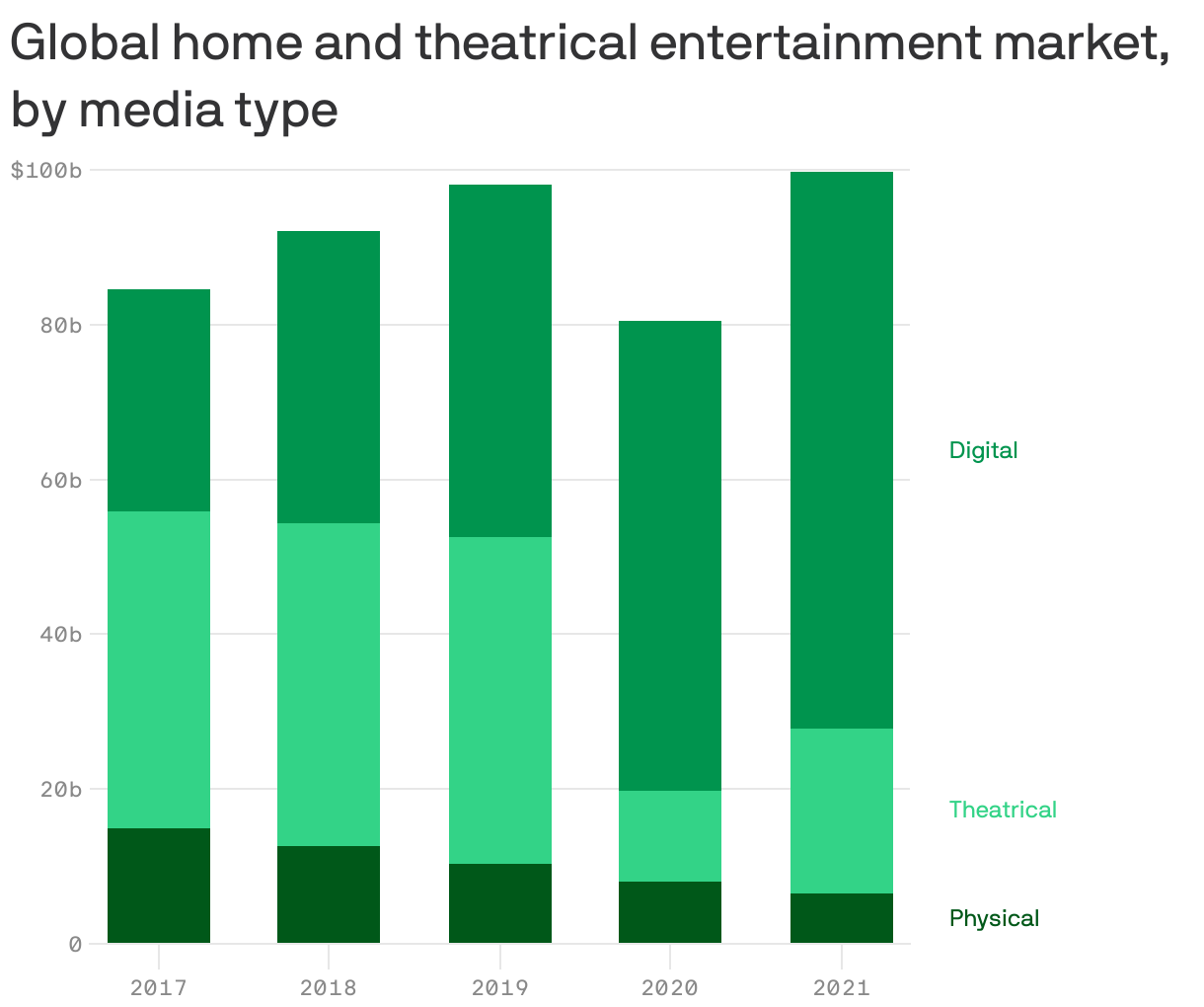
A sharp uptick in paid online video subscriptions and original content production for streaming platforms has helped the movie industry recover from the coronavirus pandemic, according to a new report.
Why it matters: The global streaming and theatrical movie market raked in nearly a combined total of $99.7 billion in 2021, eclipsing pre-pandemic sales.
By the numbers: In 2021, the digital movie market accounted for 72% of the combined theatrical and home/mobile entertainment market, compared to 46% in 2019, according to the annual report from the Motion Picture Association.
- The global theatrical market, which decreased significantly in response to COVID-19, was worth $21.3 billion in 2021, compared to $42.3 billion in 2019.
Subscriptions to streaming services, which jumped 14% in 2020, reached a global total of 1.3 billion, a new record high.
- In the U.S., the estimated number of films that debuted online exclusively was 179, up from 113 in 2019.
7. 1 fun thing: SXSW returns
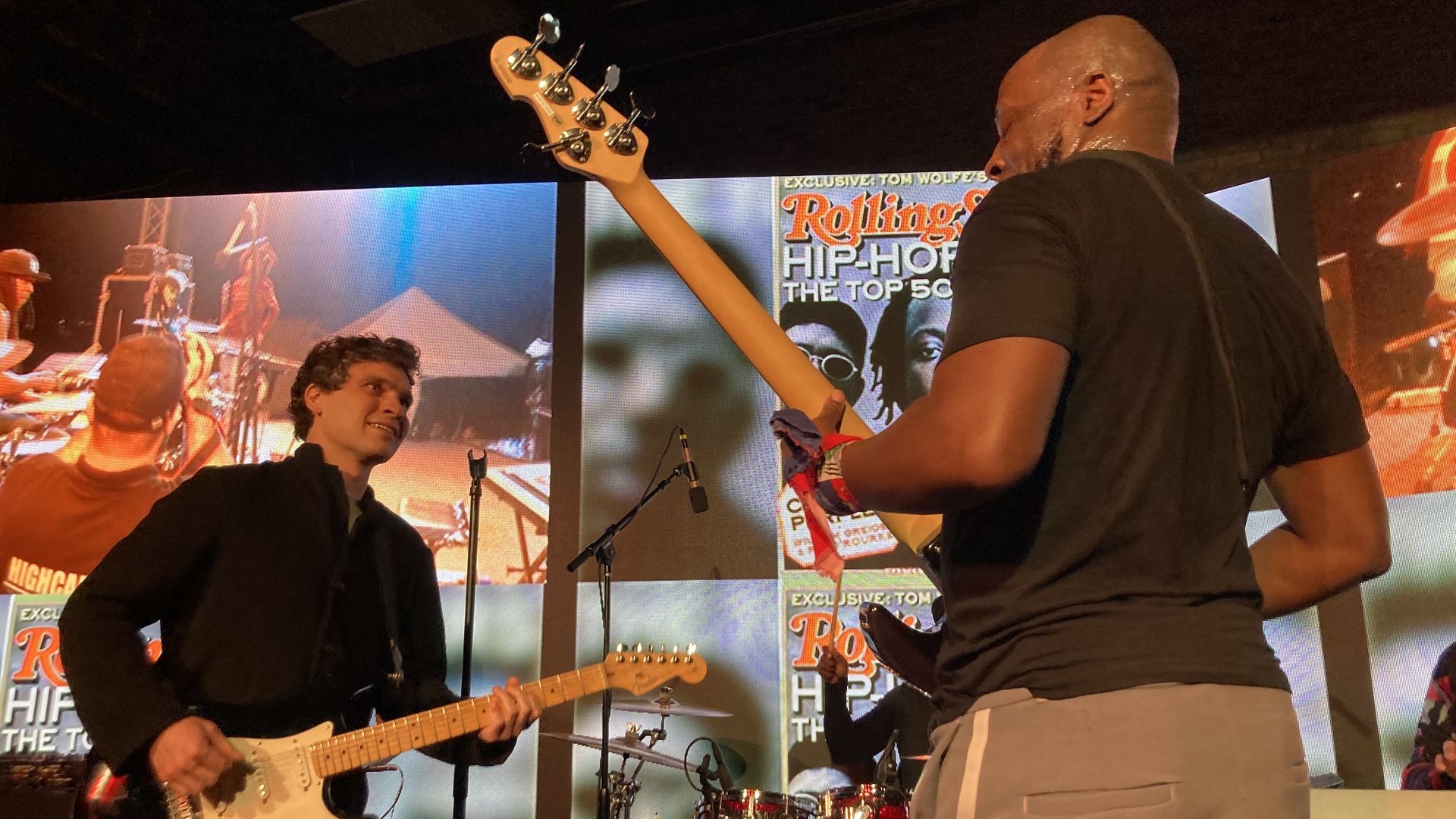
Rolling Stone CEO Gus Wenner performs on stage with Wyclef Jean at a Rolling Stone party at SXSW
SXSW's return represented a new normal for conferences and major events, where COVID measures are mostly ignored, but the pandemic still impacts attendance.
For industry insiders: This year was the first SXSW festival under its new ownership.
- Hollywood news giant Penske Media acquired a 50% stake in the festival last year via a joint venture that's parent to several music and entertainment publications.
- Penske played up its new role, hosting a slew of exclusive parties, events and concerts downtown. Penske had one of the largest traditional media presences on the ground.
Go deeper: SXSW recap
Sign up for Axios Media Trends

Sara Fischer’s inside look at the forces reshaping media.