Axios Future of Defense

August 06, 2025

G'morning from Alabama, where the Space and Missile Defense Symposium chugs along.
- Thanks to everyone who came out to our event last night in Huntsville. What did you like? Dislike? Reply to this email and let me know!
⚓ Situational awareness: Australia selected Japan's improved Mogami-class for its future fleet of general-purpose frigates. The first warship will be delivered in 2029 and ready by 2030.
- My thought bubble: How timely. A ton more on Australian sea power, below ...
Coming your way: Missile money, the Army goes birdwatching and Battlefield 6 tidbits.
Today's newsletter is 1,593 words, a 6-minute read.
1 big thing: Awaiting AUKUS answers
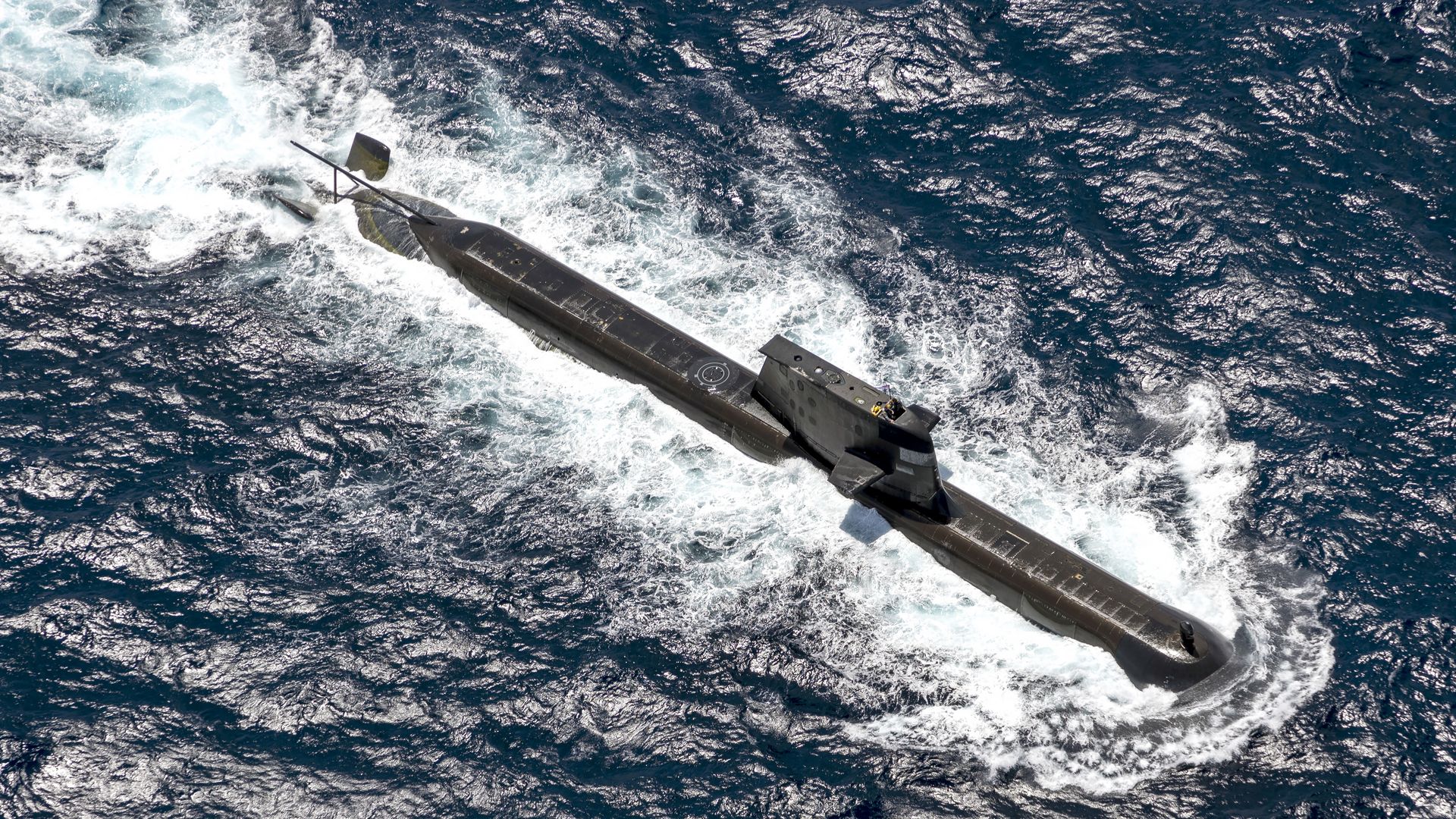
Everyone has an AUKUS take.
Why it matters: The landmark defense pact — designed to arm Australia, the U.K. and the U.S. with nuclear-powered submarines and cutting-edge tech, including hypersonic weapons and electronic jammers — is today navigating choppy waters.
Driving the news: The Pentagon's policy office, led by Elbridge Colby, last week announced that by fall it would conclude its "America First" examination of the initiative, which rolled out during the Biden administration.
- Colby has expressed AUKUS skepticism in the past, namely over resource allocation, but in March said Washington should "do everything we can to make this work."
The big picture: As the review proceeds, consider these factors:
🚢 Shipbuilding shortfalls. The U.S. struggles to construct, maintain and retrofit warships. The Government Accountability Office catalogues it. The Navy cops to it, too.
- Adm. Daryl Caudle, a career submariner turned chief of naval operations, last month told Congress the "delivery pace is not where it needs to be to make good on Pillar I of the AUKUS agreement."
- Pumping out the requisite two-plus Virginia-class subs per year, he added, demands "transformational improvement. Not a 10% improvement. Not 20%. A 100% improvement."
🇦🇺 Actual application. How the Trump administration perceives Australia's commitment to using the subs, and to countering China, could make or break a ruling.
- "They've been very coy about how they would actually employ the submarines, other than to say, 'Well, it's a deterrent, it could be employed to defend Australia,'" Bryan Clark, a senior fellow at the Hudson Institute, told me.
- "You've got to be willing to say that you would use it offensively if you want to gain the deterrent value out of it," he said, "because China could come away thinking Australia is going to buy these submarines, but they don't have the resolve to use them."
🎰 Odds Down Under. Almost two-thirds of Australians surveyed in a recent Guardian poll thought it was unlikely the U.S. would deliver subs.
- And 41% of the voters thought the deal would not affect the country's security.
- Canberra in July cut a $525 million AUKUS check. Prime Minister Anthony Albanese denied in a television interview that it was an "extra" fee, insisting it was part of the "schedule of payments to be made."
- "It's about increasing their industrial capacity," he said.
⚙️ Pillar II obscurity. Sub construction — or lack thereof — dominates headlines. Comparably less ink has been spilled on the co-development of defense tech like AI, autonomy and hypersonic countermeasures.
- Articles published by War on the Rocks in June and the Australian Strategic Policy Institute last year put it succinctly: Pillar II has a public relations problem.
- Policy and export reform isn't as attractive as novel weapons and their delivery.
- "The matter at hand — sophisticated, trilaterally supported innovation — seems to be unfurling lethargically," Peter Dean and Alice Nason argued in their War on the Rocks piece.
🔁 Common ground. A U.K. government spokesperson told me it "is understandable that a new administration would want to review its approach to such a major partnership, just as the U.K. did last year."
- Prime Minister Keir Starmer and President Trump have recently traded compliments, which could bode well for AUKUS.
What we're hearing: The trilateral agreement will survive, but perhaps in a somewhat different form and with a less optimistic timetable.
- "I infer that the administration is pro-AUKUS," one defense industry executive told me. "I think, internally, 'the Blob' is trying to portray it to Trump as a big, beautiful trade deal."
- "Everyone knows the sub industrial base is stressed, though."
The bottom line: The AUKUS anxiety is legit. The ongoing review is additional evidence nothing is sacred under Trump 2.0.
Go deeper: The Pentagon's dramatic divorce from D.C. orthodoxy
2. Missile money
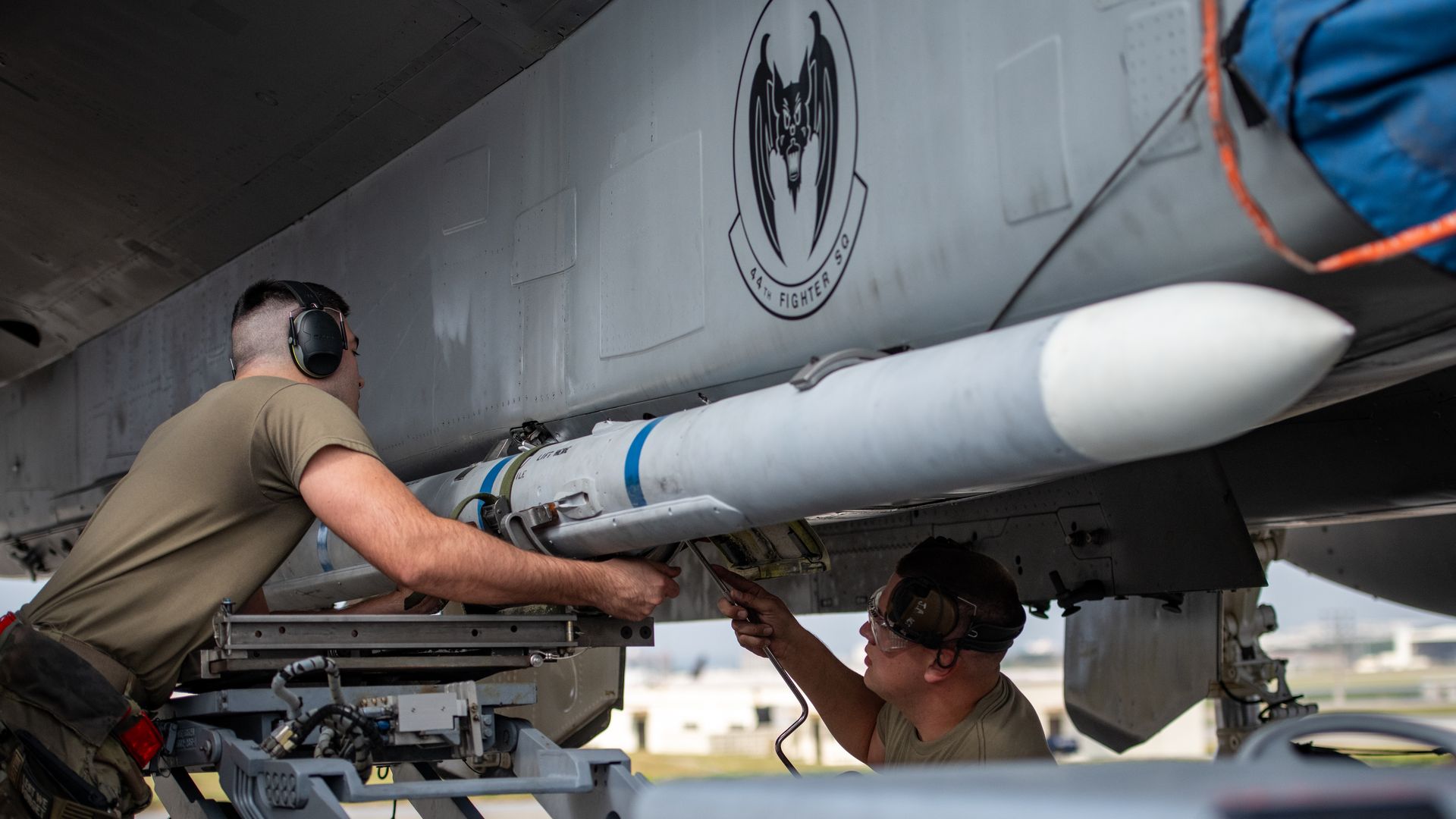
A pair of U.S. Air Force contracts are expected to bolster stateside and foreign inventories of air-to-air, air-to-ground and ship-sinking missiles.
Why it matters: The deals are worth $7.8 billion total.
- Lockheed Martin secured $4.3 billion, while RTX nabbed $3.5 billion.
- Both were announced July 31.
Follow the money: The arrangement with the former, the world's largest defense contractor, is for Joint Air-to-Surface Standoff and Long Range Anti-Ship missiles. The arrangement with the latter is for Advanced Medium-Range Air-to-Air missiles. It's the largest in the program's history.
Zoom out: Lockheed's deal involves foreign military sales to Finland, Japan, the Netherlands and Poland. RTX's includes sales to more than a dozen countries, including Israel, Taiwan, Ukraine and the U.K.
- Both deals notably involve NATO allies.
Context: Governments are sweating stockpile levels.
What's next: Years of work.
Go deeper: Jake Sullivan encourages Trump team to buy munitions in bulk
3. Palantir prevails

The U.S. Army is consolidating 75 contracts into a single arrangement with Palantir Technologies worth as much as $10 billion — a move the service said will accelerate deliveries and eliminate middleman fees.
Why it matters: The 10-year deal is evidence of three things, closely related:
- The ascendancy of Palantir in Washington and at the Pentagon, in particular. (At an AI summit last month, President Trump remarked, "We buy a lot of things from Palantir.")
- The changing ways militaries are trying and buying products, especially software.
- The maturing D.C.-Silicon Valley relationship, which was on the rocks not too long ago.
The big picture: The Army and other services have for years fought to streamline networks, intelligence, safeguards and IT, all while contending with a crush of data in the boardroom and on the battlefield.
- Solicitation documents noted the Army was expending significant administrative and financial resources managing dozens of "procurement actions tied to the integration of proven commercially available Palantir capabilities."
Follow the money: This is Palantir's largest known contract cap.
What they're saying: The deal "reflects a broader shift in recognizing that software isn't a support function — it's core to operational readiness," Wendy Anderson, a former Palantir executive and chief of staff to the late Defense Secretary Ash Carter, told me.
- "This agreement sets a precedent for how government and industry can partner to deliver real capability at speed and scale — and others across the department should follow suit."
Zoom out: Palantir is leaning hard into defense work. Chief executive Alex Karp has made it no secret he wants the West to dominate.
- Last year, the company bested RTX for a $178 million Tactical Intelligence Targeting Access Node contract. It's delivering the kitted-out trucks alongside partners Anduril Industries, Northrop Grumman and L3Harris Technologies.
- Other wins include an AI research-and-development deal in 2023, worth $250 million, and a predictive maintenance and supply chain agreement in 2022, worth $85 million.
Flashback: Palantir successfully sued the Army in 2016. Times have changed.
What's next: Expect more of these bulk buys moving forward.
Go deeper: The Pentagon's software-hardware tug of war
4. Quick hits
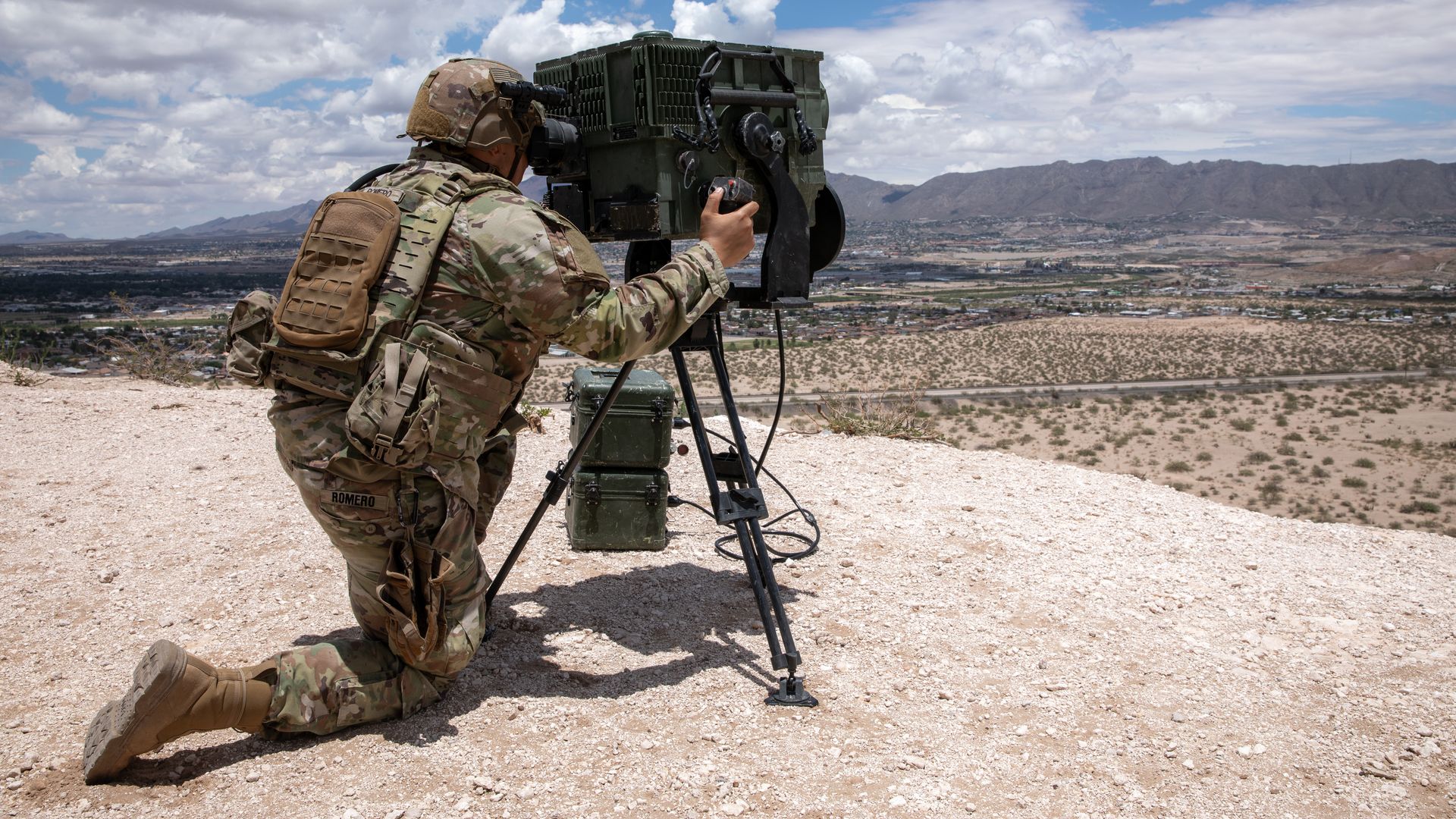
🦅 The U.S. Army is working with Leonardo DRS, Elbit America and QinetiQ on the Future Advanced Long-range Common Optical/Netted-fires Sensor (FALCONS), a replacement for the Long-Range Advanced Scout Surveillance System.
- Why it matters: This is the start of a yearslong effort. The initial phase "will allow the Army and our industry partners to collaboratively establish the FALCONS prototype's foundation before bending any metal," Lt. Col. Ryan Welch, a product manager, said in a statement.
- 💭 My thought bubble: Clunky name. Slick acronym.
🛜 Myanmar's military is using European anti-jam components aboard its attack drones despite existing restrictions, according to a new Conflict Armament Research (CAR) study.
- Why it matters: "This discovery reinforces a trend that CAR has observed across its operations," it reads, "of sanctioned entities successfully acquiring commercial components to modify, enhance or develop weapons."
- 💭 My thought bubble: CAR does super interesting work. I'd recommend their Houthi-hydrogen report, as well.
🚀 Cummings Aerospace debuts its Hellhound S4 drone at the Space and Missile Defense Symposium this week. It weighs about 45 pounds and has a range of roughly 86 miles.
- Why it matters: The S4 is designed for explosive strikes, interceptions, intelligence collection and electronic warfare, depending on the selected payload.
- 💭 My thought bubble: Hello, Golden Dome applications.
🌌 The U.S. Space Force is asking Astranis, Boeing, Intelsat, Northrop Grumman and Viasat to refine and demonstrate their respective tech for its Protected Tactical Satellite Communications–Global (PTS-G) effort.
- Why it matters: Cordell DeLaPena Jr., a program executive officer, said PTS-G "transforms" how satellite communications are acquired for the military.
- 💭 My thought bubble: I covered the early rumblings of this in November. Catch up quick, here.
5. Check this out
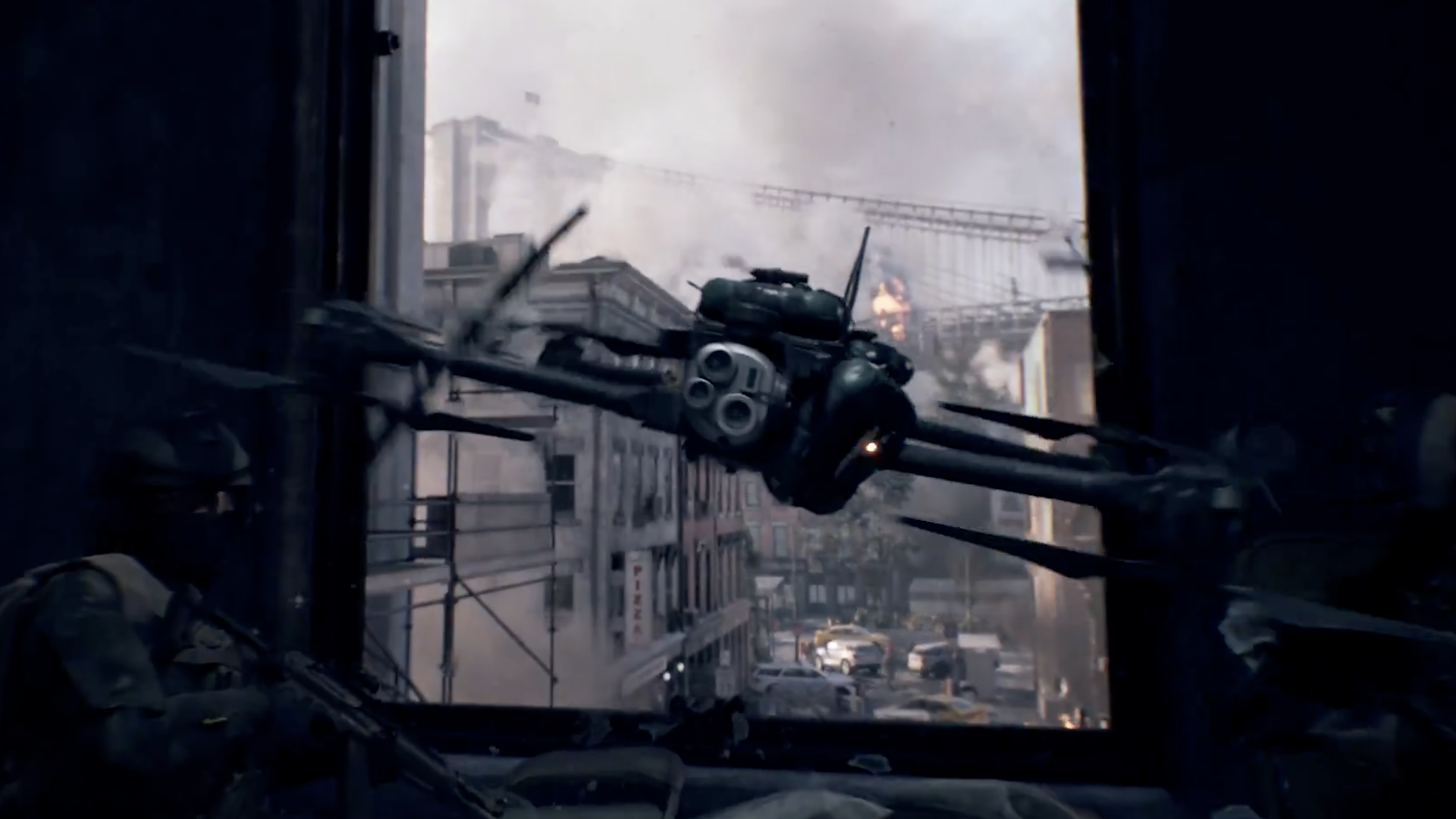
Art imitates life, or something like that.
The big picture: The multiplayer reveal of Battlefield 6, an upcoming first-person-shooter video game published by Electronic Arts, included footage of a drone strapped with explosives, above, wreaking havoc.
What we're watching: If these will be more or less annoying than Battlefield 4's SUAV and UCAV. (The former resembles the RQ-11; the latter, the Switchblade.)
The bottom line: See y'all on Operation Firestorm.
- No, not the awful battle royale mode.
Shoutout to Dave Lawler for editing and Matt Piper for copy editing.
👋🏼 Thanks, as always, for reading and sharing. Tell your friends to subscribe here.
Sign up for Axios Future of Defense