What MAGA means for the Pentagon and its weapons

Add Axios as your preferred source to
see more of our stories on Google.
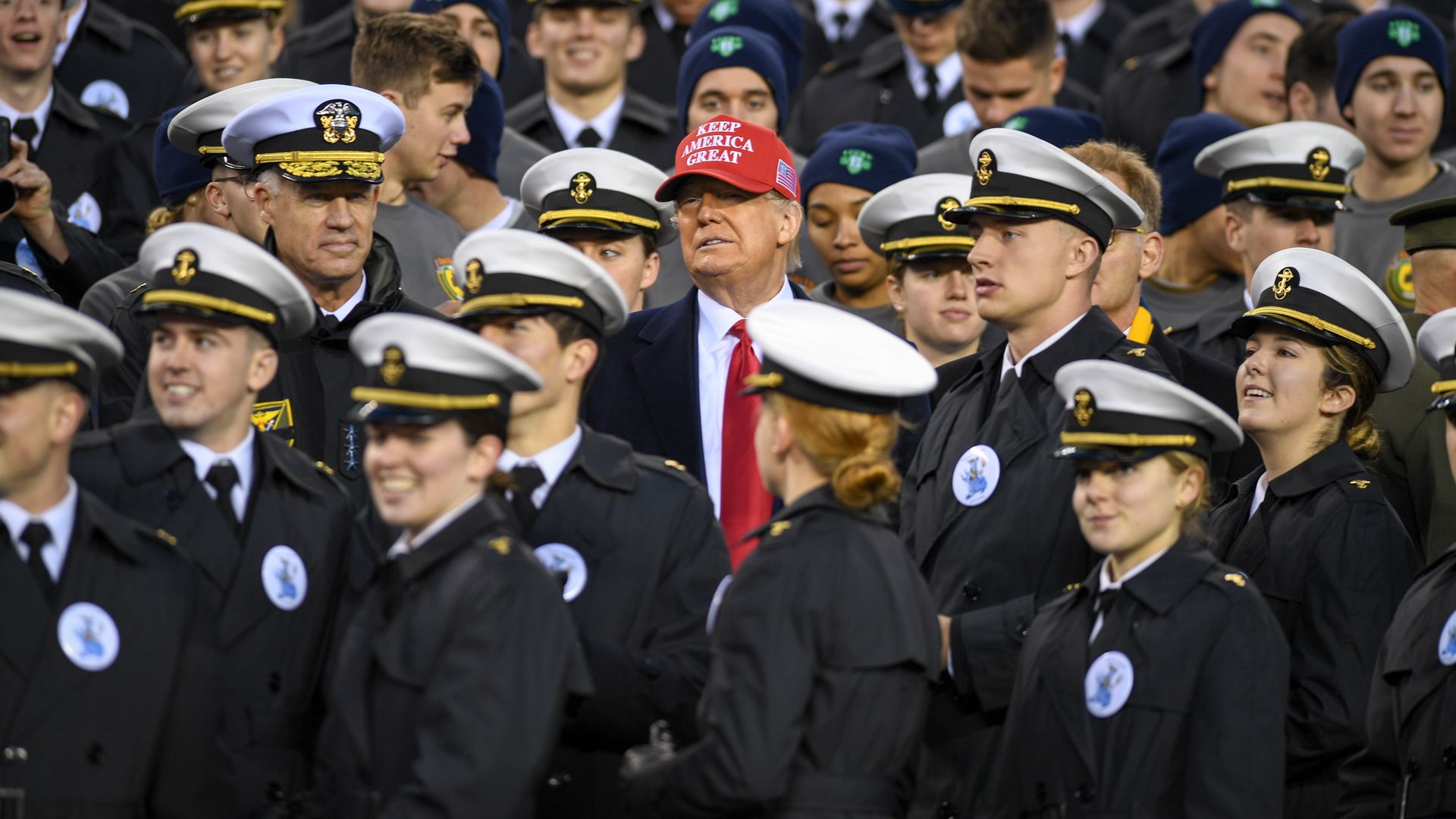
Then-President Donald Trump among cadets in 2019. Photo: James Harvey/DVIDS
Trump 2.0 will shake up the Pentagon, but how he sharpens or dulls its technological evolution — wielding his radical vibes as a scalpel or hammer, and leaning on disruptive-tech friends — is a work in progress.
The big picture: To start figuring it out, consider these clues.
Pete Hegseth. Trump's Tuesday night surprise. Hegseth is a TV personality, author and decorated Army veteran. A wildly unconventional pick!
- "Nobody fights harder for the Troops, and Pete will be a courageous and patriotic champion of our 'Peace through Strength' policy," Trump said in a statement.
- The announcement scrambled reporters and defense watchers alike at a happy hour. "Who's Pete?"
- This plays into Trump's love of television and ratings. A Fox News spokesperson said Hegseth's "insights and analysis especially about the military resonated deeply with" viewers.
Project 2025. The rightwing playbook damns the Defense Department for wasting time and money. It advocates striking outdated and underperforming projects and recognizes the extreme consequences of cyber, space and nukes.
- It also puts on a pedestal small businesses and their knack for innovation. It rings of a wholly American industrial base, not a cloistered defense industrial base.
The West Coast weapons bros. Working in national security is cool again, even in Silicon Valley and its bankrolling circles.
- Palmer Luckey, the founder of Anduril Industries, told me Trump "has acted as a change agent by rallying people who understand that we don't have time for business as usual." That includes "wanting more capability for fewer dollars."
Elon Musk. The de facto tech adviser has a direct line to the Oval Office. Last week, he sat in on calls with Ukraine's Volodymyr Zelensky and Turkey's Recep Tayyip Erdoğan.
- Starlink fuels Russia-Ukraine guerrilla connectivity. Meantime, the raucous billionaire shared a video on X blaming the U.S. and NATO for Moscow's invasion.
What they're saying: "I think we're at this really strange inflection point that comes along every couple generations," Chris Miller, a former acting defense secretary involved in Project 2025, told me.
- "We are in a position now, with a new administration, to accelerate transformation, how we think about national security and how we think about the defense industrial base that has to be rebuilt."
Zoom out: The defense sector is among the most powerful — and persuasive — in politics.
- Megaprojects span states, voting blocs and workforces. Defense dollars keep communities afloat. And an armed-to-the-teeth military is Republican red meat.
My thought bubble: Don't get too distracted by the big names above. What greatly matter are the project approvers (or deniers), the contract signers (or nullifiers) and the subject-matter experts embedded at program executive offices.
- There's a reason why so much ink has been spilled about the "frozen middle." It's not all about secretaries and honor cordons.
What's next: Pentagon leadership is urging a peaceful transfer of power and is already coordinating with the White House and the General Services Administration.
- "One policy that ... is tradition is that the military would remain, and is, an apolitical entity," deputy press secretary Sabrina Singh said.
- "We expect that to continue."
