
Axios Closer

August 07, 2023
Monday β .
Today's newsletter is 648 words, a 2Β½-minute read.
π The dashboard: The S&P 500 jumped 0.9%.
- Biggest gainer? Monster Beverage (+6.1%), with the energy drink company boosted by a bullish analyst call in spite of disappointing Q2 earnings.
- Biggest decliner? Moderna (-6.5%), with the pharmaceutical firm's stock extending its losing streak to six days despite the market upturn.
π¨ Situational awareness: KKR has agreed to buy Simon & Schuster from Paramount for $1.62 billion in an all-cash deal. (Axios)
1 big thing: Emerging inflation threat
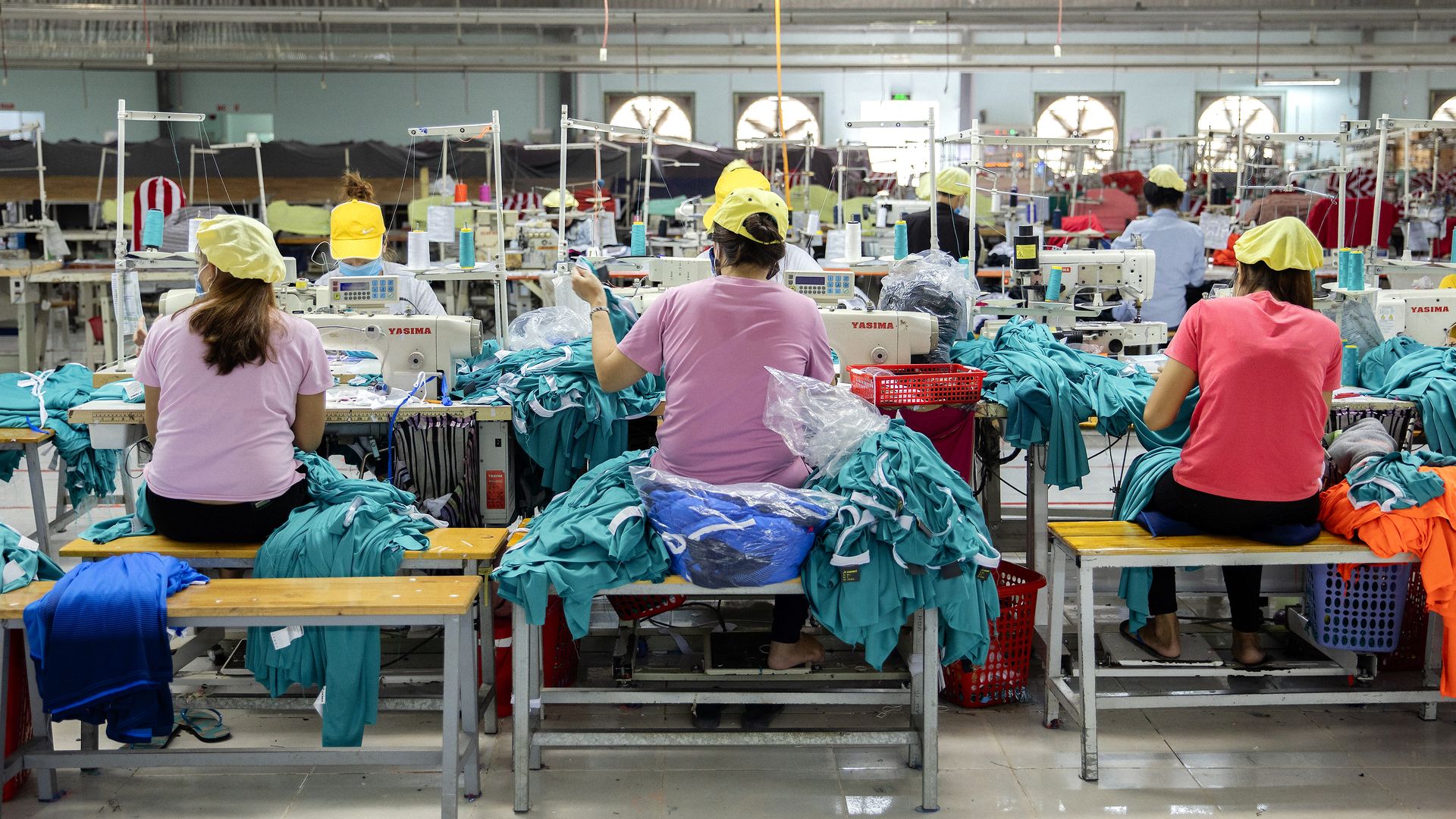
Workers operate sewing machines at a Thai Son S.P. Co. garment factory in Binh Thuan province, Vietnam in 2019. Photo: Maika Elan/Bloomberg via Getty Images
Young people in Asia don't want to work in factories anymore, and that has implications for global consumers, Hope writes.
Driving the news: The Wall Street Journal reports that Asia is having a big problem staffing its factories with younger workers.
- Companies that make goods for brands like Lowe's and Hasbro are having a hard time recruiting and retaining younger workers in places that include India, Malaysia, Indonesia and Vietnam.
Why it matters: If the trend holds, consumers worldwide will need to prepare themselves for higher prices on everything from clothing and electronics, to toys and furniture, as multinationals pay more for labor or expanded automation.
The intrigue: Social media has also exposed younger Asians to alternative lifestyles and cultures.
- "Once they can see the Kardashians, they don't want to do [factory] work anymore," Shawn Nelson, CEO of furniture brand Lovesac, told the WSJ.
The big picture: While automation can be a solution, manufacturers say there's also a lack of young engineers interested in applying their skills to factory operations.
π Hope's thought bubble: The hunt for "cheap labor" has always dehumanized a large part of the world's population whose tedious work subsidizes much of what developed economies take for granted.
- Asia's young are then justified in their aversion to the types of jobs that previously defined their value to the rest of the world. Companies and consumers having to pay more to make them happy seems like a right-sizing.
2. Charted: Credit watch


U.S. credit card debt hit $1 trillion for the first time toward the end of July, but its share of U.S. GDP is still lower than it was in 2010, or at the onset of the pandemic, Hope writes.
Why it matters: Total balances on credit cards and other revolving accounts have climbed since the Federal Reserve started to raise interest rates, but the economy has not only remained resilient βΒ it's grown stronger than anticipated.
What to watch: The impact of federal student loan repayments, which are set to resume in October.
3. What's happening
π±Apple is reportedly set to launch the iPhone 15 in mid-September. (Bloomberg)
πΊ Warner Bros. Discovery has reportedly targeted the beginning of the MLB playoffs to debut a streaming sports tier. (CNBC)
π Tyson shutters four chicken plants as COVID boost wanes. (Axios)
π Tesla CFO Zachary Kirkhorn has stepped down after 13 years with the company. (Axios)
4. Yellow bankruptcy aftermath
Illustration: Brendan Lynch/Axios
U.S. trucking company Yellow last night filed for Chapter 11 bankruptcy, destroying tens of thousands of jobs and likely wiping out most of a government loan that many in Congress believe should have never been made, Axios' Dan Primack writes.
Why it matters: Taxpayers are about to take a bath, and the political finger-pointing will continue.
What to watch: It's entirely possible that $300 million is gone, particularly since the government appears to be subordinate to lender Apollo Global Management (i.e., second in line).
5. Reddit revolt over
Illustration: AΓ―da Amer/Axios
Redditors who had been protesting the site's API pricing changes have thrown in the towel, Hope writes.
- Moderators of popular subreddits last week stopped posting pictures and GIFs of John Oliver, a sign of their discontent over Reddit's new policy.
- They were among the last holdouts of a weeks-long attempt to pressure Reddit to reconsider its new charges.
By the numbers: 21% of the original protesting subreddits are still dark, but most are small in size, Gizmodo noted.
π Our thought bubble, via Axios Pro's Kerry Flynn: As much as Reddit loves touting the word "community," it's a business and the move to charge for API access was a "business decision," as COO Jen Wong told me in June.
6. What they're saying
"It's possible we could face unprecedented market impacts if we don't do anything in terms of mitigation and adapting."β Roderick Rejesus, an agricultural economist at North Carolina State University, on the impact of extreme weather on commodities and food supply in an interview with Axios' Ayurella Horn-Muller.
Today's newsletter was edited by Javier E. David and copy edited by Carolyn DiPaolo.
βοΈ Was this email forwarded to you? Sign up here to get Axios Closer in your inbox.
Sign up for Axios Closer

Catch up on the day's biggest business stories and look ahead to important trends. Led by Nathan Bomey.