Axios AM

April 14, 2023

1 big thing: Behind the breach

He managed to pilfer and upload a shocking number of highly classified military documents. But he failed to cover his digital tracks on social media.
- That's the picture that quickly emerged of Jack Teixeira, the 21-year-old in the Massachusetts Air National Guard who was arrested yesterday in connection with the massive documents breach.
Why it matters: The disclosures have shaken capitals from Washington to Kyiv to Seoul with revelations of U.S. spying on allies and foes + sensitive military intelligence about the war in Ukraine, AP reports.
The documents showed up on Discord, a social-media site popular with gamers. Teixeira is believed to have posted for years about guns, games and memes.
Vanity may have been his downfall: Members of one of his online groups, Thug Shaker Central, told The New York Times Teixeira's goal "was both to inform and impress."
- Members "said their group had started out as a place where young men and teenage boys could gather amid the isolation of the pandemic to bond over their love of guns, share memes — sometimes racist ones — and play war-themed video games," The Times reports.
"But Airman Teixeira, who one member of the group called O.G. and was also its unofficial leader, wanted to teach the young acolytes who gravitated to him about actual war."
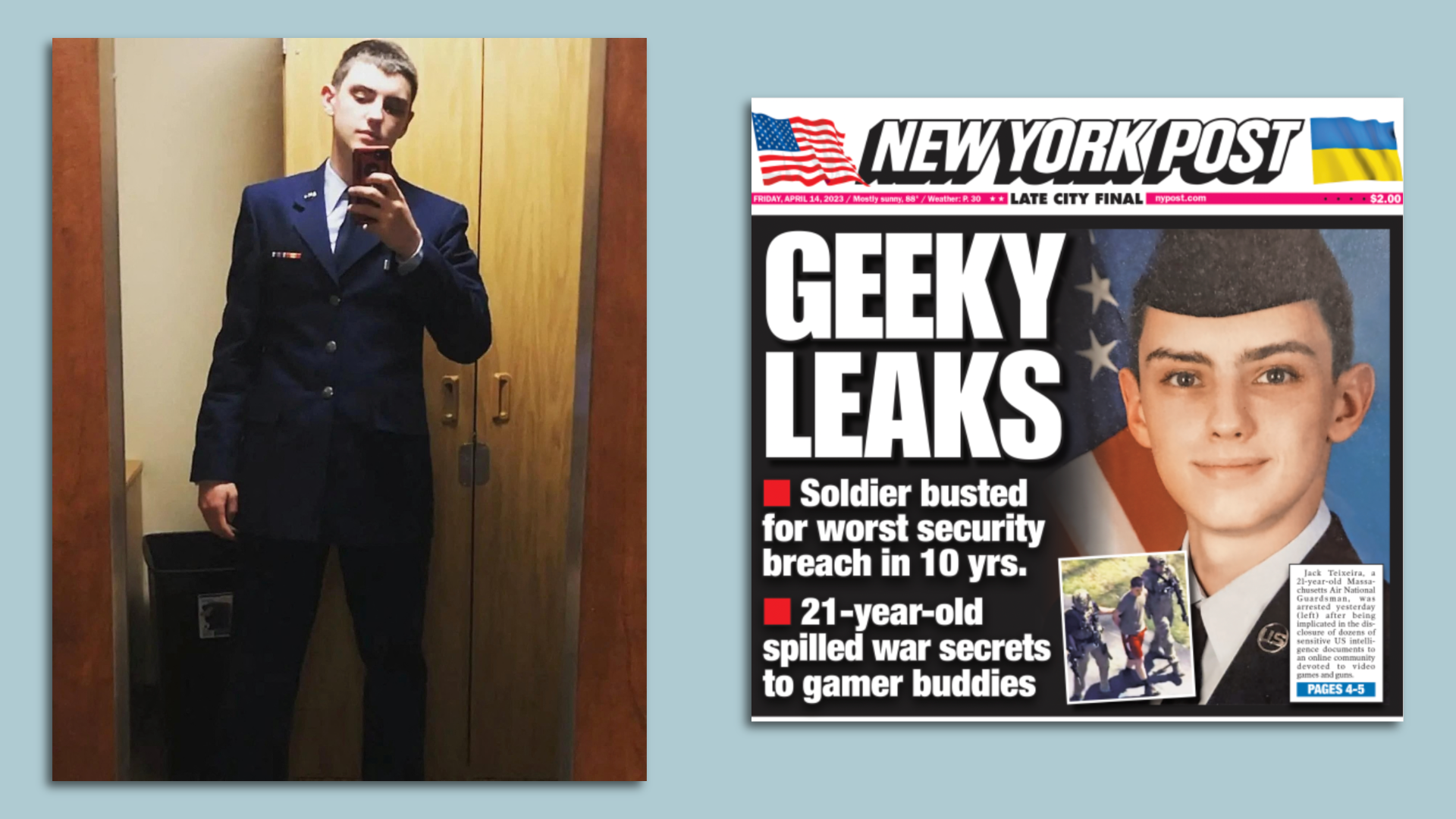
What we know about Jack Teixera, who is to appear in court in Boston today (via AP and Reuters):
- Teixera was detailed to an Air Force intelligence unit, according to Facebook posts from the 102nd Intelligence Wing, based at Otis Air National Guard Base in Massachusetts.
- Federal agents in an armored car and military gear swooped in on Teixeira — dressed in gym shorts and a T-shirt — at his home in Dighton, Mass., a wooded town about 45 miles south of Boston.
His specialty in the Air National Guard was "cyber transport systems specialist" — an IT specialist responsible for military communications networks, including cabling and hubs.
- A defense official said Teixeira would have had a high level of security clearance because he would have been responsible for accessing military communications networks — and ensuring their protection.
The bottom line: His role was pretty junior — making this international fiasco even more embarrassing. (Bloomberg)
2. 📊 Marriages get more "egalitarian" (except, um, housework)
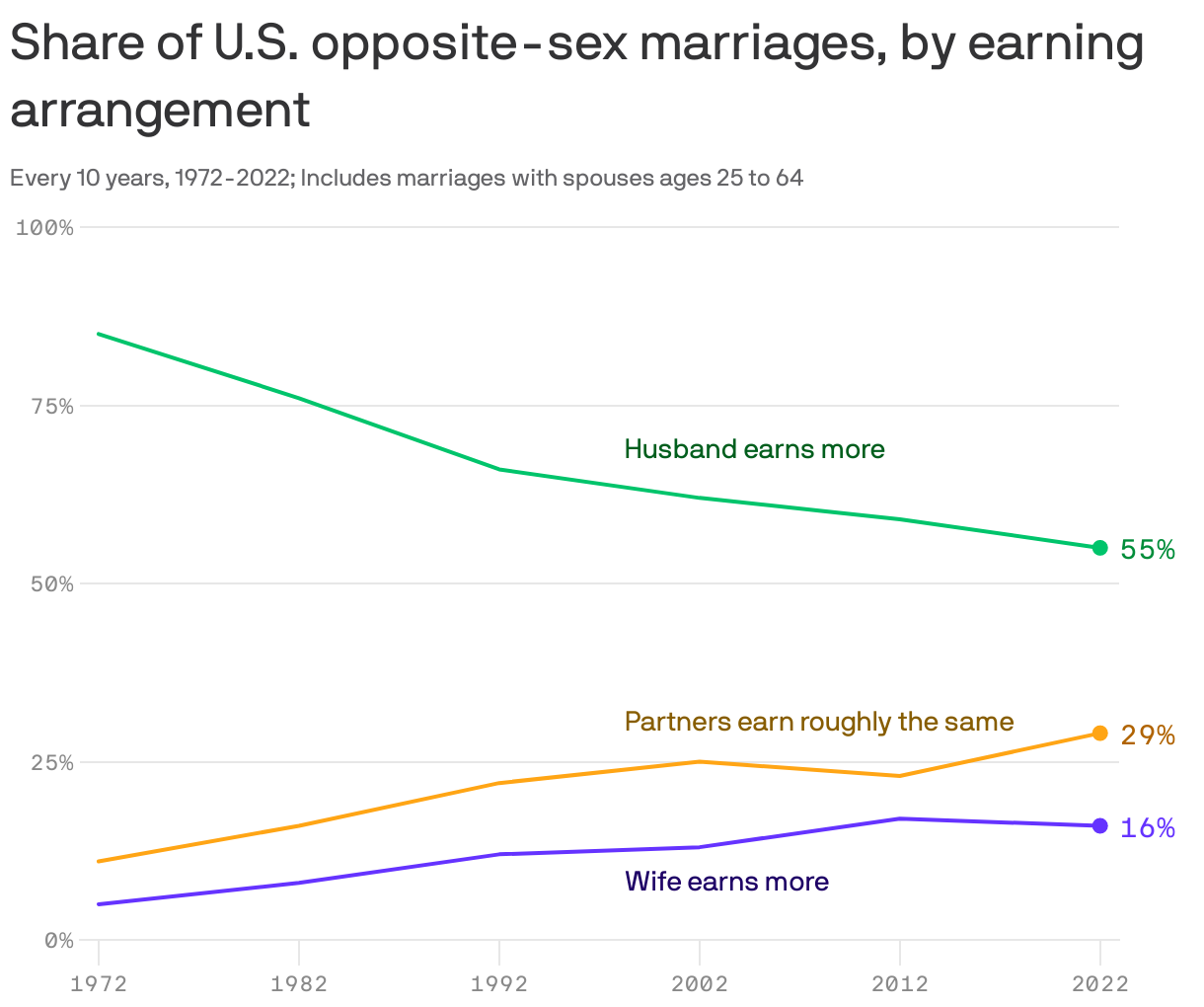
In a growing share of opposite-sex marriages, husbands and wives earn about the same income, Axios Markets co-author Emily Peck writes from a Pew Research Center analysis of government data.
- Why it matters: At first glance, this looks like the U.S. is inching closer to gender equality. But these marriages, which Pew calls "egalitarian," are still unbalanced when it comes to unpaid work — with wives spending more time on caregiving and housework.
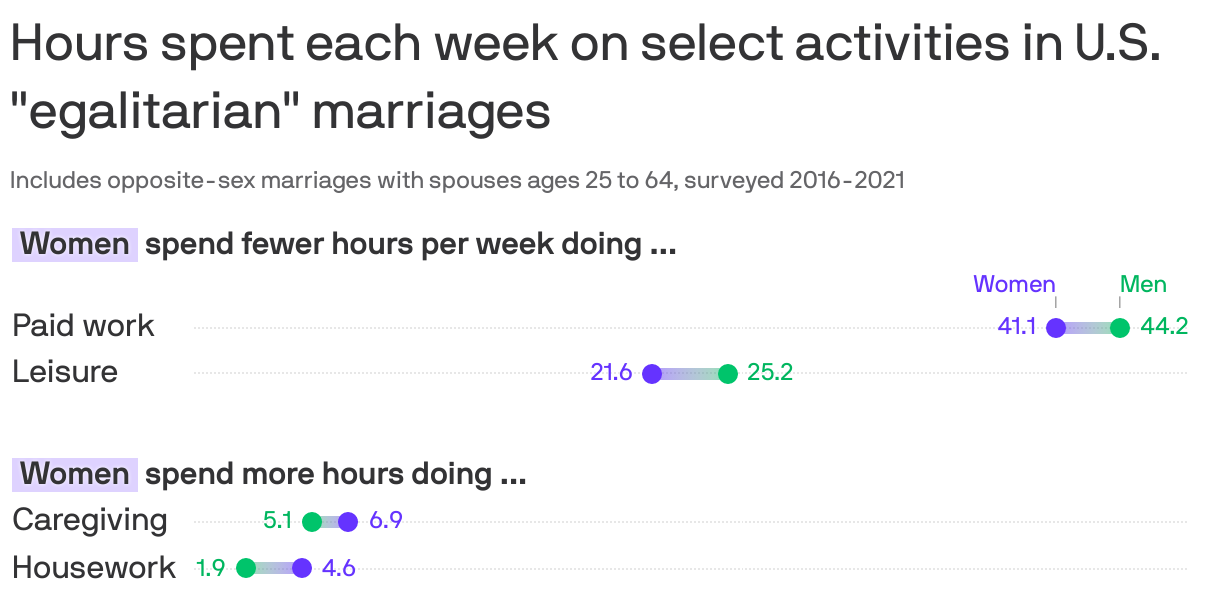
🧮 By the numbers: The Pew analysis finds that husbands spend an average of 3½ hours more than their spouses per week on leisure activities. Wives spend about 2 more hours on caregiving — and roughly 2.5 hours more on housework.
- Even in marriages where the wife is the primary breadwinner, earning 60% or more of the income, husbands spend less time on housework and caregiving.
It's only in marriages where the wife is the sole breadwinner — 6% of couples overall — that husbands spend more time doing care work than their wives, Pew finds.
3. 🏛️ DeSantis signs 6-week abortion ban
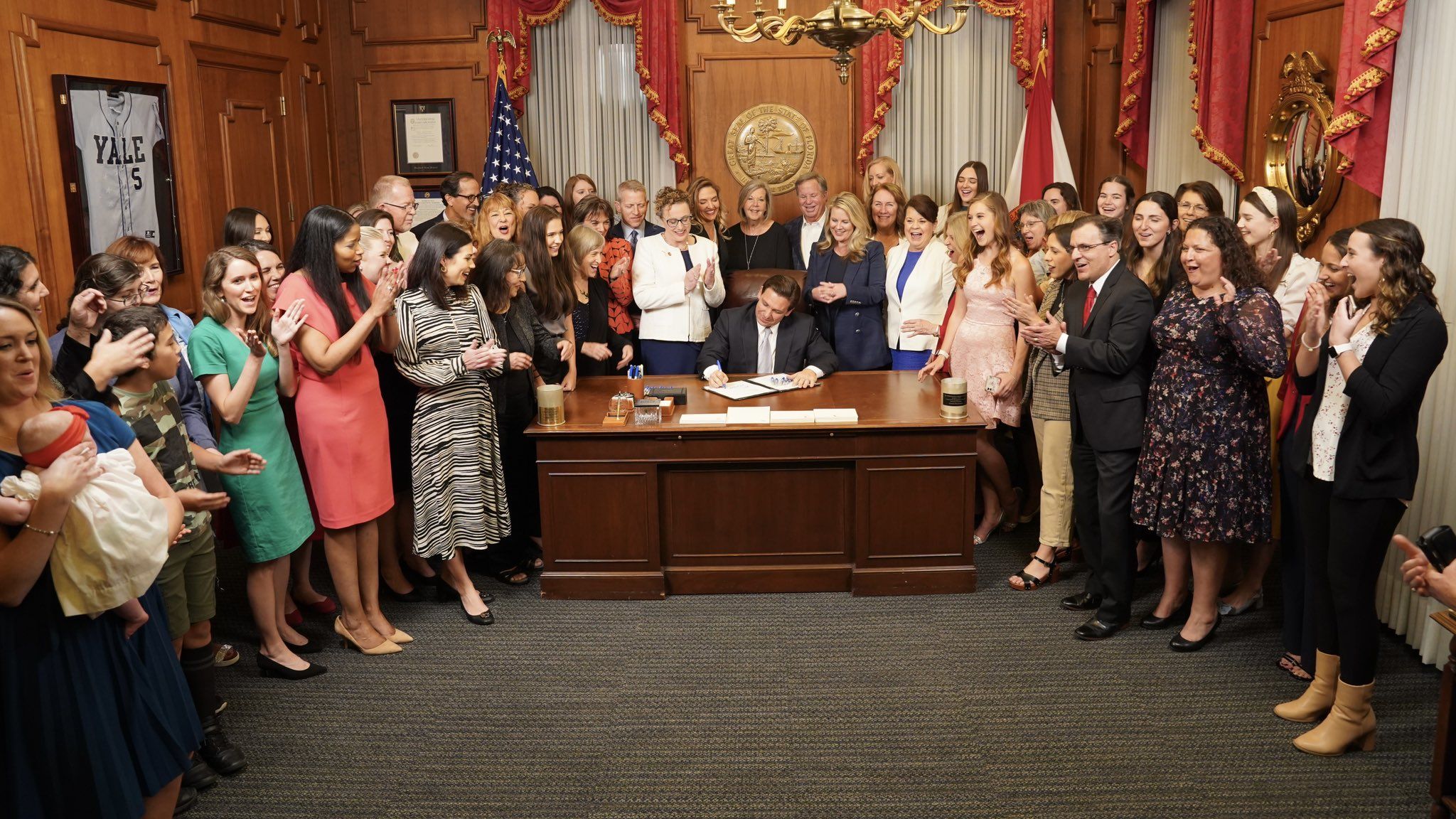
Florida Gov. Ron DeSantis (R) signed a six-week abortion ban into law last night, Axios' Oriana González reports.
- The ban will take effect only if the state's current 15-week ban is upheld in an ongoing legal challenge before the state Supreme Court.
Why it matters: Florida has been a refuge for people seeking abortions in the South. Nearby states — Alabama, Georgia, Louisiana and Mississippi — have bans that have forced abortion clinics to close.
🧮 By the numbers: Florida saw one of the largest increases in abortions in the six months after the Supreme Court rolled back Roe, according to a report Monday by the Society of Family Planning.
🔎 The intrigue: The new law, the Heartbeat Protection Act, would help DeSantis with GOP primary voters in a presidential race — but could hurt him with women swing voters in a general election.
4. 🐊 Florida's 1,000-year flood

Above: People lug valuables through flood waters in the Edgewood neighborhood of Fort Lauderdale, Fla., yesterday.
A historic 25.91 inches of rain fell in 24 hours in Fort Lauderdale from Wednesday morning to yesterday morning, Axios' Andrew Freedman writes from National Weather Service data.
- This likely qualifies as a 1-in-1,000-year downpour. (a 0.1% chance in any given year).
👀 If that preliminary reading is confirmed, it'll be a 24-hour rain record for Florida.
5. Amazon vows to democratize AI

Illustration: Annelise Capossela/Axios
6. Conservative group offers "Woke Alerts"

Illustration: Natalie Peeples/Axios
7. 🎥 Hollywood preps for writer strike

Illustration: Tiffany Herring/Axios
8. 🍽️ Tex-Mex overtakes Italian

Illustration: Shoshana Gordon/Axios
Axios AM
Catch up with the most important news of the day