Axios AM

February 14, 2023

1 big thing — Scoop: Nikki Haley makes it official
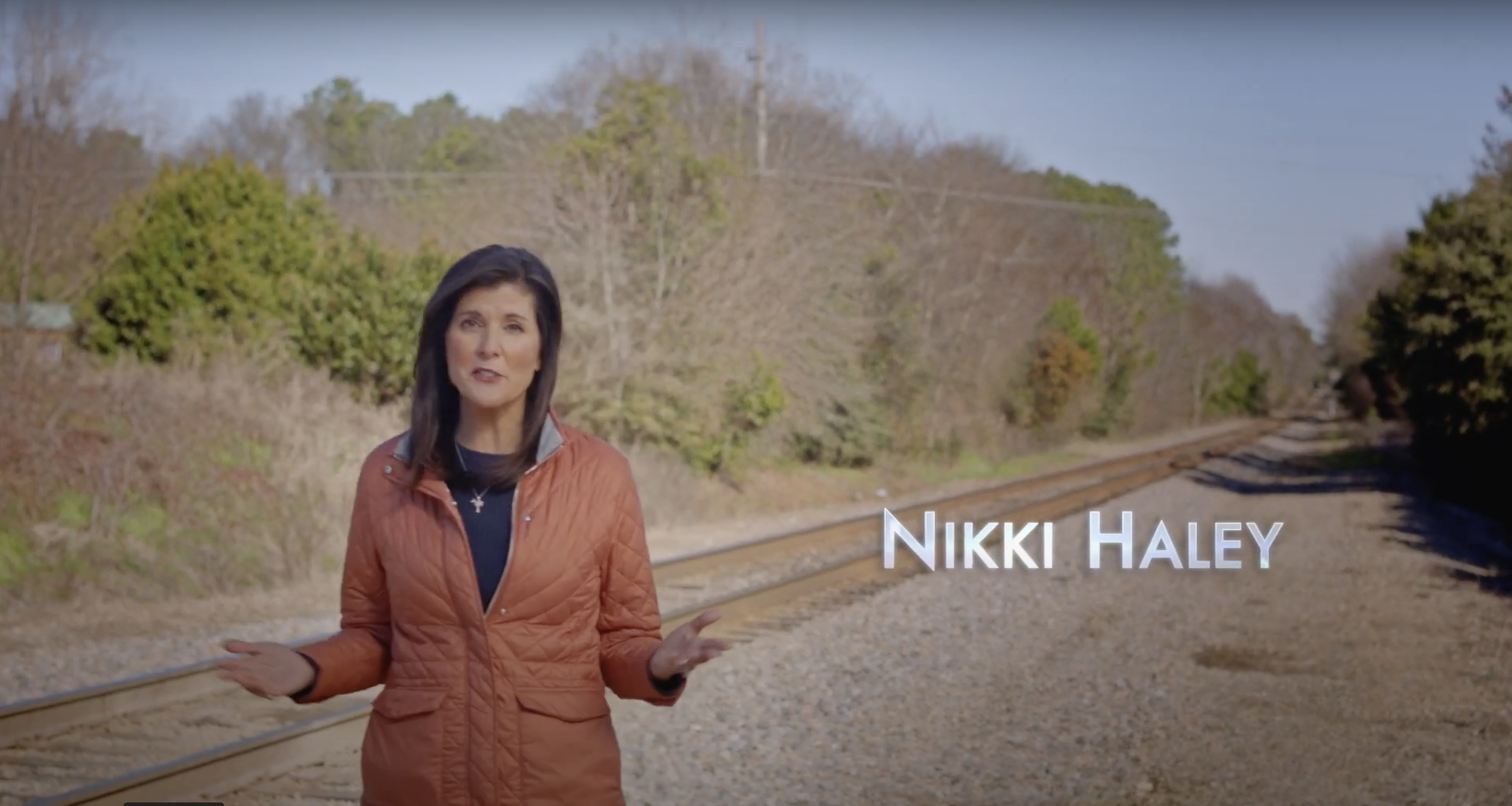
Nikki Haley — former South Carolina governor, and U.S. ambassador to the U.N. — will announce her presidential campaign tomorrow morning, becoming the first challenger to former President Trump in the Republican presidential primary, Axios' Josh Kraushaar has learned.
- Why it matters: Haley will get first crack at building early support in key states and raising money from Trump-skeptical donors. She likely will be the only woman in the Republican field.
Her campaign launch video, provided exclusively to Axios, offers an optimistic message about America's future, and argues for a new generation of leadership.
- "I was the proud daughter of Indian immigrants — not Black, not white. I was different," she says.
"My mom would always say your job is not to focus on the differences but the similarities. My parents reminded me and my siblings every day how blessed we were to live in America," Haley adds.
- "Some look at our past as evidence that America's founding principles are bad. They say the promise of freedom is just made up. Some think our ideas are not just wrong, but racist and evil. Nothing could be further from the truth."
The other side: Stuart Stevens, former GOP consultant, makes the case against Haley in a New York Times op-ed (subscription).
2. Teen girls' crisis

Illustration: Annelise Capossela/Axios
3. Mass shootings leave America feeling helpless
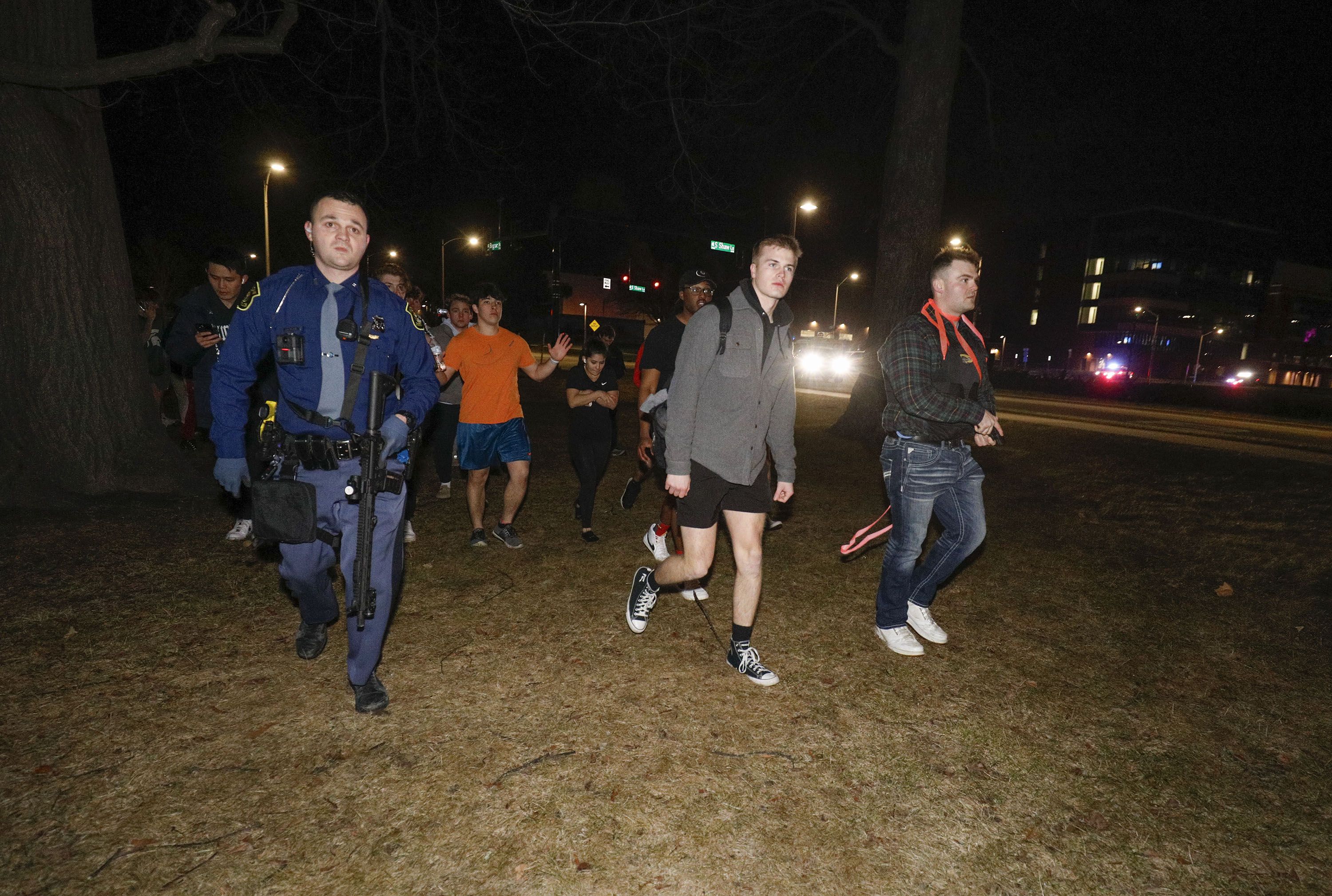
Last night, a shooting on Michigan State University's East Lansing campus left three people dead and five others in critical condition.
- The gunman fatally shot himself after hundreds of officers scoured the campus and terrified students hid in the dark.
It was a tragedy, but not a rarity: The U.S. this year has had at least 67 mass shootings — four or more people shot or killed, not including any shooter — according to the nonprofit Gun Violence Archive.
Why it matters: The school massacre in Parkland, Fla., was five years ago this afternoon. Since then, continuing mass shootings have reinforced a sense of helplessness and fear, Axois' Keldy Ortiz, Niala Boodhoo and Russell Contreras report.
🧮 By the numbers: Last year, the U.S. had 690 mass shootings, according to the Gun Violence Archive — a 153% jump from 2014.
- From 2014 to 2022, there was a 60% increase in the number of children younger than 11 who died from mass shootings.
🎧 What we're hearing: "Axios Today," our morning podcast, and Axios Latino, our twice-weekly newsletter, asked readers and listeners to tell us how their lives have changed amid the rise of mass shootings.
- In emails and emotional voicemails, they told us they look for exits at the grocery stores, just in case.
- "I tend to shop during less high-trafficked times. I avoid parades and large crowds," Jen Meehan tells Axios.
4. 🛣️ EV road trip brings "range anxiety"
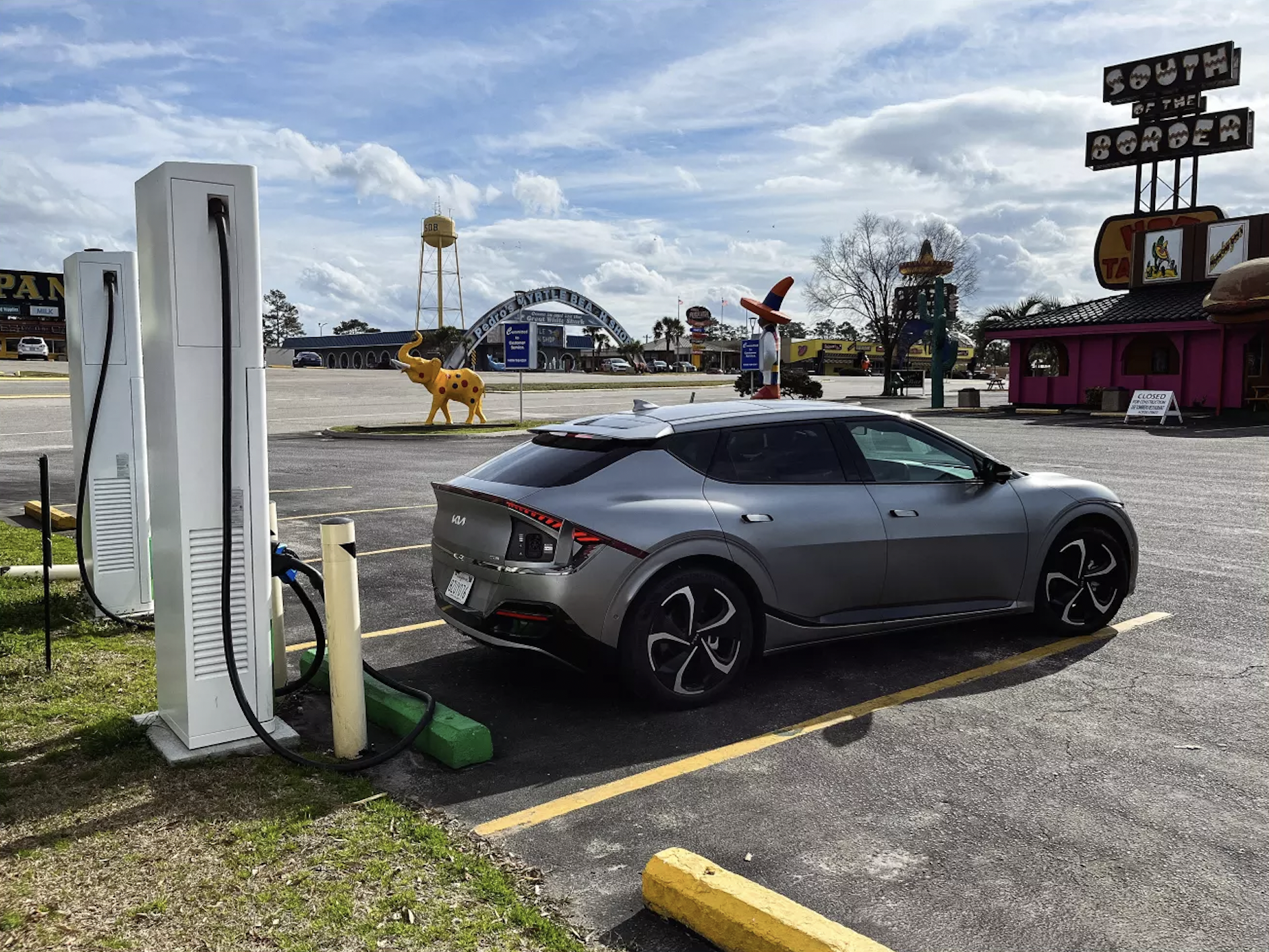
You can take a long road trip in an electric vehicle (EV) without getting stranded — but it takes a lot of planning, Axios transportation correspondent Joann Muller found.
- Joann and her husband, Bill, drove last week from her home in Michigan to Florida in a Kia EV6 — 1,500 miles — to see if America is ready for the era of electric transportation.
Why it matters: EVs account for about 5% of new car sales, and 1% of all cars on the road. For wider adoption, Americans will need to feel more comfortable about charging far from home.
What Joann found:
- An EV marathon means juggling route-planning apps and billing accounts with various charging companies.
- Be prepared for glitchy charging equipment touchscreens, billing questions and inoperable plugs.
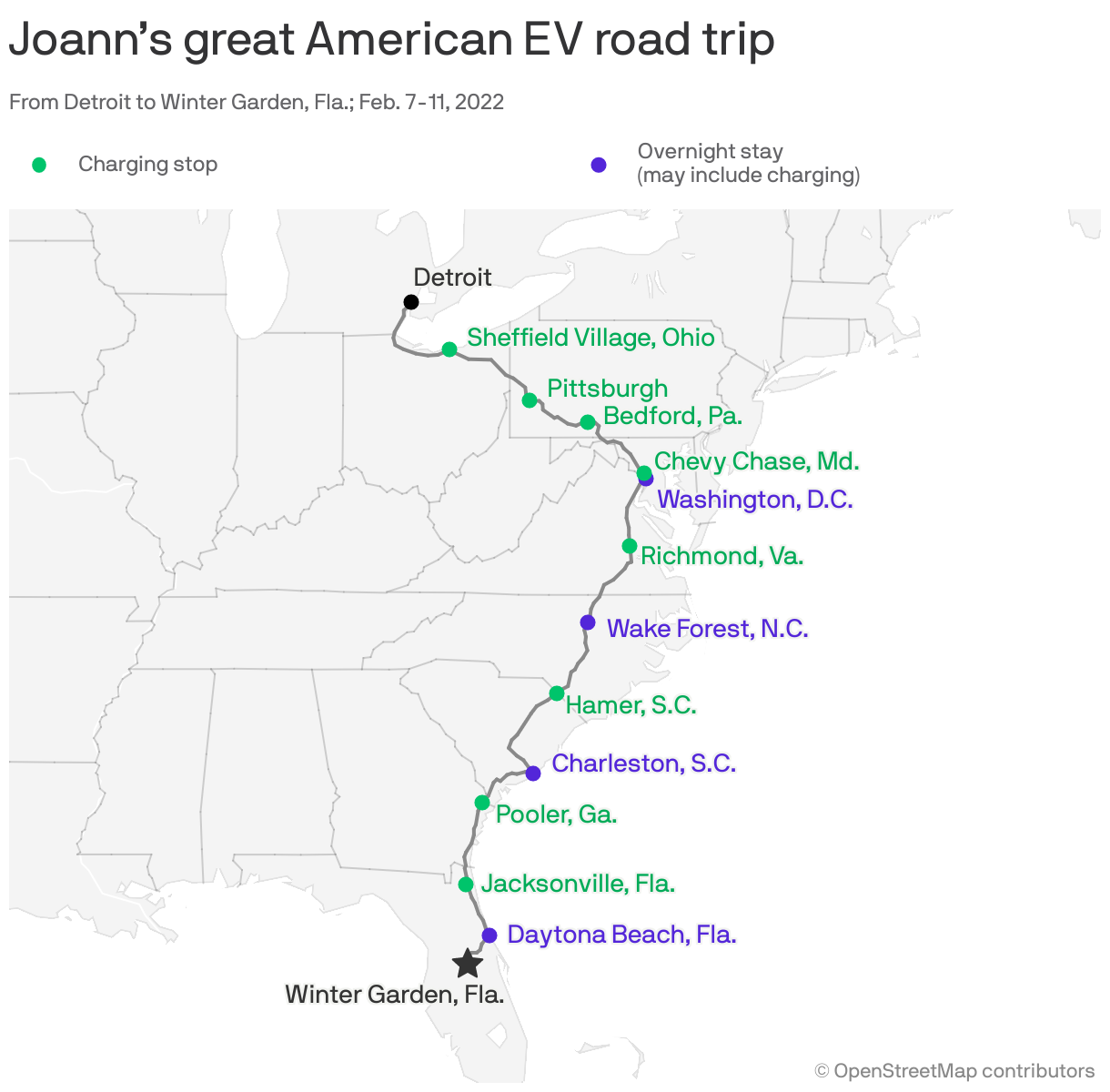
💬 Joann says: This was a leisurely trip, with stops to visit friends and do sightseeing. If we had cannonballed from Michigan to Florida, it would have taken 24 hours. We did it over four days.
- But we were constantly thinking about where to charge next. It occupied our minds more than where to eat or spend the night.
- We stopped 12 times to recharge over the 1,500-mile journey. Charging times varied between 20 minutes and 55 minutes, depending on the state of the car's battery and the speed of the chargers.
- Sometimes we were just topping off to make it to the next destination.
The bottom line: Gradually, they lost their range anxiety — even when the battery level fell below 10% and the dashboard flashed orange warnings.
5. 🔋 Ford plans $3.5 billion battery plant in Michigan
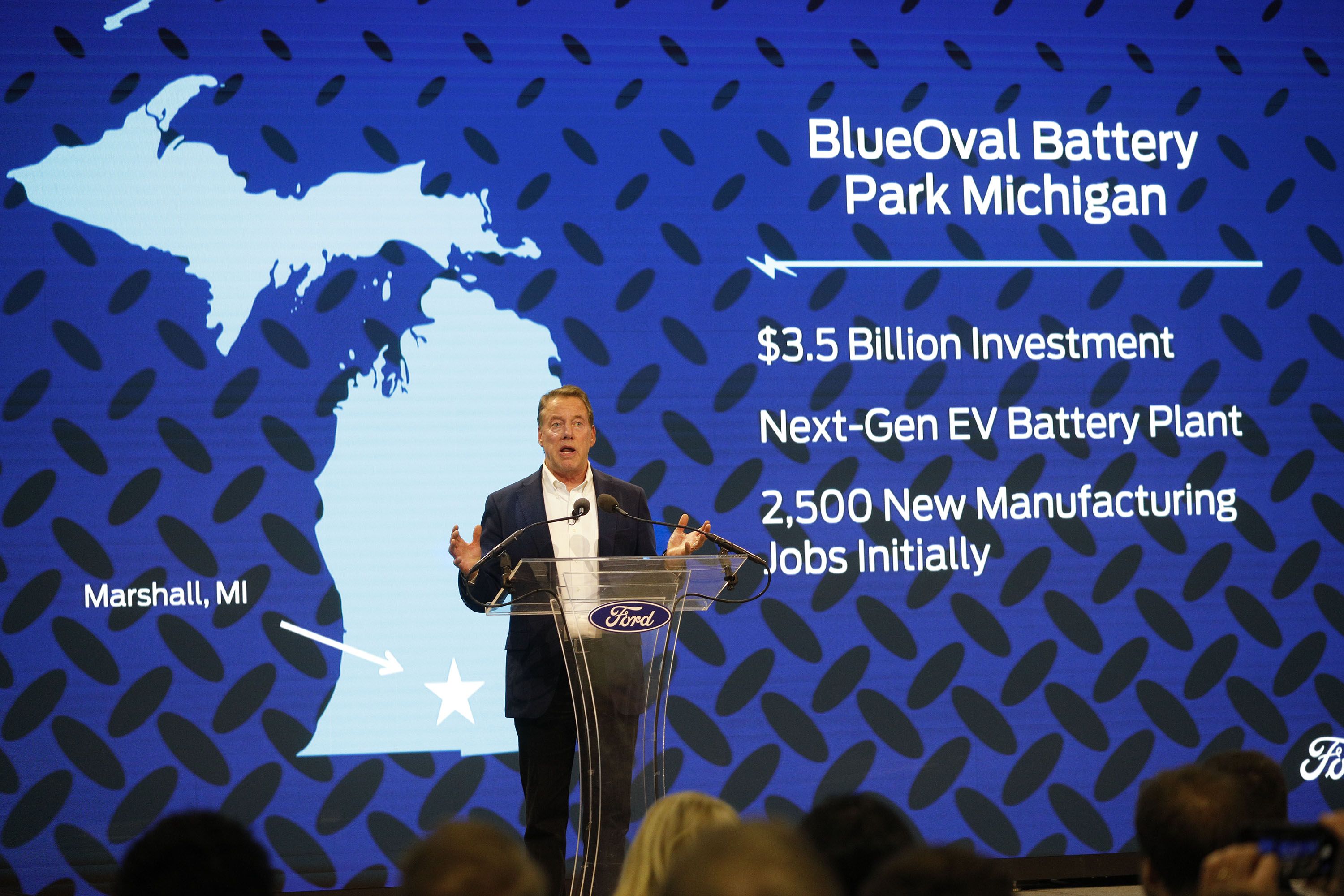
Ford announced plans to build a $3.5 billion factory in Michigan that will employ at least 2,500 people to make lower-cost electric-vehicle batteries.
- The plant, 100 miles west of Detroit, will start making batteries in 2026, AP reports.
The factory, near Marshall, would produce batteries with a lithium-iron-phosphate (LFP) chemistry, which is cheaper than the nickel-cobalt-manganese chemistry now used in many EV batteries.
- "The whole intent here is to make EVs more affordable and accessible," said Marin Gjaja, chief marketing officer for Ford EVs.
Ford says a wholly owned subsidiary will own the factory and employ the workers.
- China's Contemporary Amperex Technology Co. Limited (CATL), known for lithium-iron-phosphate expertise, will supply technology, some equipment and workers.
⚡ Breaking: Ford said today that it will cut 3,800 jobs in Europe over the next three years — 2,300 in Germany, 1,300 in the U.K. and 200 elsewhere on the continent. Go deeper.
6. Crypto crackdown

Illustration: Brendan Lynch/Axios
7. 🗳️ Every election is a change election
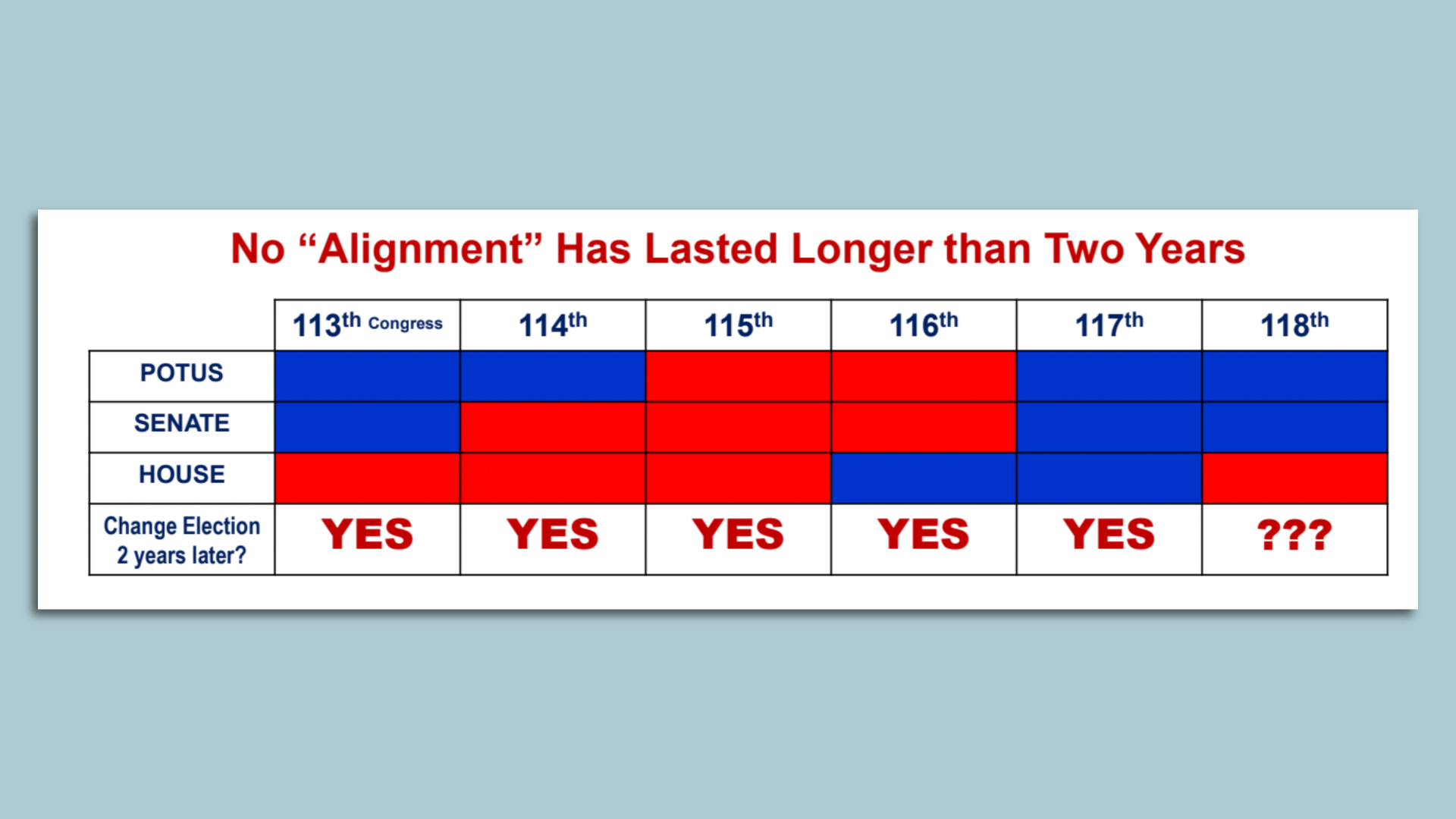
Graphic: Bruce Mehlman, Mehlman Consulting
8. ❤️ 1 heart thing: Candy shock

Photo: Consumer World. Used by permission
Axios AM

Catch up with the most important news of the day