Axios AM

April 02, 2026

1 big thing: Jamie Dimon's warning

JPMorgan Chase chairman and CEO Jamie Dimon tells Axios CEO Jim VandeHei the U.S. is facing the most concurrent risks in 80 years — and that's before AI starts displacing a large number of American workers.
- Dimon, in an interview for "The Axios Show," says American business leaders need to step up, and speak up, to help guide the country through these high-risk, tumultuous times.
"We in business made a mistake in not getting more involved earlier," Dimon told Jim at JPMorgan's new global headquarters in Manhattan. "I do not think the problems of society will be fixed by politicians alone."
- Dimon's annual shareholder letter, out next week, will dive deep into geopolitical threats. "There's more geopolitical risk than we've seen since World War II," he said.
🤖 A top threat: He told Axios that AI is likely to displace lots of workers in the medium term and increase the likelihood of a large-scale cyberattack. "AI makes cyber — and these [AI agents] make cyber — far worse," he said.
- Dimon was briefed on Anthropic's unreleased Mythos model, which the company fears may dramatically increase the ability of hackers or foreign adversaries to carry out potentially catastrophic attacks.
⚠️ Dimon's other risks, in no particular order: China, cyber, Iran war escalation, Russian aggression, rogue AI, private credit crisis, unsustainable U.S. debt, political dysfunction, economic uncertainty and nuclear weapons.
- When asked why so many CEOs seem "chickensh*t" when it comes to speaking honestly to employees and the public, Dimon downplayed fear of upsetting President Trump as the reason. But his own on-camera caution when critiquing the president captured the unease vividly.
Dimon remains optimistic about the country's ability to navigate myriad risks. But he didn't sugarcoat the ever-growing threats to business and safety:
- "We still have the most prosperous nation the world's ever seen [and] the best military. We're in a great position — and we have issues. … You can't fix problems when you don't acknowledge them."
🗳️ What's next: Dimon said an independent candidate might be needed to fix things. But, at 70, he's not running — for anything, under any party: "I do get asked, but I'm not sure I'm suited to it."
- "We're so tough on our politicians," he said. "We just annihilate them, and I just think it's wrong."
2. 📺 Trump: U.S. to bomb Iran "back to Stone Ages" over next 2–3 weeks
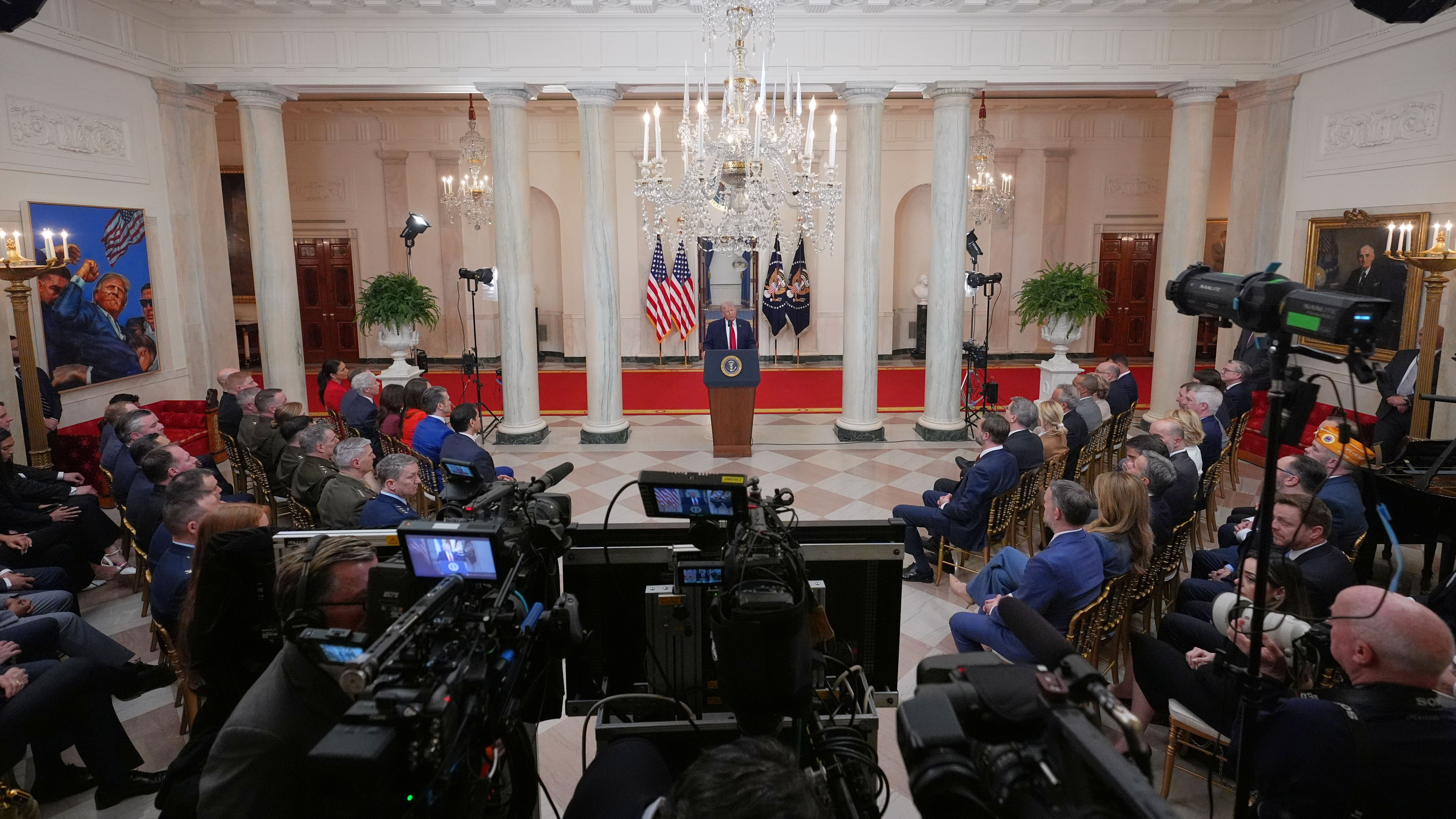
President Trump said in a prime-time address that the U.S. is "nearing completion" of "core strategic objectives" in Iran, but added: "We are going to hit them extremely hard over the next two to three weeks. We're going to bring them back to the Stone Ages, where they belong."
- If a deal to end the war can't be reached, he said, "we are going to hit each and every one of their electric generating plants very hard and probably simultaneously" — and perhaps the oil fields.
- That would have devastating consequences for Tehran's civilian population and the future of the country, while likely inciting retaliation against America's allies in the region.
Between the lines: Trump's threat to wreck Iran's power infrastructure betrayed his frustration, expressed to others privately, that Iran's leaders don't believe they're losing the war and therefore don't feel motivated to strike a deal favorable to the president's point of view, Axios' Dave Lawler and Marc Caputo write.
- "The Iranian military leadership has lost so much. But they're not feeling the pain, and there's a discussion about testing their pain tolerance," said one confidant who spoke with Trump last week about the war.
- The massive bombing campaign to come was an indication of the Trump administration's plan to strike a "final blow" to close out the bombing campaign that began Feb. 28.
🔎 Between the lines: Trump appeared to back away from plans to dispatch special operations forces to seize highly enriched uranium at Iran's nuclear sites that the U.S. had bombed last year and also attacked in this war.
- "The nuclear sites that we obliterated with the B-2 bombers have been hit so hard that it would take months to get near the nuclear dust, and we have it under intense satellite surveillance and control," Trump said. "If we see them make a move — even a move for it — we'll hit them with missiles very hard again."
- Called "mowing the grass," that pledge to return for future bombing raids has increasingly been discussed by Trump's advisers.
Behind the scenes: Trump's administration has told Tehran, through mediators, that the U.S. is interested in a ceasefire in exchange for the reopening of the Strait of Hormuz.
- But the speech publicly laid out a darker scenario for Iran and the global economy: The U.S. could leave the key strait closed and bomb Iran's civilian infrastructure before concluding the war.
State of play: Trump didn't announce any new policy to end the war, focusing his prime-time address on trying to convince a skeptical public that it was necessary and has been successful.
- Trump argued that previous presidents should have handled the threat from Iran, but that he was the one who finally took it on.
3. 🚀 Humanity heads back to Moon

NASA's Artemis II Moon mission successfully launched from Florida's John F. Kennedy Space Center at 6:35 p.m. ET, Axios' Alex Fitzpatrick reports.
Why it matters: Artemis II's planned crewed lunar flyby is set to mark the closest humanity has come to the Moon since the Apollo days.
- It's also a key step toward NASA's grand ambition to return human boots to lunar soil and the Trump administration's dreams of a permanent Moon base.
📸 Keep an eye on astronaut Christina Koch's Instagram during the 10-day mission around the Moon and back.

Above: Astronauts Jeremy Hansen, Victor Glover, commander Reid Wiseman and Christina Koch head to the launchpad. Quick bios.
- Five minutes into the flight, Commander Reid Wiseman said from the capsule: "We have a beautiful moonrise. We're headed right at it."
4. Exclusive: Trump spurns record requirement
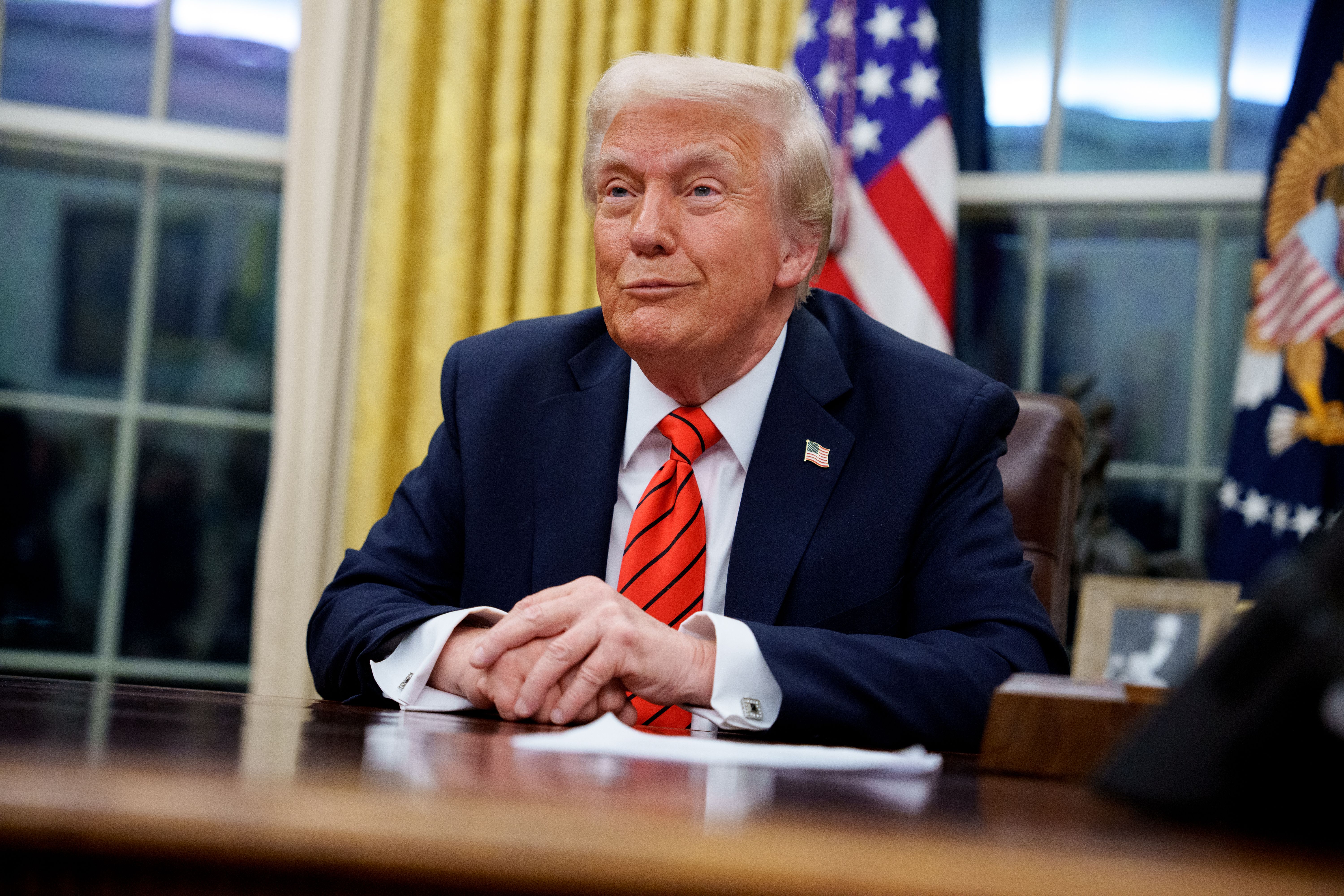
President Trump's Justice Department has concluded that a federal law requiring presidential records to be turned over to the government is unconstitutional, a senior White House official tells Axios' Alex Isenstadt.
Why it matters: It's an indication Trump will be reluctant to give all of his official records to the National Archives at the end of his term, as presidents have done for nearly half a century under the Presidential Records Act of 1978.
- The law, passed in the post-Watergate era as a hedge against government corruption, states that every official record regarding a president's decisions or policies belongs to the U.S. government, not the president.
The White House hasn't been destroying documents, the official said.
- Trump has instructed White House employees to preserve their records for "historical value, the administrative record of policy decisions and actions, litigation needs, and to explain past actions and guide future ones."
Trump has had several run-ins with the Presidential Records Act. During his first term, he tore up some documents that had to be taped together by staff.
- The 37-count indictment Trump faced for allegedly mishandling classified documents included images of boxes of records that were stored in a bathroom at his Mar-a-Lago estate.
What's next: Any move by Trump to retain classified documents when he leaves office in 2029 is likely to draw legal challenges, particularly if Democrats control either the House or Senate.
5. Liberation Day's legacy
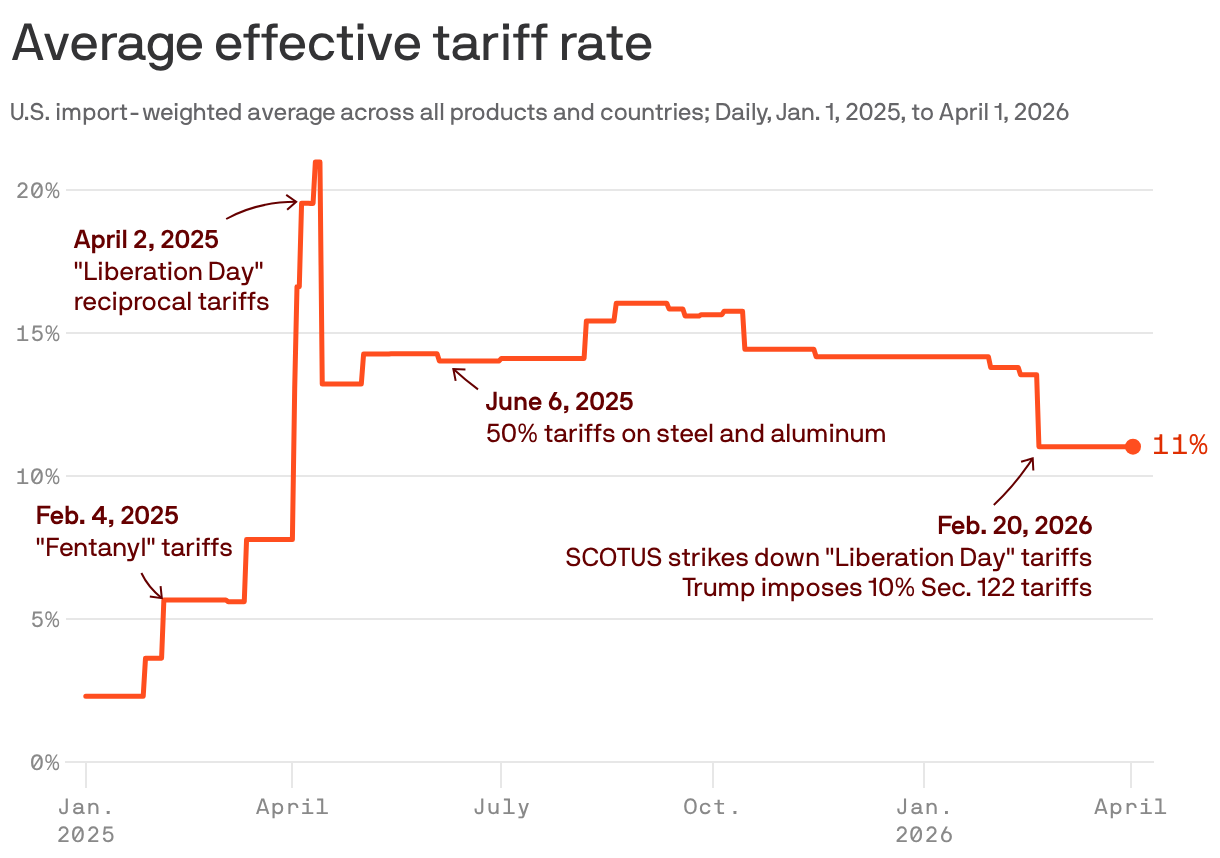
One year after "Liberation Day," the global economy is still reckoning with the fallout of a trade policy that has since been diluted.
Why it matters: President Trump's tariff wall has been torn down by the Supreme Court, watered down by exemptions and scaled back under trade agreements, Axios' Courtenay Brown reports.
- Even so, the past year of policy changes turned the global trading system upside down in ways that appear irreversible.
The intrigue: The Trump administration has enacted more than 50 different trade policy changes, a historic whipsaw illustrated by a new daily tariff tracker launched by the Budget Lab at Yale.
- White House spokesperson Kush Desai said in a statement that Trump has "powerfully used tariffs to lower our goods trade deficit, renegotiate trade deals, secure trillions in manufacturing investments and lower drug prices."
6. Major danger: AI's college shift


Nearly half of college students say they've thought at least a fair amount about changing their major or studies because of AI, Axios' Avery Lotz reports via new polling from the Lumina Foundation and Gallup.
🧮 By the numbers: Among currently enrolled college students, 14% have thought "a great deal" and 33% have thought "a fair amount" about changing their major or field of study because of the effect AI may have on the job market or on specific industries.
- 16% of students have changed their major because of the impact AI might have, a trend that is higher among men (21%) than women (12%) and in vocational (26%) and tech (25%) majors.
🤯 Threat level: Despite students bracing for post-grad impact, 42% say students at their college are discouraged from using AI in coursework, other than in a few circumstances.
7. 🏛️ Dem pushes Anthropic on leaks
8. 😳 1 for the road: Airports fear morning rush
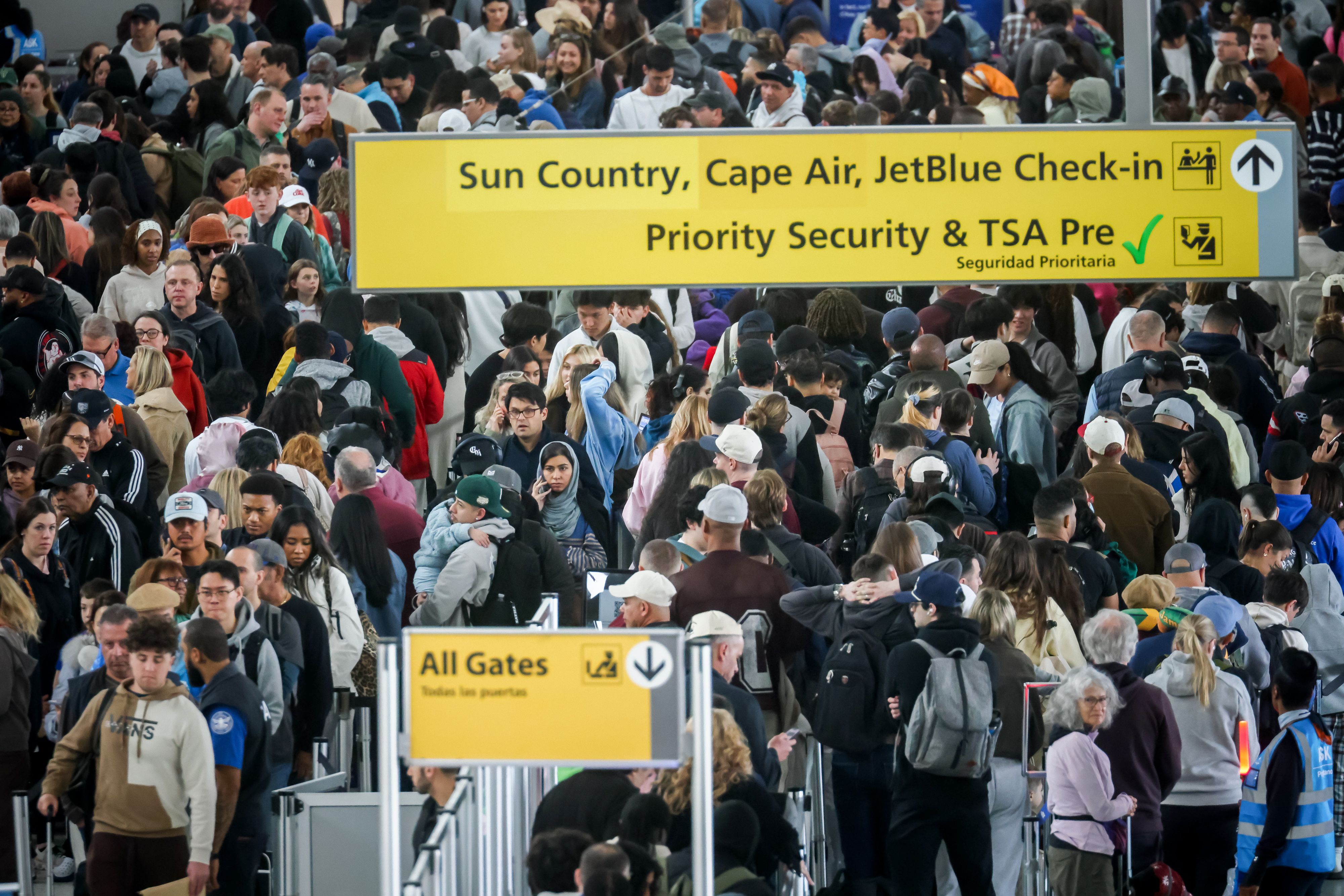
Some airports across America are warning travelers that arriving too early for their flights is contributing to those eye-popping lines at TSA checkpoints, The Washington Post reports.
- Austin and Columbus airports are both explicitly telling travelers to avoid showing up early, especially ahead of morning flights.
- The Columbus airport said 90 minutes before departure is the "sweet spot": "Showing up too early creates those first-wave lines."
🚙 Scott Keyes, founder of the cheap-flight alert service Going, told The Post: "It's almost like rush-hour traffic."
- Keep reading (gift link).
Axios AM