Trump imposes 25% tariff on some semiconductors, including Nvidia chips


Add Axios as your preferred source to
see more of our stories on Google.
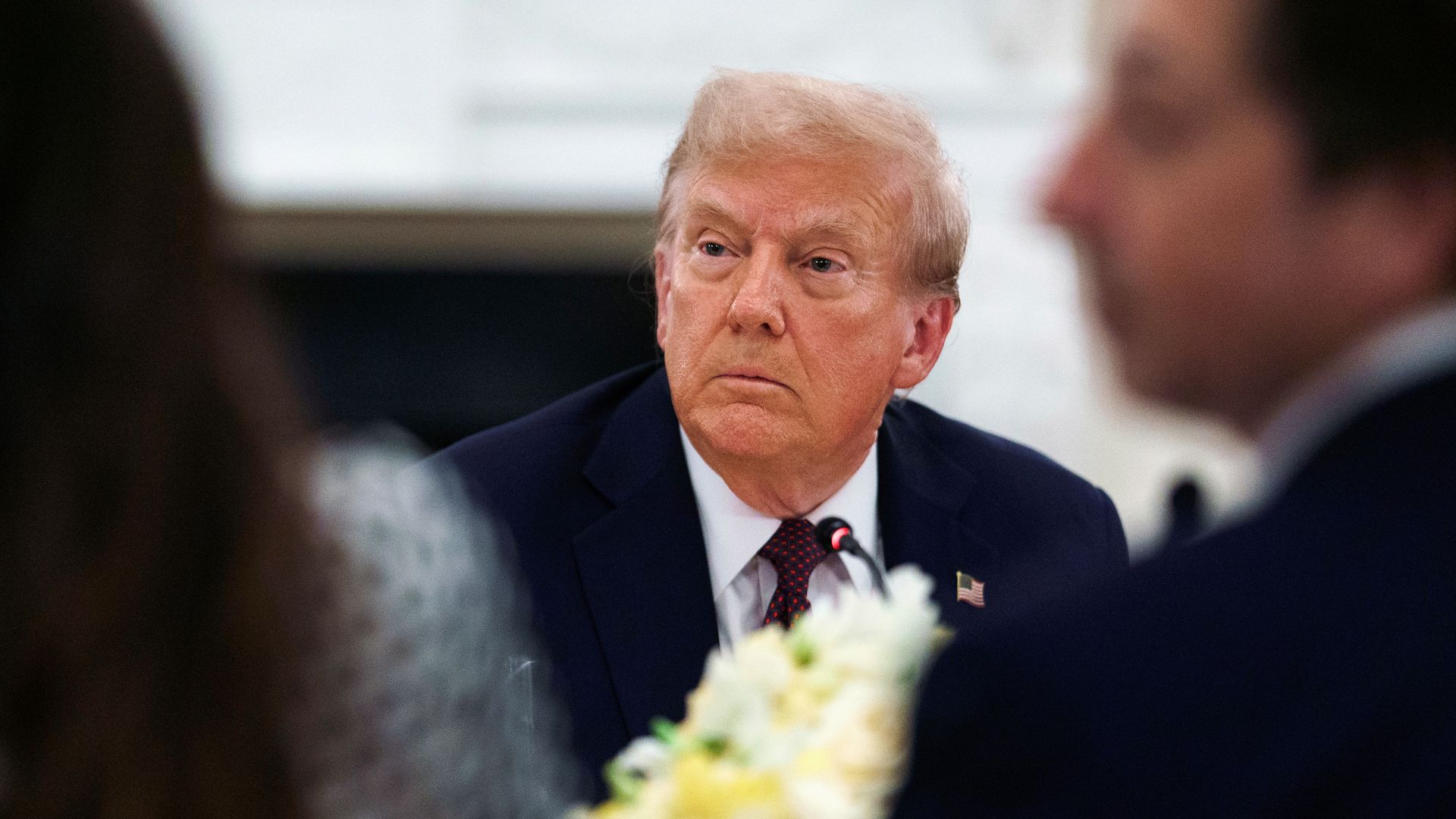
President Trump during a dinner with tech leaders at the White House last year. Photo: Will Oliver/EPA/Bloomberg via Getty Images
President Trump said on Wednesday that he would impose a 25% tariff on select semiconductors, including the Nvidia chips it plans to sell in China.
Why it matters: The tariffs are part of a broader deal, one in which the U.S. government will reap revenues from allowing Nvidia to sell AI processors in China.
- Trump stopped short of imposing tariffs on most other foreign chips, though a White House fact sheet warned that the administration might decide to do so at a later date.
What's inside: Trump "imposed a 25% tariff on certain advanced computing chips, such as the NVIDIA H200 and AMD MI325X," according to a fact sheet released on Wednesday, citing threats to national security.
- The fact sheet notes that the tariff would not apply to chips that are imported to "support the buildout of the U.S. technology supply chain and the strengthening of domestic manufacturing capacity for derivatives of semiconductors."
- In practice, it means that Nvidia will have to pay a 25% tariff on the H200 AI processors — produced in Taiwan — before the company sells them in China.
What they're saying: Nvidia applauded the administration's decision to allow Department of Commerce-vetted H200 chips to go to approved commercial customers in China.
- "The Administration's critics are unintentionally promoting the interests of foreign competitors on U.S. entity lists—America should always want its industry to compete for vetted and approved commercial business, supporting real jobs for real Americans," an Nvidia spokesperson said in an email.
The big picture: This is the next key step in Trump's decision to open up the Chinese market for Nvidia.
- The Commerce Department's Bureau of Industry and Security on Tuesday revised its policy for licensing chip sales to China.
- License applications for the Nvidia H200, the AMD MI325X and similar chips will be reviewed on a case-by-case basis provided certain security requirements are met, BIS said.
- To qualify, companies have to show that exporting to China won't impact U.S. customer demand and that Chinese purchasers have gone through screenings.
Tension point: Republicans on the Hill are looking to rein in Trump on chip sales to China, even as they avoid public criticism.
- During a congressional hearing on Wednesday, Trump's former Asia advisor, Matt Pottinger, said that the administration was on the "wrong track" on its decision to allow chip sales to China, which he added would hurt the U.S. in the AI race.
What to watch: Late last year, Trump warned he would slap "fairly substantial" tariffs on semiconductors, threatening levies as high as 100% at one point for companies that had not shifted production to the U.S.
- But the action announced on Wednesday is largely a condition that allows Nvidia to send its chips to China, sales that had previously been banned.
- The White House said in a fact sheet that Trump might impose broader tariffs on semiconductors "in the near future."
- The tariffs will be imposed under Section 232, a different law than one currently being challenged before the Supreme Court.
