Exclusive: Trump's DOJ says he's not required to turn over official records

Add Axios as your preferred source to
see more of our stories on Google.
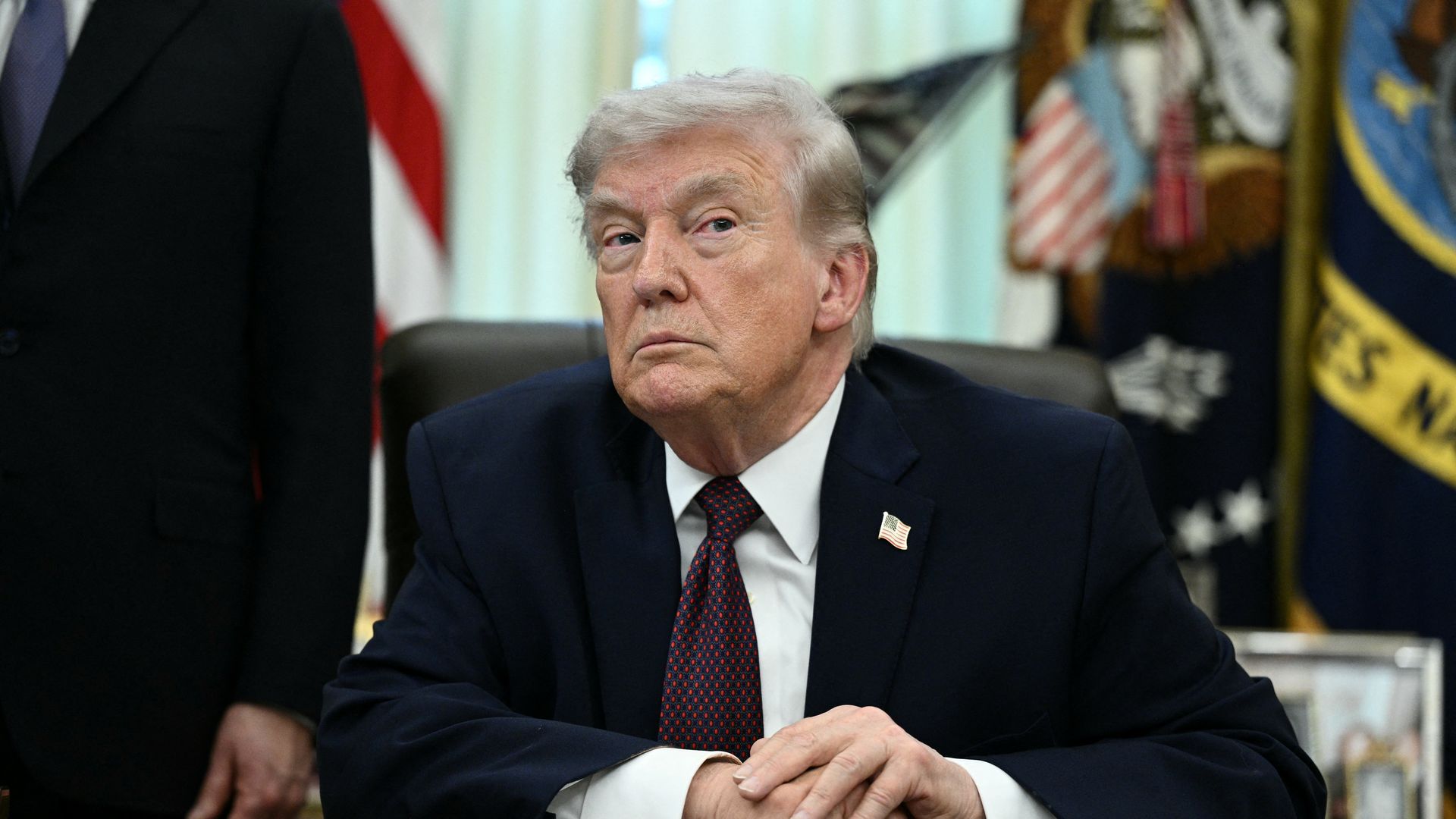
President Trump takes a question from a reporter in the Oval Office on Tuesday. Photo: Brendan Smialowski /AFP via Getty Images
President Trump's Justice Department has concluded that a federal law requiring presidential records to be turned over to the government is unconstitutional, a senior White House official tells Axios.
Why it matters: The finding is an indication Trump will be reluctant to give all of his official records to the National Archives at the end of his term, as presidents have done for nearly a half-century under the Presidential Records Act of 1978.
- The law, passed in the post-Watergate era as a hedge against government corruption, states that every official record regarding a president's decisions or policies belongs to the U.S. government, not the president.
Trump has shown that he disagrees with the law.
- When he left office in 2021 after his first term, he kept many official documents — including some classified materials.
- He was indicted by President Biden's Justice Department for doing so and allegedly trying to hide them from federal investigators. The case was dropped after Trump was re-elected in 2024.
What they're saying: The Trump Justice Department's legal counsel concluded that the Presidential Records Act is "exceeds Congress' powers ... at the expense of the constitutional independence and autonomy of the executive branch," according to the White House official.
- "Congress does not have the power to compel an entire branch of government to create and save every single possible piece of paper," the official added.
The White House has not been destroying documents, the official said.
- Trump has instructed White House employees to preserve their records for "historical value, the administrative record of policy decisions and actions, litigation needs, and to explain past actions and guide future ones," the official said.
- Employees' emails and electronic documents are not being deleted.
- "Congress has always been able to obtain information from the executive branch via the give and take of the negotiation process," the White House official says. "President Trump will continue to do just that."
The background: When a president leaves office, the Presidential Records Act requires the White House to send all official records to the National Archives and Records Administration (NARA).
- NARA makes the records available to the public several years after an administration.
Flashback: Trump has had several run-ins with the Presidential Records Act.
- During his first term, he tore up some documents that had to be taped together by his staff.
- The 37-count indictment Trump faced for allegedly mishandling classified documents included images of boxes of records that were stored in a bathroom at his Mar-a-Lago estate.
What's next: Any move by Trump to retain classified documents when he leaves office in 2029 is likely to draw legal challenges, particularly if Democrats control either the House or Senate then.
- The White House is weighing next steps and plans to discuss with NARA how to proceed moving forward, the official said.
- It's unclear whether the administration will try to get Congress to overturn or change the Presidential Records Act, or will challenge it in court.
Go deeper: Final report from Trump's classified documents case blocked by judge
