Ring of Fire shocks raise West Coast fears

Add Axios as your preferred source to
see more of our stories on Google.
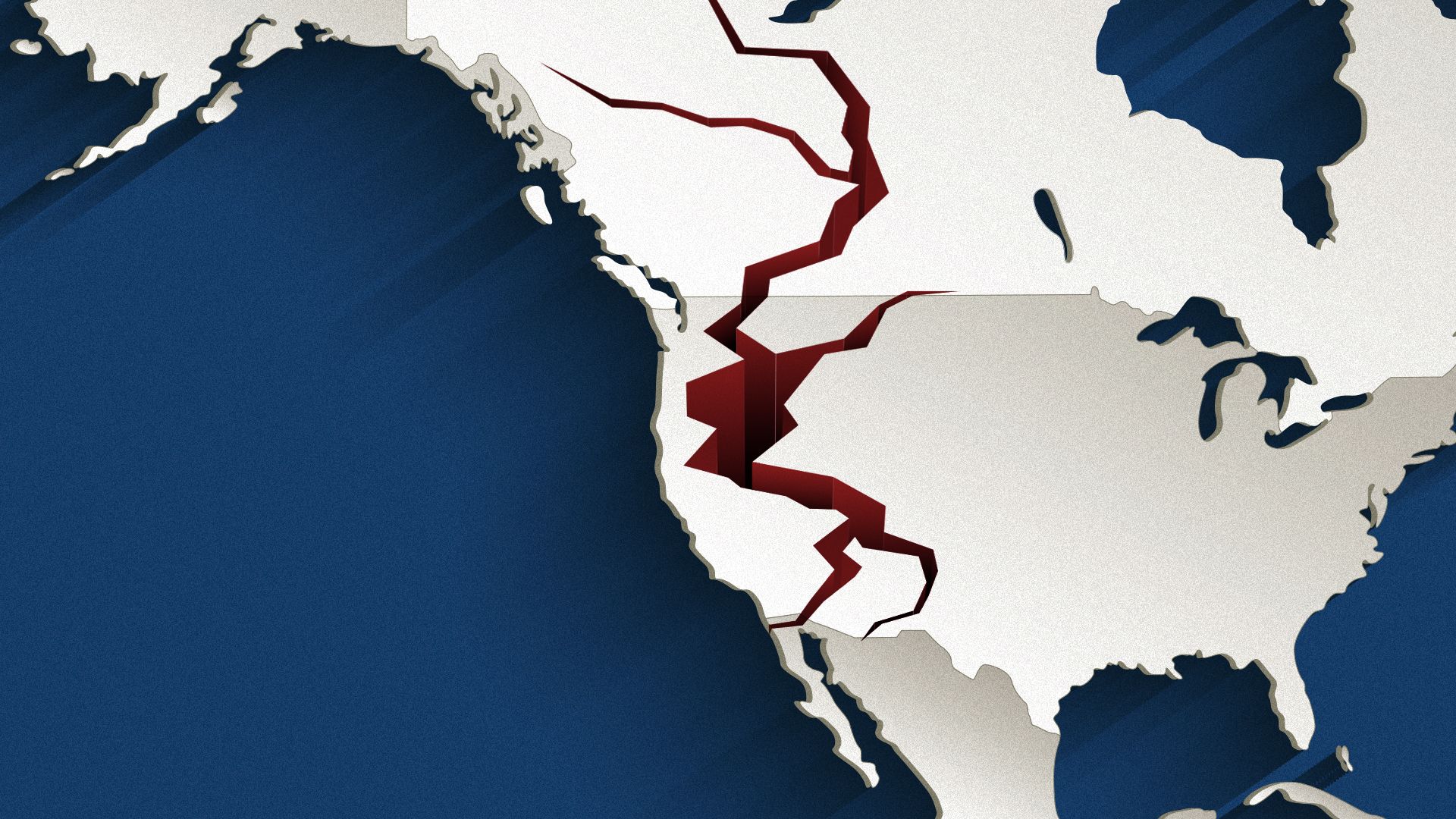
Illustration: Lindsey Bailey/Axios
A recent string of powerful earthquakes and volcanic eruptions in Russia and Alaska serve as stark reminders that the U.S. West Coast — from Seattle to San Diego — lies along one of Earth's most volatile tectonic boundaries.
Why it matters: The same immense geological forces driving quakes, tsunamis and volcanoes far across the Pacific Ocean mirror those at work beneath Washington, Oregon and California, Harold Tobin, director of the Pacific Northwest Seismic Network, tells Axios.
- "What happened in Russia is a reminder of the similar forces at play in our backyard," says Tobin. "Except we have more people and infrastructure in harm's way."
Catch up quick: A magnitude 8.8 earthquake, one of the strongest ever recorded, struck July 30 beneath the Kamchatka Peninsula in Russia, triggering tsunami warnings from Japan to Chile to the U.S.
- Hours later, the nearby Klyuchevskoy volcano erupted, followed on Sunday by the Krasheninnikov volcano, which blew for the first time in centuries, just 150 miles from the epicenter of the Kamchatka quake.
- Earlier, a 7.3 quake was recorded July 16 on the Aleutian Islands in Alaska.
- Meanwhile, a record-breaking swarm of quakes at Mount Rainier is ongoing, according to the Pacific Northwest Seismic Network.
What's happening: The "Ring of Fire" — home to 75% of Earth's active volcanoes and 90% of its earthquakes — is a belt of tectonic pressure around the Pacific Ocean driven by movement of the Pacific Plate as it collides with neighboring plates.
- In the Pacific Northwest, the great ocean plate is pushing the relatively small Juan de Fuca plate under the North American plate, creating the Cascadia subduction zone, per Tobin.
- As the smaller plate slides beneath the larger, it heats up and melts deep underground, building mountains and fueling active volcanoes, including Mount Rainier, Mount St. Helens and Mount Hood.
- Historically, a destructive earthquake has occurred roughly every 550 years along the subduction zone that runs from Northern California to British Columbia.
- The last one was in 1700 — 325 years ago — which means a repeat event could happen any time, Tobin says.
What's next: Scientists are monitoring how the Kamchatka quake may influence seismic stress across the Pacific Rim, and experts are reminding West Coast communities to sharpen quake and tsunami readiness.
What to do: At the very least, start getting your go bag together.