Climate anxiety runs high in King County


Add Axios as your preferred source to
see more of our stories on Google.
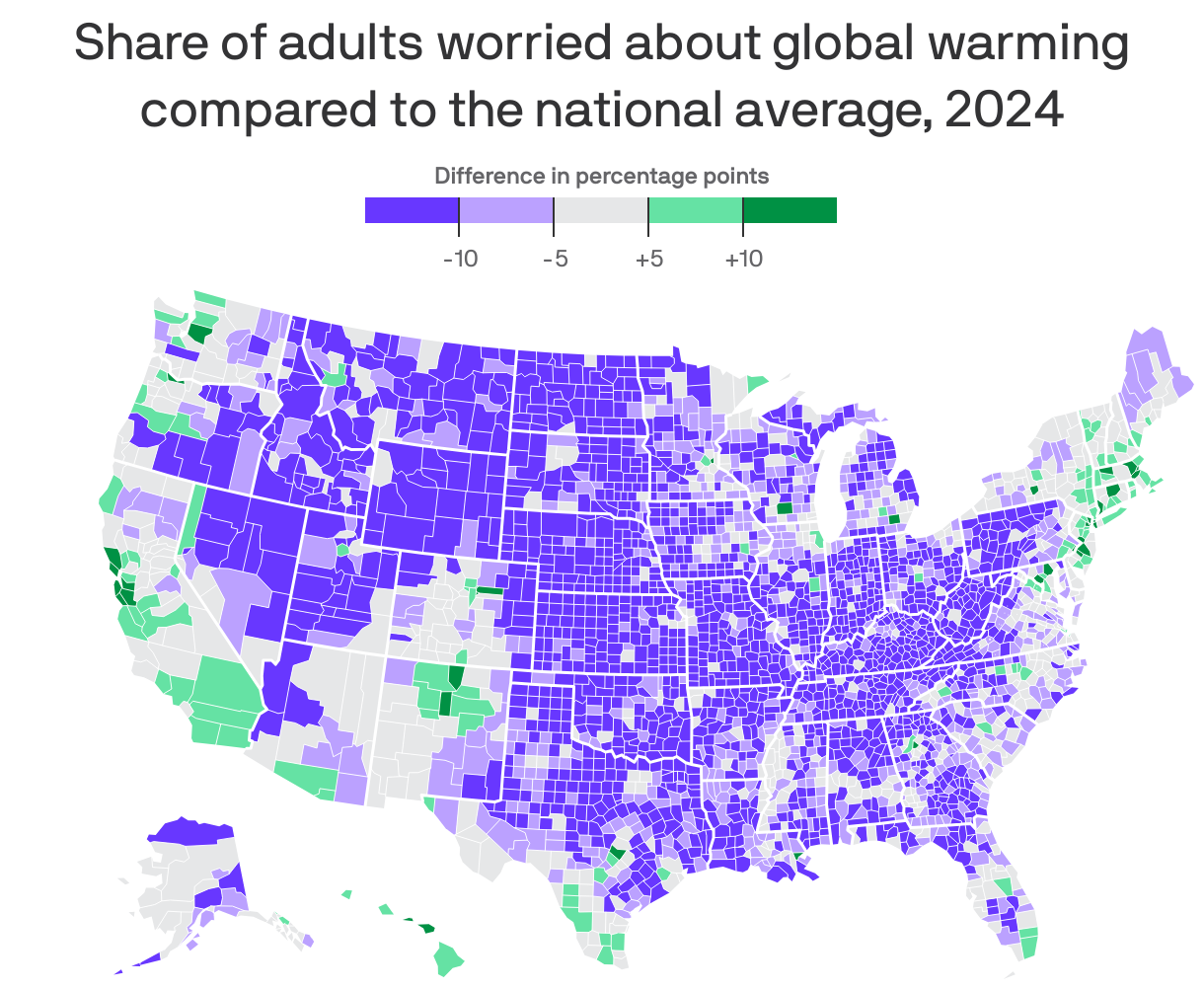
King County has one of the highest rates of climate anxiety in the U.S., with three-fourths of county residents worried about global warming, according to recent estimates.
Why it matters: High concern about climate change in Washington's most populous county helps shape statewide policy — like when Washington voters overwhelmingly upheld the state's cap-and-trade law last fall.
By the numbers: In King County, about 76% of adults were "somewhat" or "very" worried about global warming as of 2024, according to the Yale Program on Climate Change Communication, which looked at survey data.
- That's roughly 13 percentage points higher than the national average, which was about 63%, per the center's estimates.
Zoom in: The Yale analysis found that 85% of King County adults believe global warming will harm future generations, while 69% believe global warming is already harming people in the U.S. or will within the next 10 years.
Zoom out: Among more than 3,000 counties included in the Yale report, King County ranked among the top 25 when it came to the percentage of residents worried about global warming.
Yes, but: Washington state as a whole is also more concerned about climate change than the national average, with 68% of adults statewide reporting fears about rising global temperatures.
- Washington's least concerned county was Garfield County, where 50% of adult residents reported worries about global warming, the Yale analysis found.
The big picture: Attitudes toward climate change vary greatly between counties, with climate anxiety concentrated in big U.S. metros and some coastal communities.
- In Wyoming's Campbell County, for instance, an estimated 38% of people are worried about global warming, the lowest rate nationwide.
What they're saying: While the map above may look like a sea of purple, "it's crucial to remind people that the vast majority of the population exists in some of these green places," says Jennifer Marlon, senior research scientist at the Yale School of the Environment.
Between the lines: Individual attitudes about climate change are not based entirely on local risk, with politics, education, and other factors playing big roles.