Climate change harming young people's mental health, study says

Add Axios as your preferred source to
see more of our stories on Google.
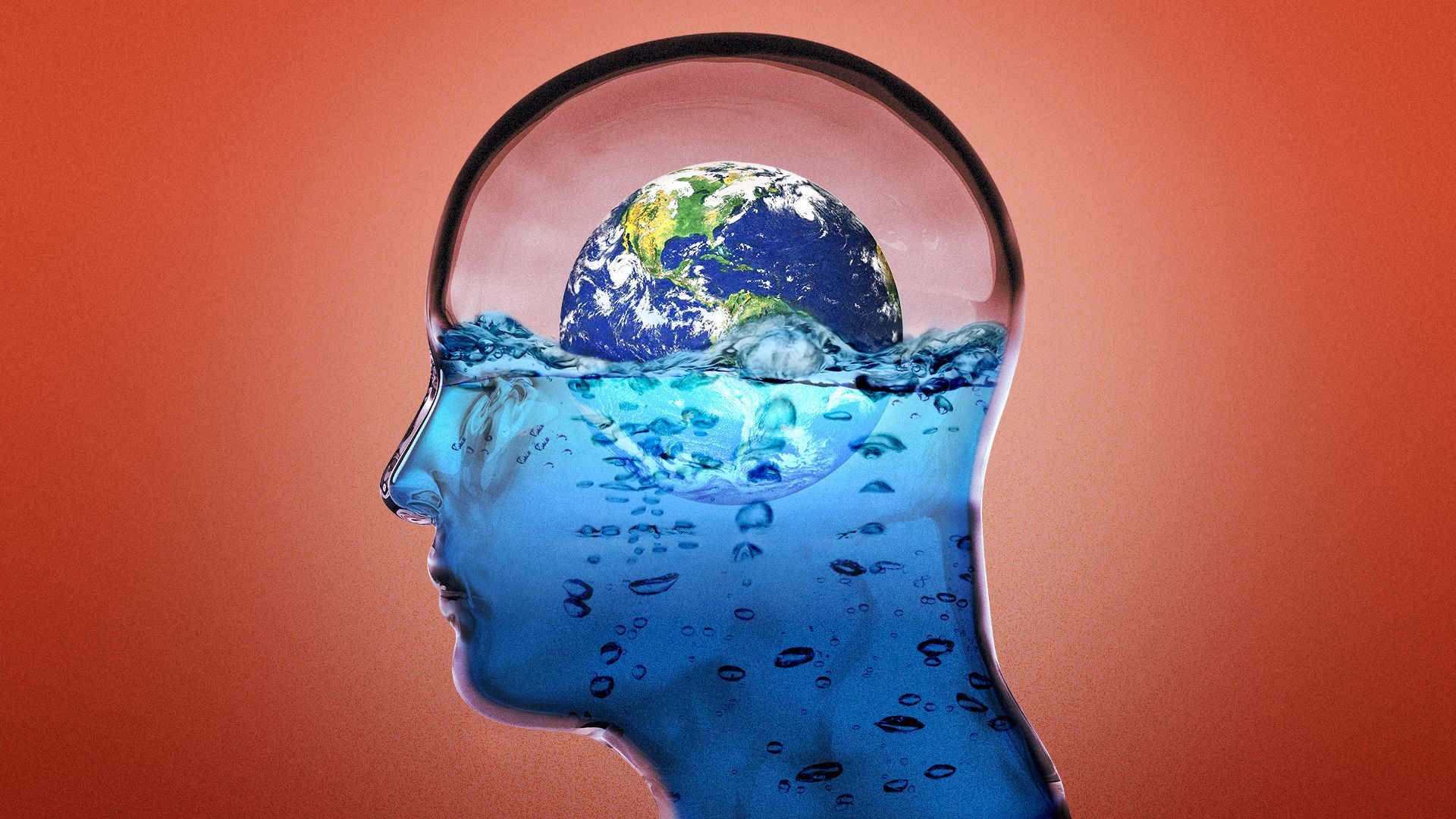
Illustration: Lindsey Bailey/Axios
Human-caused climate change is having widespread and significant negative effects on young people's mental health across the country, a new study finds.
Why it matters: The study is one of the largest to date to examine how young people are responding to global climate change and government action.
- The research also reveals new insights into the mental toll on adolescents and young adults of extreme weather events that climate change either propelled or made worse, depending on the type of event.
Zoom in: The peer-reviewed study, published Thursday evening in The Lancet Planetary Health, provides the latest — and perhaps the most authoritative — look at what the authors refer to as "climate emotions," including despair, fear, anxiety and depression, among others.
- The researchers analyzed the results of an online survey of about 16,000 U.S. youth between the ages of 16 to 25 between July and November of last year.
- They found a large majority, or 85% of respondents, are at least moderately worried, with about 58% "very or extremely worried," about climate change and its impacts.
- A smaller but still sizable group reported that these concerns were harming their mental health, with 38% stating their feelings about climate change were interfering with their daily lives.
- The survey used includes respondents from every state.
Respondents identifying as Democrats or Independents tended to be more worried than Republicans in the survey.
Yes, but: The survey used in the study relied on a non-probability sample, which means its results can't be directly applied to the overall U.S. population in a statistical sense.
- In that way, it differs from most epidemiological surveys.
- However, it can be used to observe general trends and can be combined with other evidence to bolster particular conclusions.
Between the lines: Respondents who reported exposure to more types of extreme weather events tended to be more distressed about climate change and more in favor of action to address the issue.
- "Respondents desire action from industries, corporations, and governments, including the U.S. government," the study states.
- Such people were also more likely to have plans to act on this issue, such as voting for candidates who support cutting greenhouse gas emissions, than those less affected by extreme weather.
The intrigue: A majority of total respondents, including 37.9% of Republican respondents, to the online survey stated climate change would make them hesitant to have children.
- And majorities of all respondents, including 57.8% of Republicans in the survey, said the issue would influence where they choose to live.
- "This is a kind of less partisan issue in this younger generation," said the study's lead author, Eric Lewandowski of NYU's Grossman School of Medicine.
- A higher proportion of Democrats (45.7%) compared to Republicans (33.7%) said that their feelings about climate change affect their daily life.
Zoom out: Other studies have found evidence of younger people in multiple countries, including the U.S., reporting distress over climate change.
What they're saying: One interesting finding of the research, Lewandowski said, is that young people are looking to have more conversations about climate change and to be validated in their concerns, rather than have older generations dismiss them.
- "Talking about the danger when there is danger is helpful," he told Axios in an interview. "We think of these climate emotions as a normal human reaction" in the face of a threat.
- "These statistics confirm what we've been seeing in the trenches," said study coauthor Lise Van Susteren, a psychiatrist in Washington who is an expert on the psychological impacts of climate change. "The young people are really struggling. And they are struggling in ways that I've not seen before."
- She hopes the findings will help lead to a "social tipping point" on climate.
Of note: The study was funded by Avaaz, a youth-oriented nonprofit organization that promotes action on climate, human rights and other issues.
