More than 300,000 bird flu cases in Washington


Add Axios as your preferred source to
see more of our stories on Google.
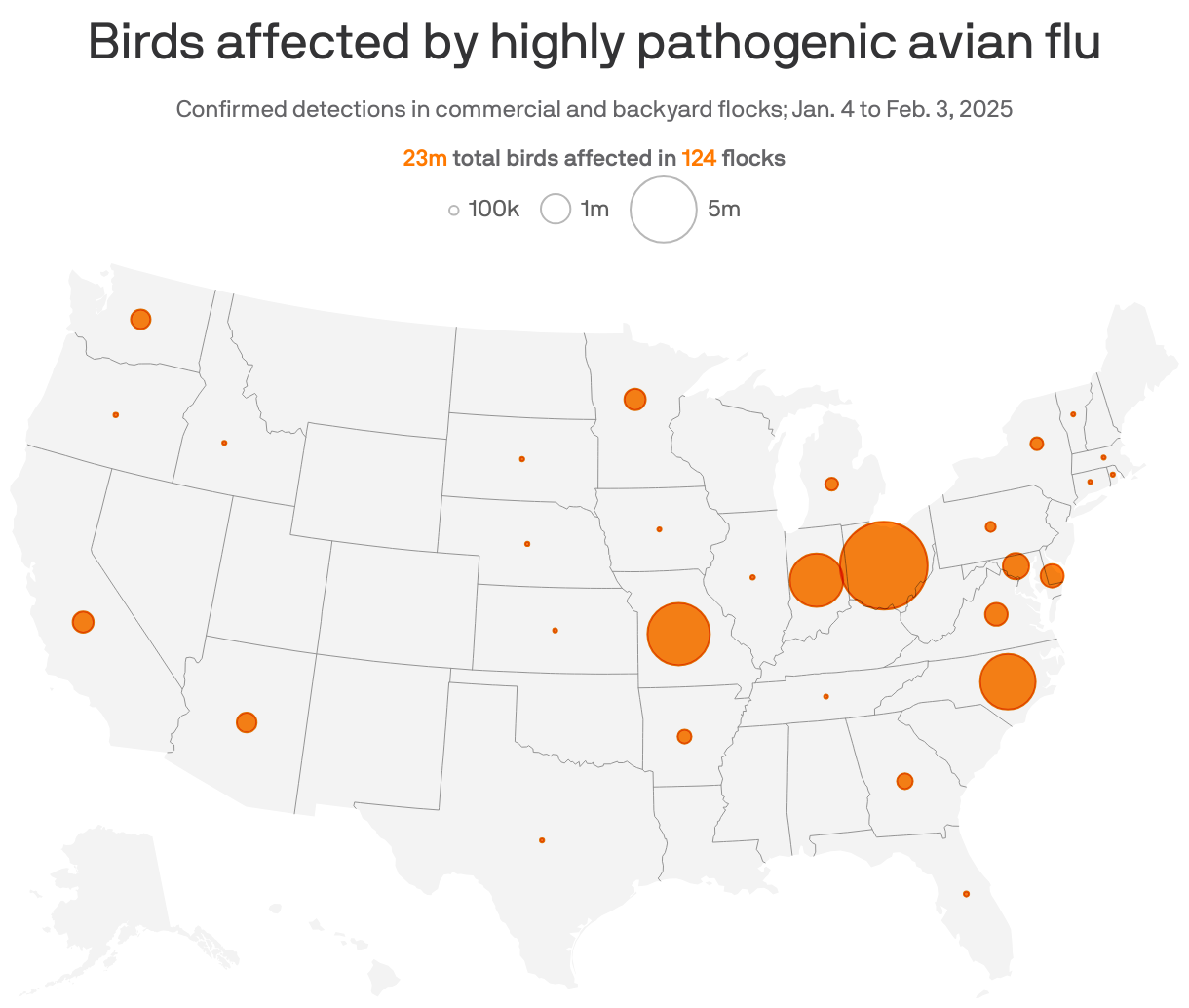
Dozens of newly confirmed cases of avian influenza in wild birds and the first verified U.S. case of a new strain of the virus are raising concern that the bird flu crisis may be entering a troubling new phase.
Driving the news: The U.S. Department of Agriculture last week confirmed 81 detections of highly pathogenic avian flu in wild birds collected across 24 states between Dec. 29 and Jan. 17.
Zoom in: As of Jan. 24, 307,800 birds in Washington state had been affected by H5N1, according to the USDA.
- The bird flu virus killed 20 big cats in Washington last year and was detected in wild mammals in six counties, including raccoons in Franklin and Island counties, harbor seals in Jefferson County, skunks in Stevens County, and a bobcat in King.
The intrigue: A new strain of avian flu called H5N9 was recently identified on a duck farm in California that had an outbreak of the more common H5N1 flu last fall.
- The new type is a sign that two or more viruses could be infecting the same animal and swapping genetic material.
Between the lines: The outbreak is intensifying as the Trump administration maintains a pause on most external communications from federal health agencies, including publication of the CDC's Morbidity and Mortality Weekly Report.
The big picture: While the developments don't necessarily raise the risk of a pandemic, they could create more havoc for farmers, exacerbate egg shortages, and expose more gaps in government disease surveillance.