Bird flu kills 20 big cats at Washington wildlife sanctuary

Add Axios as your preferred source to
see more of our stories on Google.
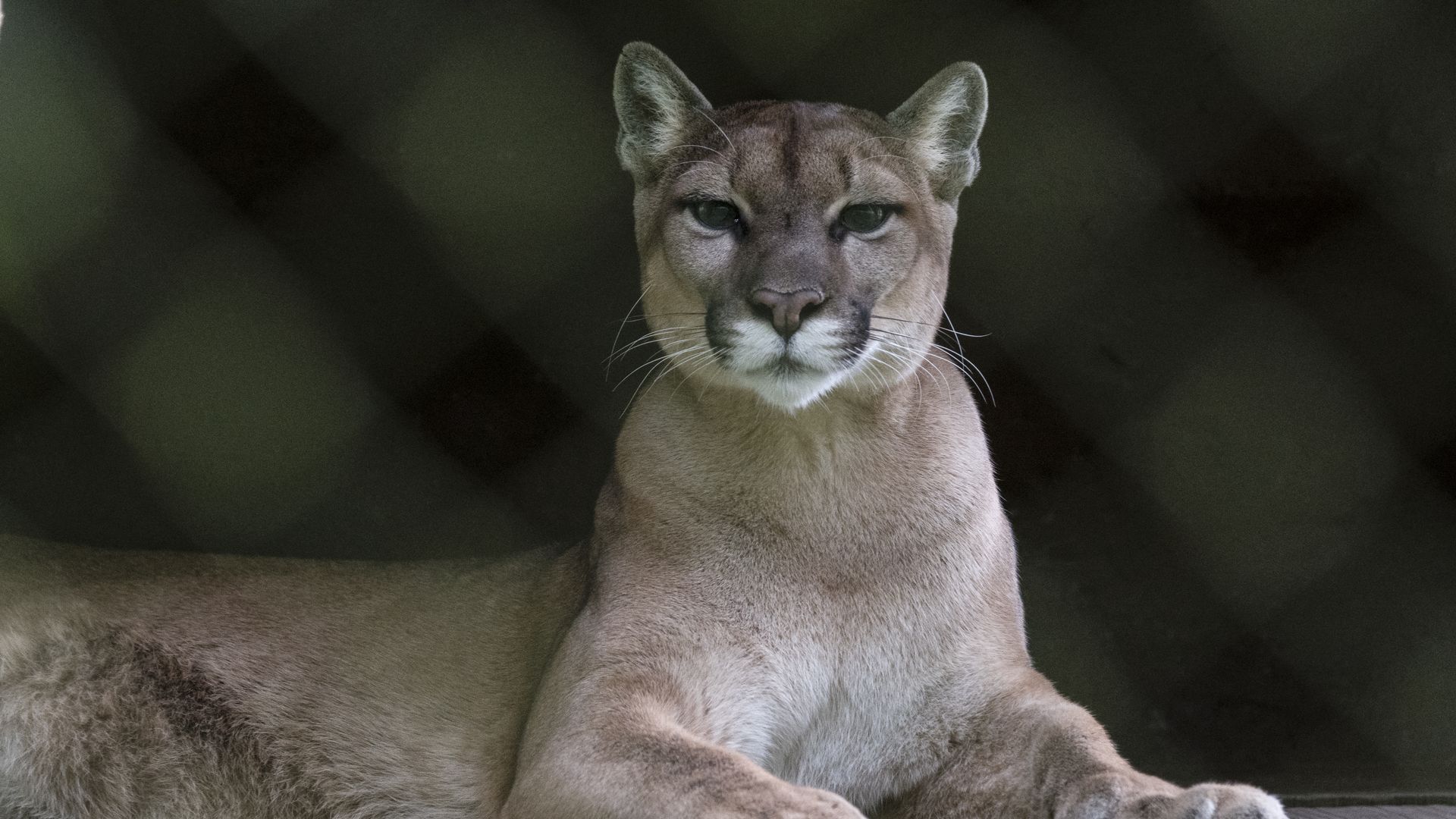
Four cougars were among those to die from bird flu at the sanctuary. Photo: Ezequiel BECERRA/AFP via Getty Images
Bird flu cases in Washington have spread to an animal sanctuary, resulting in the deaths of 20 big cats and forcing the center into quarantine until further notice.
The big picture: Wild Felid Advocacy Center in Shelton is working closely with public health officials to monitor workers and animals after the presence of bird flu (HPAI) was confirmed in some big cats at the sanctuary, per a statement on its website.
- The center confirmed in a Friday Facebook post that the virus had killed five African servals, four bobcats, four cougars and two Canada lynx. One Amur/Bengal tiger, a Bengal cat, an African caracal, a Geoffroy's cat and a Eurasian lynx also died of bird flu.
- The Washington Department of Fish and Wildlife in a statement warning that bird flu cases were on the rise in the state confirmed two cougars in Clallam County contracted the H5N1 strain of the virus.
Zoom in: The sanctuary said in a Dec. 2 Facebook post earlier this month that it would temporarily close because some of its big cats were "experiencing unknown illness" and confirmed four days later that bird flu had been detected in the animals.
- "We are heartbroken to share that animal health officials have confirmed the presence of highly pathogenic avian influenza (HPAI) among over half of our wild felids as of December," per a Friday Facebook post from the nonprofit that houses big cats previously not well looked after or whose owners could no longer care for them.
- Mark Mathews, founder and director of the sanctuary, told the New York Times on Tuesday that the animals' deaths occurred from late November to mid-December.
- The center has removed 8,000lbs of frozen food and had begun the weeks-long task of disinfecting the area, per the NYT.
What we're watching: The cause of the outbreak was not immediately known, but the center noted on Facebook that bird flu "spreads primarily through respiratory secretions and bird-to-bird contact and can also be contracted by carnivorous mammals that ingest birds or other products."
- Cats "are particularly vulnerable to this virus, which can cause subtle initial symptoms but progress rapidly, often resulting in death within 24 hours due to pneumonia-like conditions," the post added.
What they're saying: "This tragedy has deeply affected our team, and we are all grieving the loss of these incredible animals," the sanctuary said in its post.
- Mathews told the NYT they'd "never had anything like it." The big cats "usually die basically of old age," not something like this "pretty wicked virus," he said.
- "It looks like the virus has taken its course," he added. "We're just trying to make [one of the animals] that's incapacitated now just a little stronger."
What's next: The sanctuary aims to reopen in the new year, per the center's website.
Zoom out: A pet food company in Oregon this week issued a voluntary recall of its raw and frozen products, as state officials investigate the bird flu death of an indoor cat that they linked to its food.
- Meanwhile, Los Angeles County health officials are investigating the H5 bird flu deaths of four house cats that consumed recalled raw milk.
Go deeper: CDC reports first severe human case of bird flu in U.S.
