Redmond's shift from bedroom suburb to urban hub

Add Axios as your preferred source to
see more of our stories on Google.
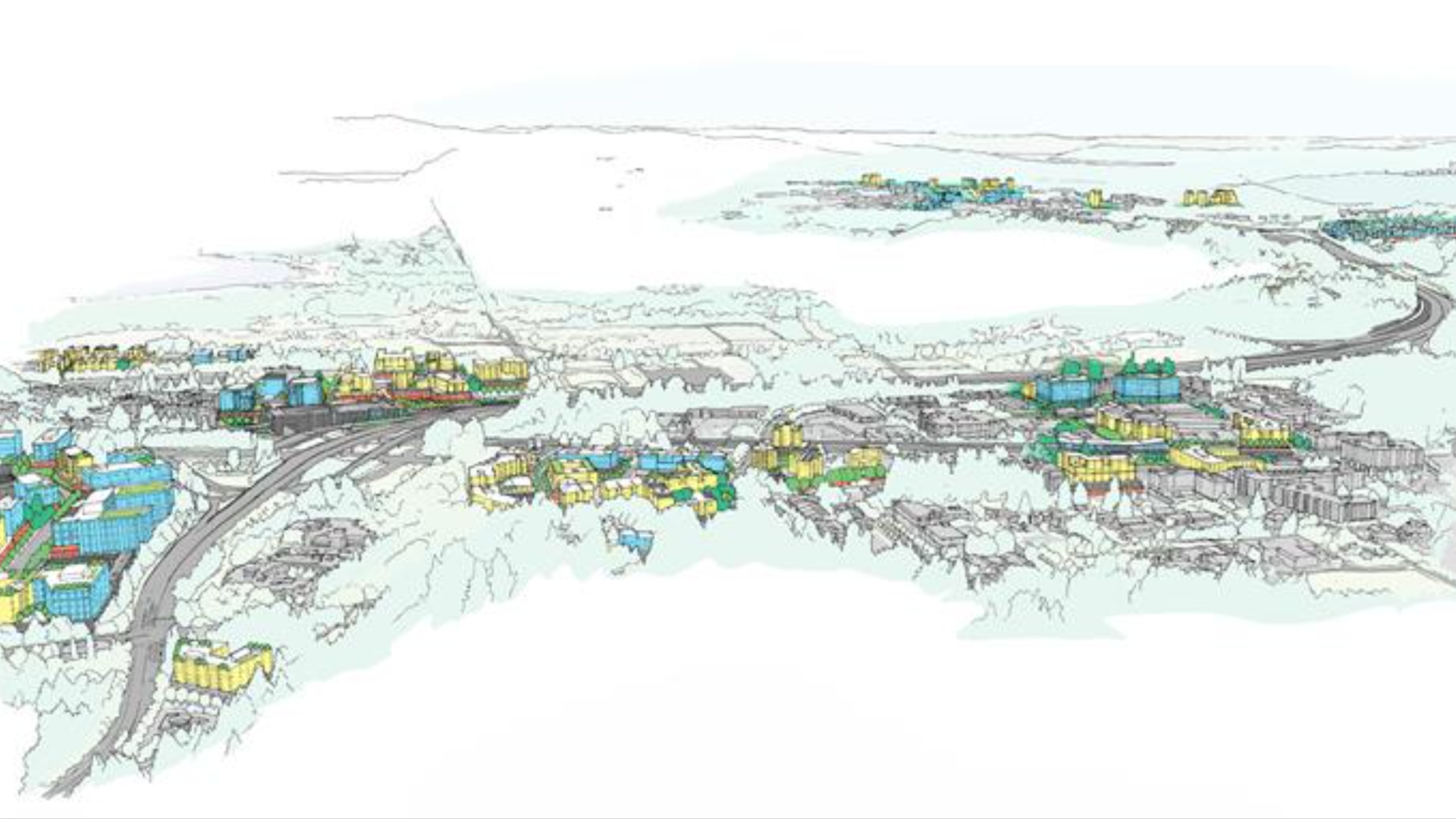
A birds-eye view of what Redmond will look like in 2050, according to the recently-adopted comprehensive plan update. Illustration: Courtesy of the City of Redmond
Often thought of as the affluent home of Microsoft, Redmond is working to become a vibrant, walkable city built around fast transit, green spaces and housing that people can afford.
Why it matters: Growing cities are required by Washington's Growth Management Act, passed in the early 1990s, to anticipate rising populations, lay out infrastructure investments, and address challenges like urban sprawl.
- After Seattle and Tacoma, Redmond saw the third-largest population boost in the metro area from 2023 to 2024, according to the Puget Sound Regional Council.
Driving the news: Redmond's 2050 comprehensive growth plan update, approved by the City Council on Tuesday, outlines the city's anticipated transformation from a bedroom suburb into a collection of urban centers built around the city's new Sound Transit stations.
- The changes within the plan will be implemented beginning Jan. 1.
What they're saying: "We want to stay ahead of the challenges that have plagued other cities," Redmond Mayor Angela Birney told Axios.
- For example, the city is moving forward with a plan to build 100 units of permanent supportive housing for extremely low-income adults exiting homelessness.
- "More people bring new needs, and we're not going to wait around to see what happens," she says. "We're proactively addressing concerns to ensure our housing and public safety systems are ready to support the community as it evolves."
What's happening: Redmond is focusing its growth around light-rail stations and transforming key districts — Downtown, Overlake and Marymoor Village — into hubs of residential, commercial and cultural activity, per the comprehensive plan.
Zoom in: Like almost all municipalities in Puget Sound, Redmond faces a significant challenge in ensuring housing affordability as it anticipates a population surge.
- To make room for this growth, Redmond is introducing "missing middle" housing like duplexes and townhomes, and encouraging mixed-use developments that integrate affordable housing with local businesses and amenities.
- The city is also pushing for developers to prioritize two- and three-bedroom apartments, which Birney says are the first to be snapped up by families.
By the numbers: Of the 20,000 new housing units expected by 2044, half are reserved for households earning up to 30% of the area median income, per the plan.
The new policies simplify rules to allow small-scale businesses, like cafes or corner stores, to operate within residential areas.
- They also introduce "neighborhood mixed-use zones," where homes, shops and services can coexist to make communities more walkable and convenient.
The bottom line: "We want people who love urban life to feel they can raise their families and live their whole lives in Redmond," Birney said.