Washington home prices rose more than 800% in 40 years

Add Axios as your preferred source to
see more of our stories on Google.
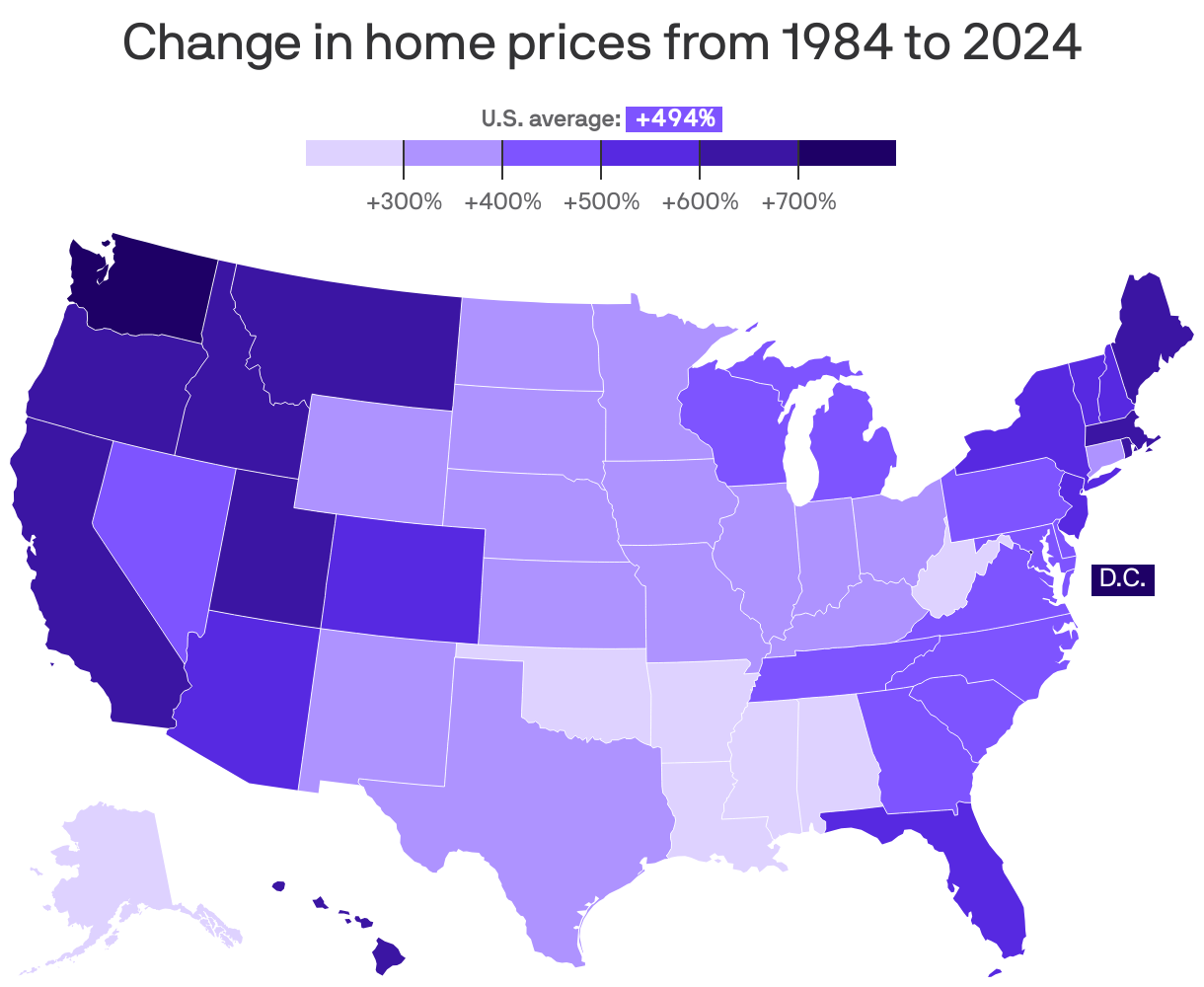
Home prices in Washington soared more than 800% over the past four decades, according to one analysis of Freddie Mac data.
Why it matters: That far exceeds the national average of nearly 500%.
The big picture: Housing affordability is repeatedly cited as one of the top concerns for Washington residents, reflecting widespread struggles with rising home prices and the growing gap between housing costs and household incomes across the state.
Driving the news: Washington had the largest home price gain in the nation, at 828%, from 1984 to 2024, according to the analysis of Freddie Mac House Price Index data by journalist Lance Lambert of ResiClub.
- Oregon (699%), Rhode Island (668%) and Massachusetts (664%) followed, per Lambert.
- Overall inflation rose 203% in the last 40 years, while median U.S. household incomes rose 233%, Lambert wrote.
Yes, but: He points out that overall housing affordability is only slightly worse today than it was in 1984 when you account for mortgage rates, median household incomes and national home prices.
Stunning stat: A 30-year fixed rate mortgage was between 13% and 15% in 1984, while it's fluctuated between 6% and 7% this year, according to Freddie Mac.
Threat level: Approximately 73% of Washington households cannot afford a median-priced ($640,000) home, according to a recent report by the Building Industry Association of Washington.
- Plus, more than one-third of households statewide are considered "cost-burdened," paying more than 30% of their monthly income for housing, a standard for affordability, according to the state Department of Commerce.
- The Department of Commerce says the state is facing a critical housing shortage that could last decades, estimating a need for around 1 million new homes by 2044.
Zoom in: Housing affordability is even more strained in the Seattle metro area, where the median home price is about $875,000, according to Redfin, and less than 1% of the listings are affordable for middle-income households.
- A recent analysis by Redfin determined that buying a typical starter home in the city requires a six-figure income.
What's next: State and local governments as well as housing organizations are working to adjust zoning laws, incentivize affordable housing construction and address the high demand for housing among lower-income residents.
The bottom line: There's a reason many young people in Washington say their homeowning dreams are on hold.