
What to know about Seattle's revised growth plan

Add Axios as your preferred source to
see more of our stories on Google.
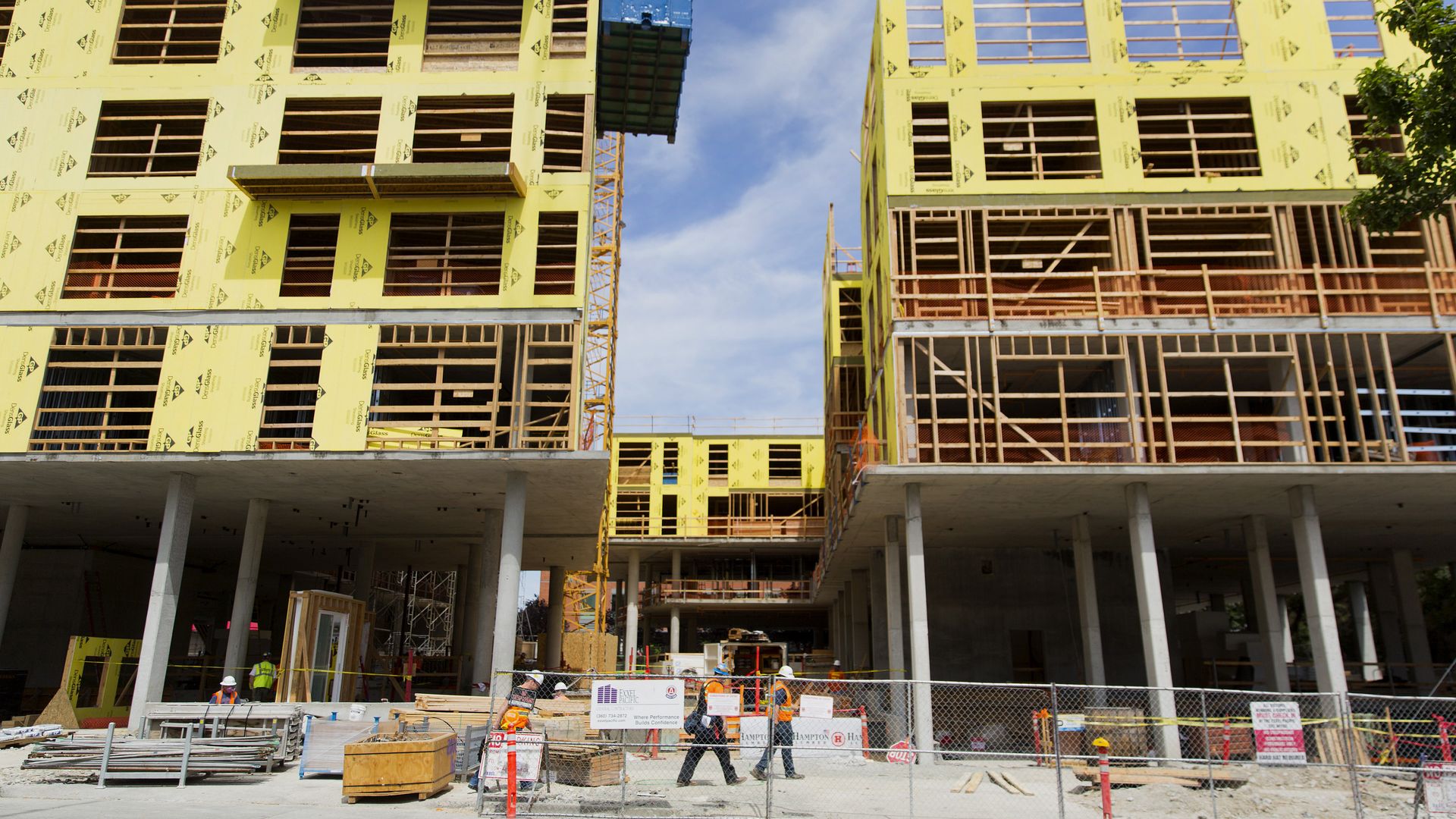
The mayor's revised growth plan would allow more apartments to be built near transit centers in Seattle. Photo: Mike Kane/Bloomberg via Getty Images
Seattle Mayor Bruce Harrell has introduced a revised version of the city's growth plan, focusing on zoning changes to accommodate 330,000 additional housing units over the next 20 years.
Why it matters: The revisions to the comprehensive plan are aimed at addressing the city's skyrocketing home prices and an affordability crisis that stems from limited housing supply, growing demand, and zoning restrictions.
Driving the news: Unveiled Wednesday, the updated proposal builds on a draft released in March but expands the scope by targeting more neighborhoods for increased urban density and includes zoning adjustments and maps.
What's inside: A key component of the proposal is creating 30 neighborhood centers and allowing taller apartments within 800 feet of transit and commercial areas alongside businesses and amenities within walkable cores.
- The updated plan allows "stacked flats" — a type of "missing middle" housing designed to increase density — and apartment buildings that are six stories tall.
- As required by a 2023 state law, multiplex housing would be permitted in some areas that currently allow only single-family homes.
- Developers could build up to 12 units on a typical 5,000-square-foot lot in residential areas if at least 50% of the units are affordable for low-income households, according to the plan.
What they're saying: "To bring down costs, support current residents, and prepare for future growth, Seattle needs more housing and more housing choices — it's that simple," Harrell said in a written statement.
Yes, but: The new version is not a radical departure from the March draft, which was criticized for setting inadequate housing production targets and not doing enough to prevent the displacement of vulnerable residents, Publicola reported.
- It also creates only five new clustered growth centers — in North Magnolia, High Point, Central Beacon Hill, North Fremont, and Hillman City — compared with the nearly 50 requested by the Complete Communities Coalition, per The Urbanist.
What's next: The proposal is now open for public comment, with the city hosting seven in-person information sessions and two online sessions through Dec. 20.
- It will go before the Seattle City Council next year.