Seattle's District 4 candidates clash over taxes, drug policy

Add Axios as your preferred source to
see more of our stories on Google.
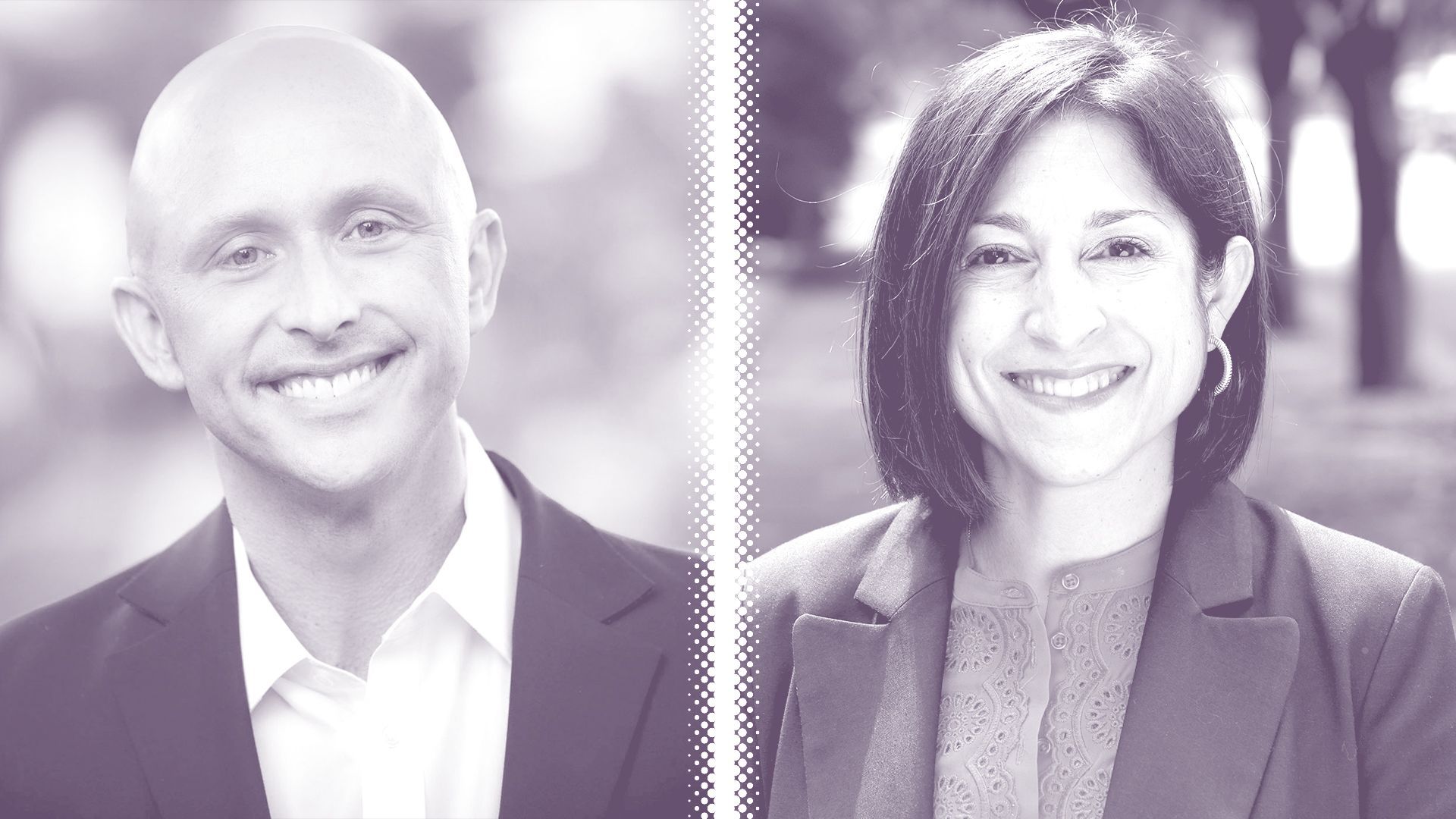
Ron Davis and Maritza Rivera. Photo illustration: Axios Visuals. Photos: Courtesy of both campaigns.
Taxes and the city's response to the drug crisis are among the issues that divide the candidates in the race for the Seattle City Council's District 4 seat.
Why it matters: The November election will ensure the City Council gets at least four new members, a level of turnover that may bring big changes to the nine-member body.
Driving the news: Maritza Rivera, former deputy director of Seattle's arts and culture department, is campaigning on a platform of hiring hundreds more police, frugal budgeting and cracking down on drug dealers.
Meanwhile, tech entrepreneur Ron Davis emphasizes the need for expanded drug treatment, denser housing options and new tax revenue, which he says will be necessary to help pay for programs like affordable housing and alternatives to armed police.
State of play: Davis and Rivera are running to replace retiring City Councilmember Alex Pedersen in Northeast Seattle.
Here's a closer look at some of the candidates' biggest areas of disagreement.
Encampment removals
Rivera says encampments of people experiencing homelessness often must be cleared because they are unsafe, both for the people living in them and the surrounding neighborhoods.
- Davis, meanwhile, argues the city's current practice of removing encampments frequently ends up simply moving people from one neighborhood to another, without providing enough viable shelter options.
Taxes, budget and police hiring
Rivera said she doesn't want to look at new tax revenue until after the city has carefully examined its budget and is sure current programs are getting the desired outcomes.
- She wants to hire hundreds more police officers and focus on adding temporary shelters like tiny homes for people who are currently living in encampments.
- Davis said he, too, wants to expand shelter options and hire more police.
- But he said without new tax revenue, he doesn't see a way to carry out what Rivera proposes, nor meet other goals like standing up new civilian response alternatives, building affordable housing and expanding drug treatment programs.
Of note: The city projects a general fund deficit of more than $220 million in 2025.
Housing policy
Davis wants to see denser housing allowed throughout more city neighborhoods, including more mid-rise housing and multi-story walk-up flats, paired with stricter protections for trees.
- Rivera told Axios that "we need to build thoughtfully and gradually," and wrote in a recent questionnaire that the city "needs to preserve the unique character of our neighborhoods."
- She said supports allowing fourplexes in most residential neighborhoods and six units per lot near transit, something that's already set to happen under a new state law.
New drug law
Rivera supported a recent change in law that allows the Seattle city attorney to prosecute people for drug possession and public drug use.
- She said she particularly wants to go after drug dealers.
- But Davis said many low-level dealers could also benefit from diversion and treatment, as many of them sell small amounts of drugs to feed their own addiction.
- In general, he said, "jail is ineffective" at getting people to stop using.
What's next: Davis and Rivera will square off at 7pm Thursday in a televised debate.
- Ballots will be mailed Oct. 18.
Go deeper: A guide to the 2023 election in Seattle