Two-thirds of Seattle-area Gen Z renters are rent-burdened


Add Axios as your preferred source to
see more of our stories on Google.
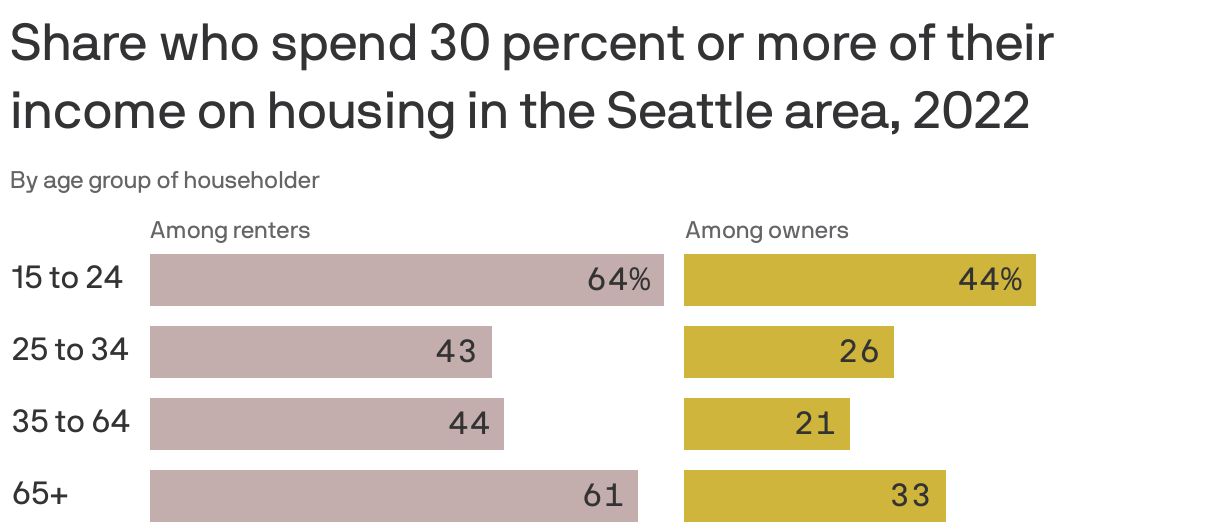
Nearly two-thirds of the Seattle area's youngest renters spend at least 30% of their income on rent, according to the latest U.S. census data.
Why it matters: Steep prices and mortgage rates pose seemingly insurmountable hurdles to homeownership — and renting isn't necessarily an affordable alternative.
- Spending at least 30% of your income on rent — the maximum advised by many experts in the past, and a common standard for being considered rent-burdened — is now "the new normal," according to economists at Moody's Analytics.
Zoom in: In the Seattle metro area, 64% of renters ages 15–24 spent 30% or more of their income on rent last year.
- That's far higher than the rate among local renters 25 to 64. Among those renters, 43% to 44% spent at least 30% of their income on rent last year, per census data.
The big picture: One in three Gen Z-ers (34%) surveyed by Freddie Mac say owning a home feels impossible in their lifetime, up from 27% in 2019.
- Saving for a down payment is the biggest obstacle, they say. It's one reason the typical first-time homebuyer last year was a record-high 36 years old, per the National Association of Realtors.
What they're saying: Higher interest and inflation rates have also made things harder for young buyers, John Manning, the managing broker of Re/Max Gateway in Seattle, told Axios.
- "We're seeing a lot of younger folks who qualified to buy a house last year and now they're no longer qualified," he said.
Yes, but: The vast majority of young renters are renting for lifestyle reasons, preferring the flexibility to move, RealPage chief economist Jay Parsons told Axios.
Reality check: Older Americans on fixed incomes are especially burdened by high housing costs, contributing to rising homelessness among baby boomers, the Wall Street Journal reports.
- In the Seattle area, 61% of renters over 65 spent at least 30% of their income on housing last year.
Go deeper: Student loan interest has started again, adding to affordability pressures.