Jan 2, 2024 - News
5 key issues to track in San Francisco this year

Add Axios as your preferred source to
see more of our stories on Google.
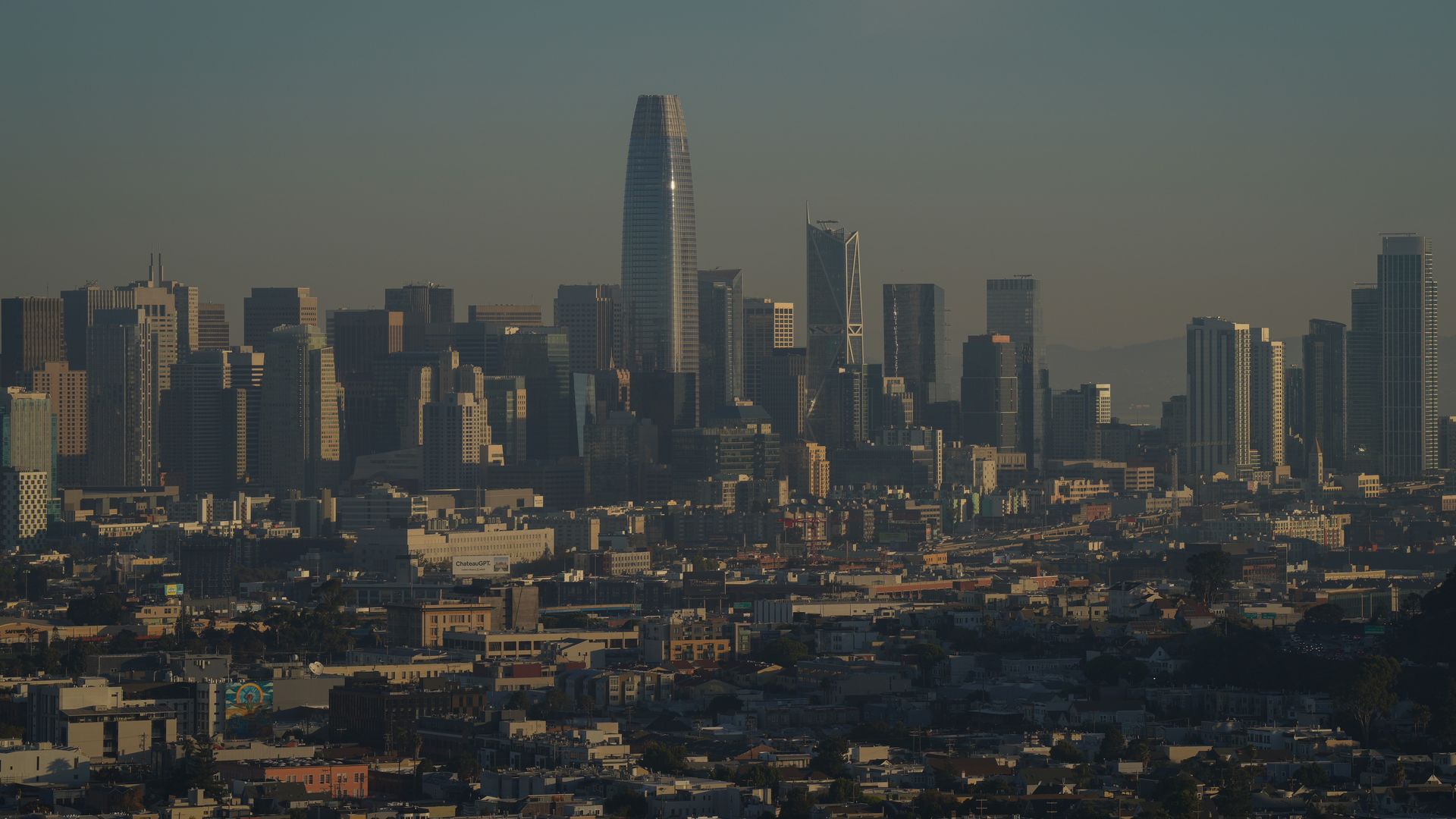
The downtown skyline of San Francisco as seen on Nov. 3. Photo: Loren Elliott/Bloomberg via Getty Images
It's 2024, and as we head into a pivotal election year, here are five things to keep on your radar.
Driving the news: The tech industry is seeing gains amid Silicon Valley's AI boom, yet the wealth gap seems as wide as ever with the Bay Area's continued struggles with homelessness and drug abuse.
2024 ballot
- City Hall could change dramatically after this year's elections, which will determine our next mayor, district attorney, sheriff, city attorney and treasurer.
- Voters also will weigh in on ballot measures, including one that would expand police powers. Others would require mandatory drug screenings to receive welfare benefits and determine whether voting in supervisors' races should be open to all voters regardless of their district.
Housing
- Home prices in the Bay Area are expected to drop in 2024, with Zillow forecasting a 4.8% decrease in San Francisco.
- Meanwhile, the city's Planning Department is set to propose zoning changes that would enable significantly denser development in select neighborhoods primarily on the city's west side, according to a draft map in a December newsletter to constituents from District 1 Supervisor Connie Chan.
- That could mean construction of buildings that stand over 80 feet in areas where the cap is currently 40 feet, the San Francisco Examiner notes.
- The city's dispute over its ability to clear homeless encampments will also continue to play out in court — Gov. Gavin Newsom has already called on the U.S. Supreme Court to take up the case.
Affirmative action
- Fallout from the Supreme Court's ruling against race-conscious admissions in higher education continues.
- The Bay's many universities are scrambling to enact other kinds of policies — such as making standardized tests optional — to maintain racial diversity on campus.
- Meanwhile, San Francisco faces lawsuits over guaranteed basic income programs for transgender people as well as pregnant Black and Pacific Islander women.
- Some anti-affirmative action groups are also using the ruling to demand an end to corporate programs prioritizing underrepresented groups.
Downtown recovery
- San Francisco's downtown foot traffic is improving, but it still lags compared to other U.S. metro areas.
- Many restaurants and retail stores shuttered last year, but the city is forging ahead with pop-ups, night markets and watch parties to draw people back to downtown areas.
- Local transit agencies are also investing resources to bolster ridership, including a new app with real-time predictions, a pilot BayPass program and community-led retail.
- What's next: Officials are pursuing opportunities to convert non-residential buildings to housing to bolster the downtown population amid high commercial vacancies.
Reparations
- The city is considering over 150 recommendations from its reparations committee, including $5 million payouts to each eligible person and creating an Afrocentric K-12 school.
- What to watch: Some Black residents have renewed calls for a faster timeline, especially after Mayor London Breed's recent budget cuts slashed funding for a centralized reparations office.