What's next for reparations in San Francisco

Add Axios as your preferred source to
see more of our stories on Google.
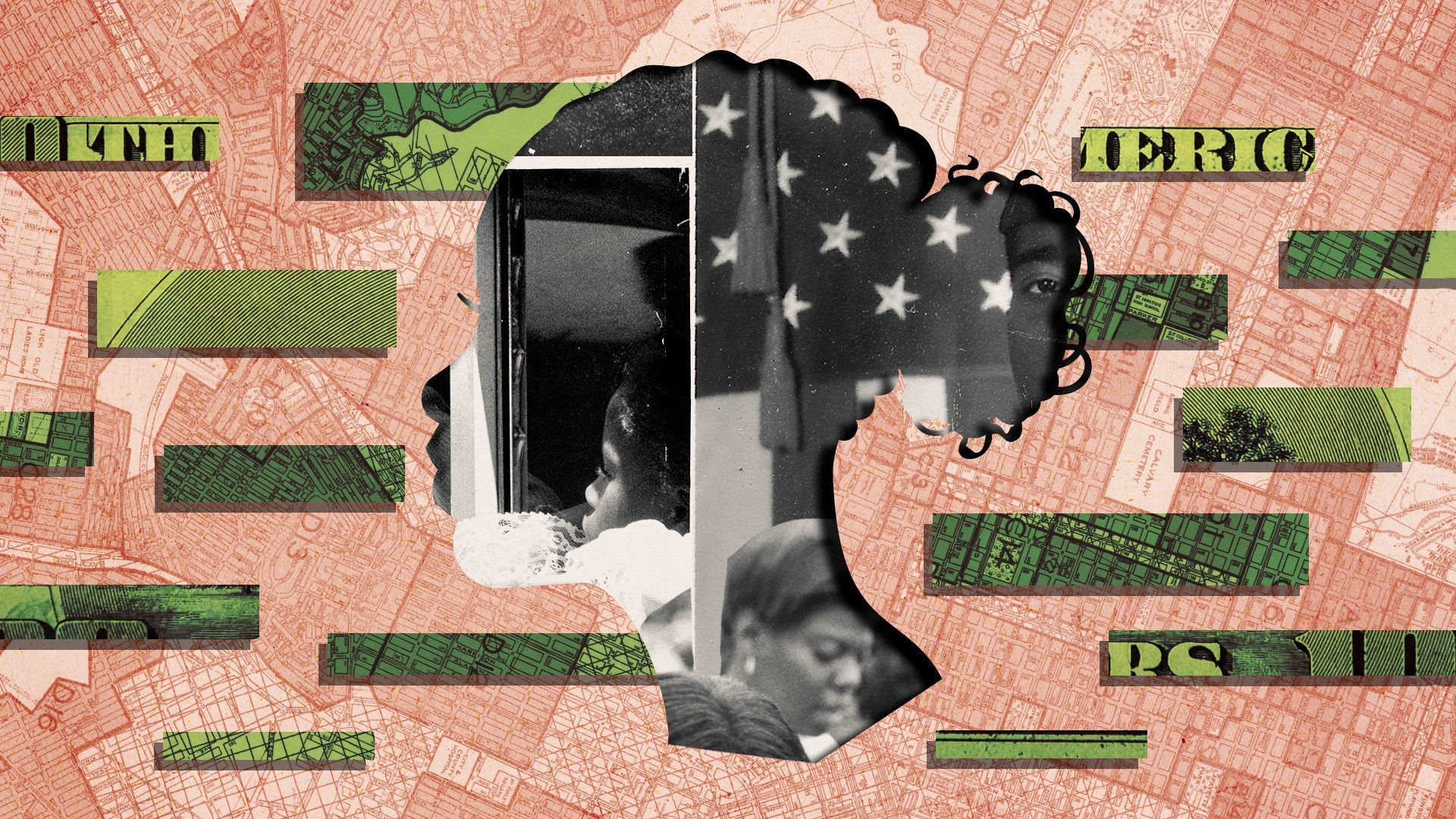
Photo illustration: Shoshana Gordon/Axios. Photos: Clarence Gatson Collection/Gado/Getty Images, Dave Randolph/San Francisco Chronicle via Getty Images, National Archives via Mapping Inequality
Reparations for Black people are still on the table in San Francisco, but the path forward remains unclear.
The big picture: San Francisco is among a growing number of places looking to atone for slavery.
- California, in June, released its own report detailing how the legacy of slavery continues to harm Black people today.
- Meanwhile, the city of Evanston, Illinois, in 2019 implemented a reparations program that has the approval of most of its residents.
Driving the news: City Supervisor Shamann Walton, who wrote the 2020 legislation to establish the African American Reparations Advisory Committee, next week plans to introduce a resolution that would urge San Francisco to issue a formal apology to Black people for past harms, Walton's office confirmed to Axios.
- Some of these harms entailed the displacement of the city's Black population.
- The urban renewal of the 1960s and '70s, for example, shuttered 883 businesses and displaced 4,729 households in the Fillmore District, a neighborhood once known as the Harlem of the West, according to the reparations committee.
Context: A formal apology is just one of more than 150 recommendations the committee made to the city in July.
- Other recommendations include $5 million payouts to each eligible person and the creation of an afrocentric K-12 school.
- In September, city supervisors passed a resolution accepting the final reparations report. But that didn't mean the recommendations would be implemented.
The intrigue: In June, Mayor London Breed approved a budget that set aside $4 million over the next two years to set up an office of reparations that would oversee the implementation of any of the recommendations.
- The money would be used to set up the office, create an eligibility database and more. But it's unclear whether that money will be spent on such an office.
What they're saying: The mayor "does not believe that addressing the needs of the African American community requires adding more bureaucracy and a whole new office; this work can be done with existing staffing," mayor's office spokesperson Parisa Safarzadeh told Axios via email.
- While Breed believes "reparations are an issue best handled at the federal level," her office "remains committed to reforming local policies to help address decades of disparities and disinvestment" that impact communities, including the Black community, Safarzadeh said.
Meanwhile, it still needs to be determined which, if any, of the more than 150 recommendations the city will implement and what the funding source will be, Natalie Gee, a spokesperson for Walton, told Axios.
- Tinisch Hollins, vice chair of the reparations committee, still believes there's a chance the other recommendations could be implemented, but said it depends on political will, leadership and resources.
The bottom line: The reparations recommendations report was meant to serve as a guiding document on how to repair the harm done to Black San Franciscans, Hollins said.
- "There's endless potential for the recommendations to be revisited and implemented over time," Hollins said.
- Yes, but: Hollins said she observes the city government trying to "leverage what currently exists" to address the disparities the report highlighted, and cautions "that those things are not necessarily reparations. Those are things that should be happening anyway."