Daylight comes and stays late in Utah with or without DST

Add Axios as your preferred source to
see more of our stories on Google.
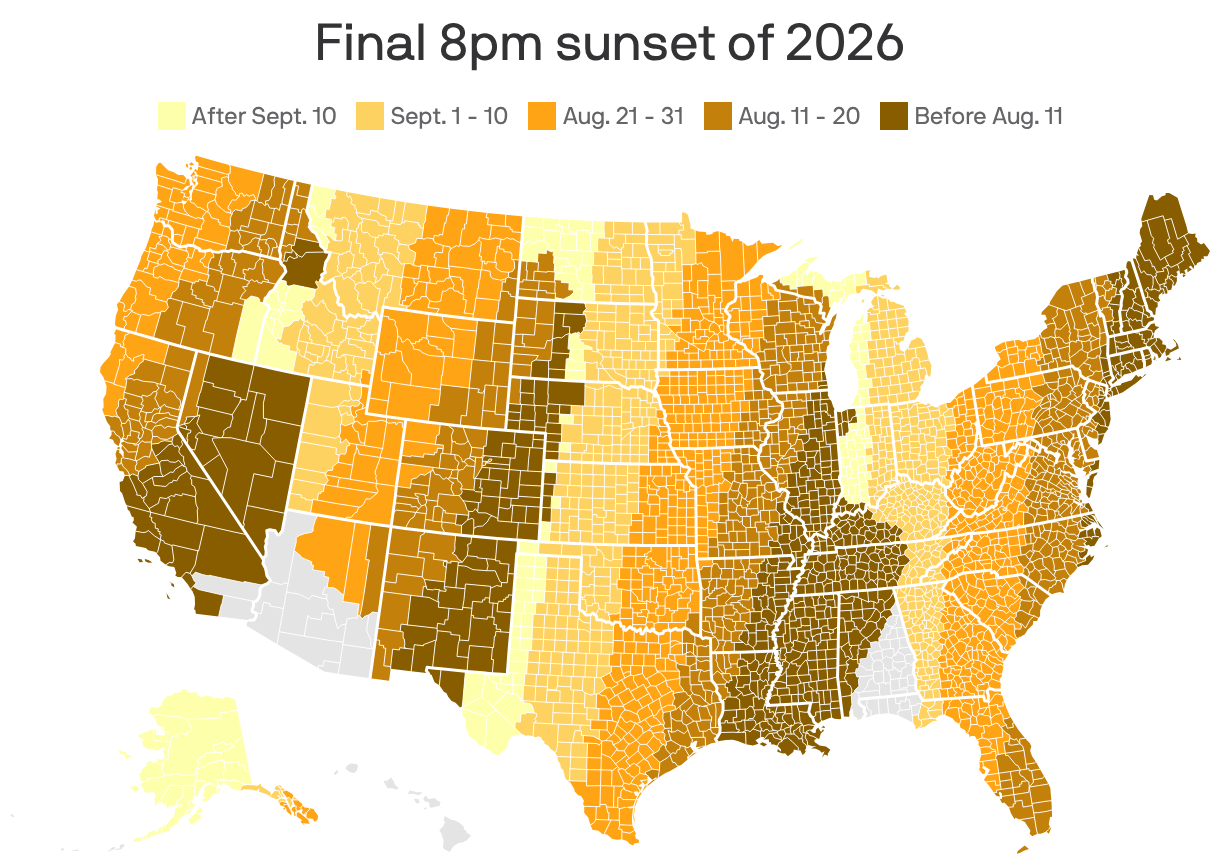
Monday brings the final Salt Lake sunset of the year that falls after 8pm.
Why it matters: Our sunsets (and sunrises) are later than the overwhelming majority of other major U.S. cities because we are near the western edge of our time zone.
- Daylight saving time puts our solar noon more than 90 minutes behind the clock — and Utah officials have pushed to keep it that way for the whole year.
State of play: Utah is poised to shift to permanent daylight saving time if Congress allows it — and the U.S. House last month passed a measure that would do just that.
- President Trump has urged the Senate to pass it when they're back in session later this month.
Meanwhile, a movement favoring permanent standard time is growing as research increasingly shows late sunlight is bad for our health.
The most common argument against permanent daylight saving time is that winter sunrises would be too late to light kids' way to school for much of the year.
- That's why it didn't last long when the U.S. tried it in the 1970s.
Yes, but: Summer's late sunsets may also lose appeal as Utah gets hotter.
Flashback: Arizona noticed this in 1967, when the state tried DST for a single year and then opted out because energy costs soared, and no one wanted that ferocious summer sun lingering in the sky any later than necessary.
The big picture: Utah isn't Arizona, but our summer temps are rising, making health hazards more common — and nights aren't cooling the city off like they used to.
Between the lines: Anyone who's attended a general-admission outdoor concert in Salt Lake has seen the shade scrum before the sun sets, or craned their necks to see the stage over walls of umbrellas.
My thought bubble: If you've enjoyed a patio meal in the valley before 8pm since June, you're a braver soul than I.