Utah's hospitals are highly consolidated, report shows


Add Axios as your preferred source to
see more of our stories on Google.
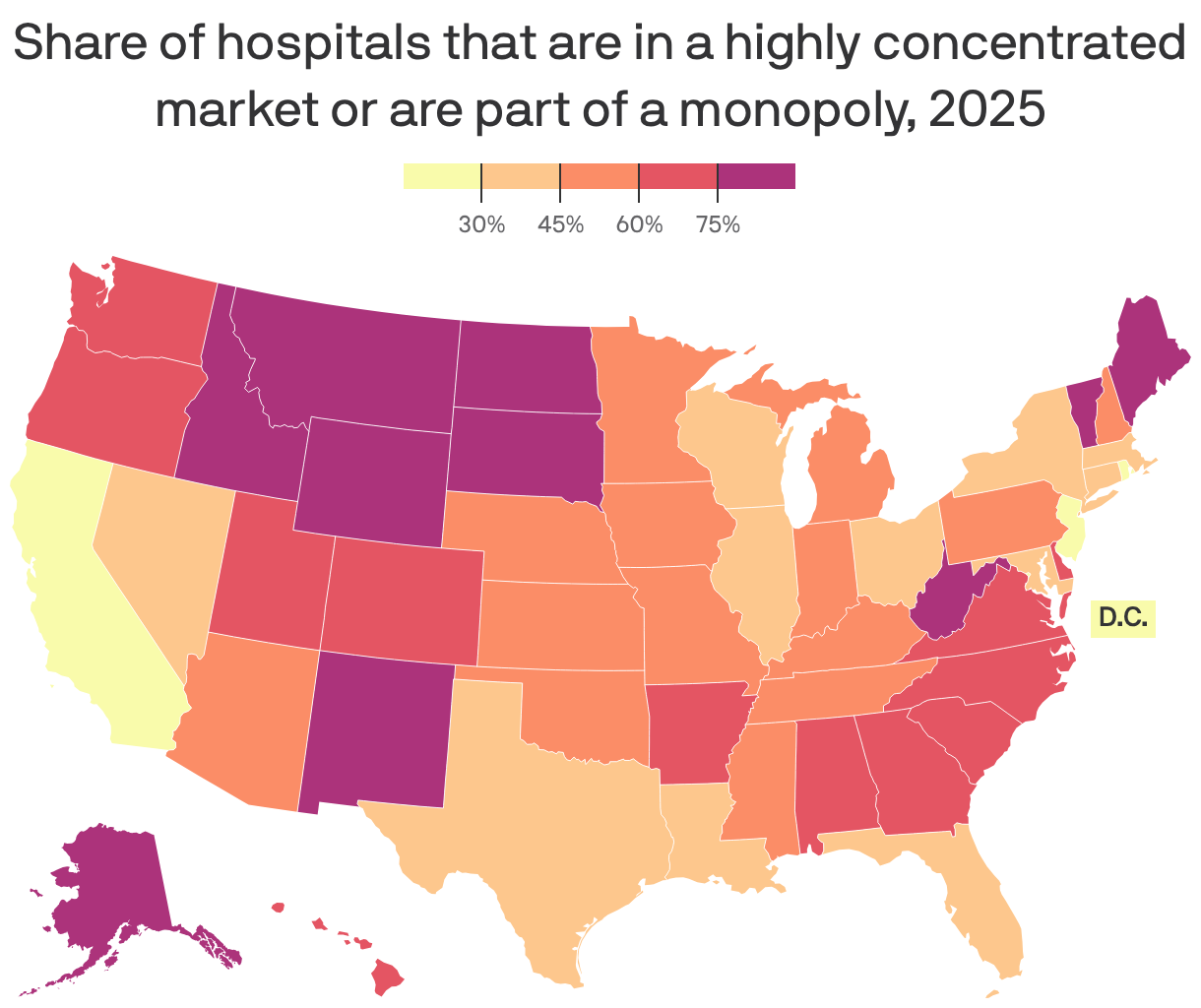
Utah's health care system is heavily consolidated among a few hospital systems — a dynamic associated with rising costs, according to an analysis from Yale's new Health Care Affordability Lab.
Why it matters: A federal report last year found hospital mergers drove price hikes for care — 6% to 65% — and costs "increase significantly for neighboring hospitals as well."
- Consolidation also tends to sweep in physician practices, pushing up the costs of doctor visits, too, per a separate 2025 federal analysis.
Zoom in: 61.7% of the state's 47 hospitals analyzed in the Yale study are concentrated in ownership or represent a monopoly in certain markets.
Zoom out: Further consolidation could bring Utah's health care market closer to the monopolies in neighboring states.
- All hospitals in Wyoming are in concentrated markets, compared with 98% in Montana and 86% in Idaho.
- In Colorado, where markets are more concentrated than in Utah, lawmakers have repeatedly advanced bills to allow state intervention in health care monopolies — but those have failed.
How it works: Yale's analysis defines markets based on a 30-minute travel time to determine whether patients have a reasonable choice between facilities.
State of play: In 2022, the Federal Trade Commission blocked HCA Healthcare's acquisition of five Steward hospitals along the Wasatch Front, citing the harm of reduced competition.
- The same year, Intermountain Health merged with Colorado-based SCL Health — but SCL didn't have locations in Utah.
The other side: The most concentrated states also have large rural populations, which can make supporting more than one hospital in a community difficult.
The big picture: In the past 20 years, there have been around 1,300 mergers among the nation's approximately 5,000 hospitals. The Federal Trade Commission has taken action on competition concerns against only 13 of the deals.
- Hospitals accounted for 40% of the growth in national health spending between 2022 and 2024 — a much larger share than any other health spending category, per a recent KFF analysis.