Colorado's hospitals are highly consolidated, report shows


Add Axios as your preferred source to
see more of our stories on Google.
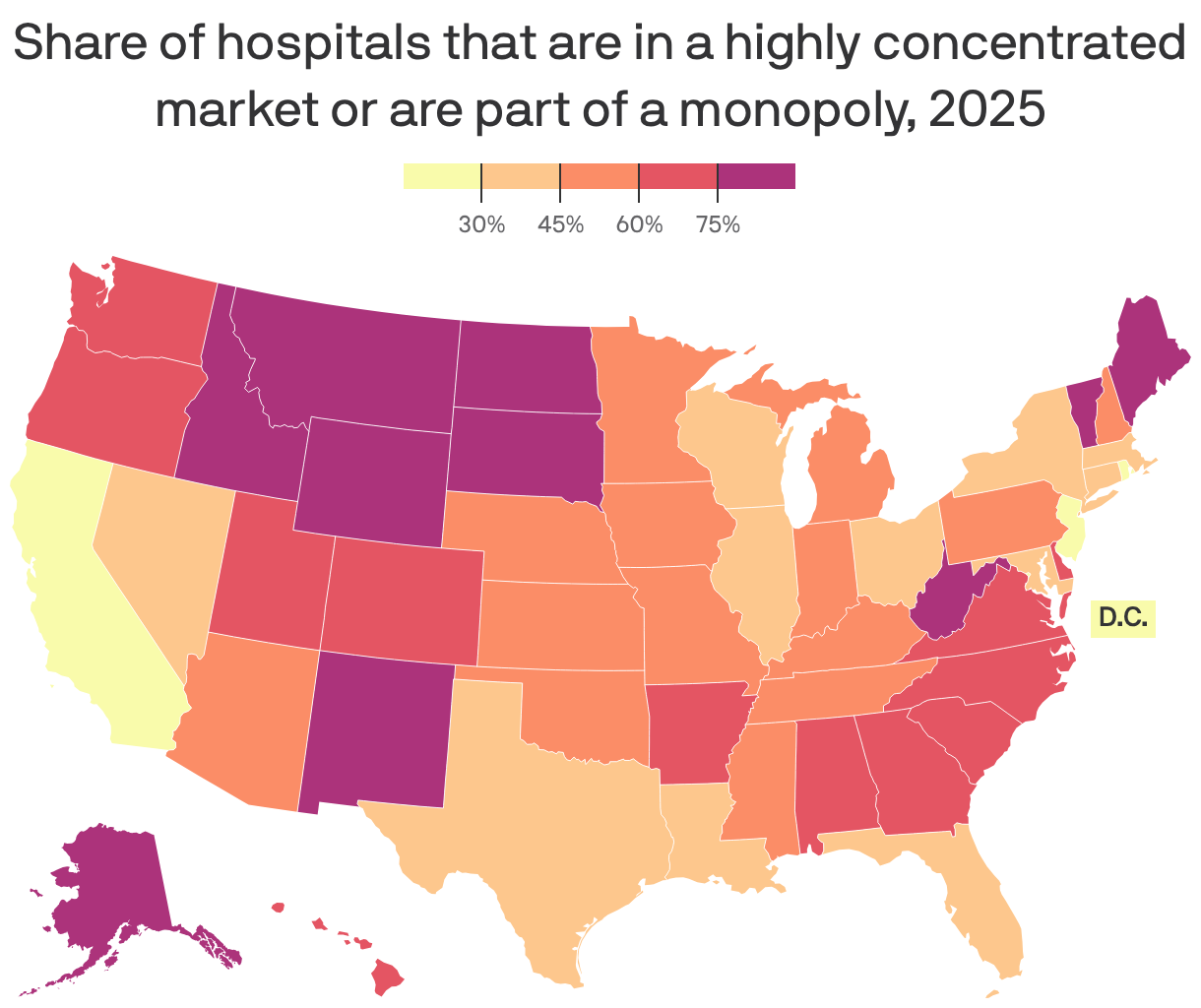
Colorado's health care system is heavily consolidated among a few hospital systems, a dynamic that is raising concerns among state lawmakers.
Why it matters: As rising health care costs put more financial strain on Americans, "one major and underappreciated factor driving price increases is rising consolidation among U.S. hospitals," according to Yale's new Health Care Affordability Lab.
By the numbers: 67% of the state's 80-plus hospitals analyzed in the Yale study are concentrated in ownership or represent a monopoly in certain markets.
- Between 2005 and 2025, four mergers in Colorado significantly reduced competition in the marketplace, the study found.
State of play: In each of the last two years, Colorado lawmakers have introduced legislation to allow the attorney general's office to investigate and block acquisitions and mergers that reduced competition and raised prices.
- "This is not a radical ask," bill sponsor state Sen. Cathy Kipp (D-Fort Collins) said at the hearing.
Yes, but: The hospitals defeated both bills, with Senate Bill 41 being the most recently rejected on March 5.
- Sen. Kyle Mullica (D-Thornton), an emergency room nurse, opposed the bill. "For many rural providers, we heard that it's not about consolidation — it's about survival," he said at the hearing.
The big picture: Hospitals accounted for 40% of the growth in national health spending between 2022 and 2024 — a much larger share than any other health spending category, per a recent KFF analysis.
- Since 2000, about 1,300 mergers have taken place among the nation's approximately 5,000 hospitals.
- The Federal Trade Commission has taken action on competition concerns in 13 of the deals.