What to know about your legal right to protest in Utah


Add Axios as your preferred source to
see more of our stories on Google.
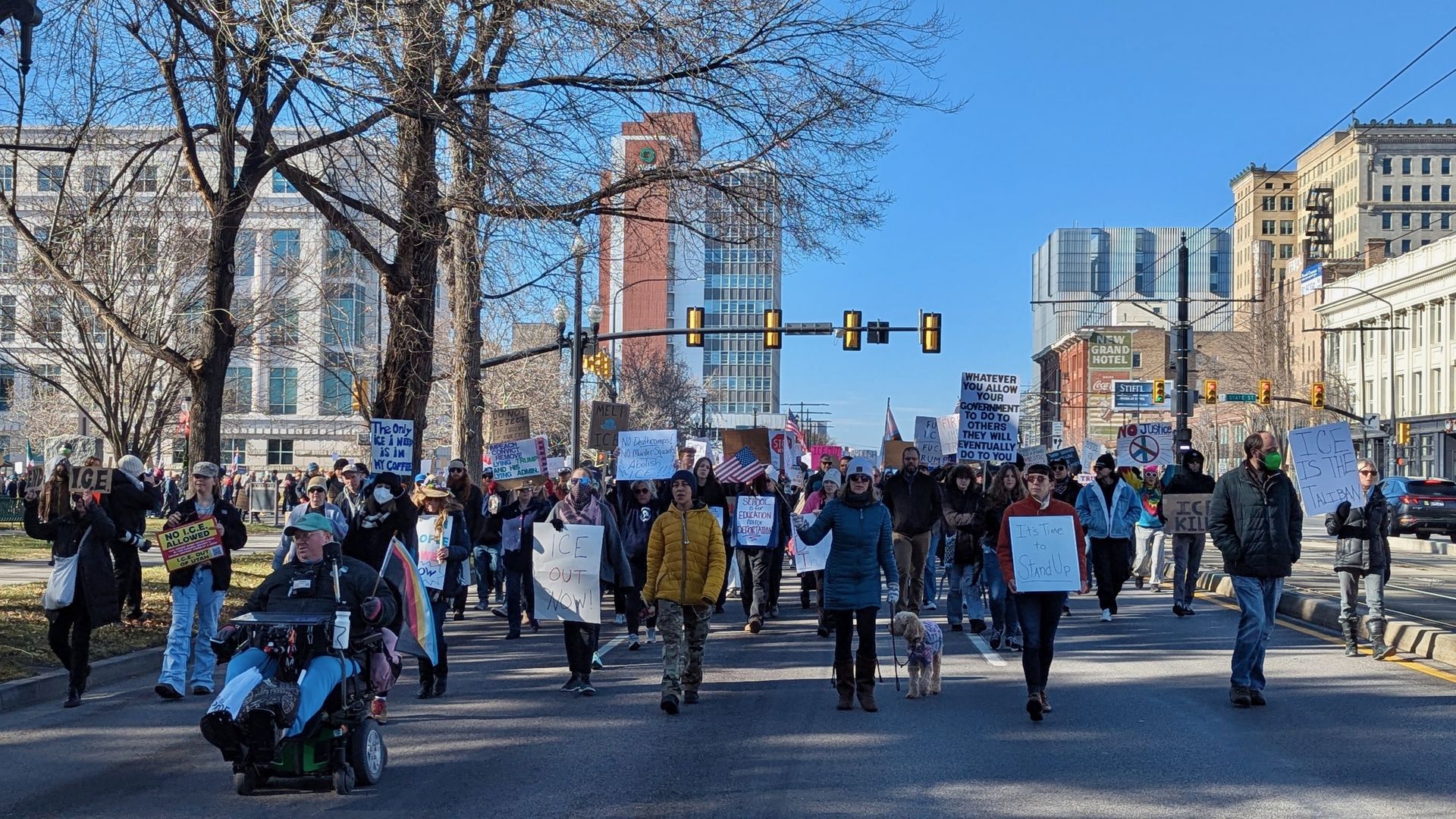
Protesters march on Jan. 10 in Salt Lake City. Photo: Erin Alberty/Axios
Anti-ICE rallies are planned in Utah on Friday as part of a nationwide demonstration and strike amid debates over protesters' rights.
The big picture: The rights to assemble, speak and petition the government are covered by the First Amendment, but legal limits remain that protesters should be aware of — particularly when tensions are high.
Between the lines: Rules around face coverings, recording law enforcement without audio, and whether individuals must identify themselves to law enforcement can vary by location, Maribel Hernández Rivera from the American Civil Liberties Union tells Axios.
Here's what to know:
Where can you protest legally?
Protestors can safeguard themselves by staying on public property, including streets, sidewalks, parks and outside government buildings, as long as entrances aren't blocked.
- Blocking traffic is one of the most common reasons protestors are arrested, Kylah Clay, national secretary of the National Lawyers Guild, tells Axios.
Flashback: In bills proposed after the summer 2020 protests, Utah lawmakers considered heightened penalties for riot-related offenses and legal protections for drivers if they hit protesters who block traffic.
- Yes, but: Those measures were abandoned or failed.
Can you film during protests?
Protesters may photograph or film anything in public view, including police activity — though courts often defer to law enforcement in cases where officers say recording interferes with their duties, per the First Amendment advocacy group Freedom Forum.
- Police have targeted individuals recording with phones, but it's harder to single one person out if others are also recording, Rivera said.
Interacting with law enforcement
If stopped by an officer, ACLU advises protesters to remain calm, keep their hands visible and follow directions to avoid escalation.
Zoom in: Utah law requires police to have "a reasonable suspicion to believe the individual has committed or is in the act of committing or is attempting to commit a public offense" to stop a person in public and demand ID.
- If that condition is met, refusing to give your name or birthday is a misdemeanor.
Zoom out: Protesters should ask whether they're free to go and leave calmly if the answer is yes.
- If you're arrested, you have the right to ask why and to remain silent. Don't disclose information or sign anything until a lawyer is present, Clay said.
- Protesters don't have to consent to searches, and officers cannot confiscate or demand access to footage on a phone without a warrant.