"No Kings" protest: What to know about your rights, safely protesting

Add Axios as your preferred source to
see more of our stories on Google.
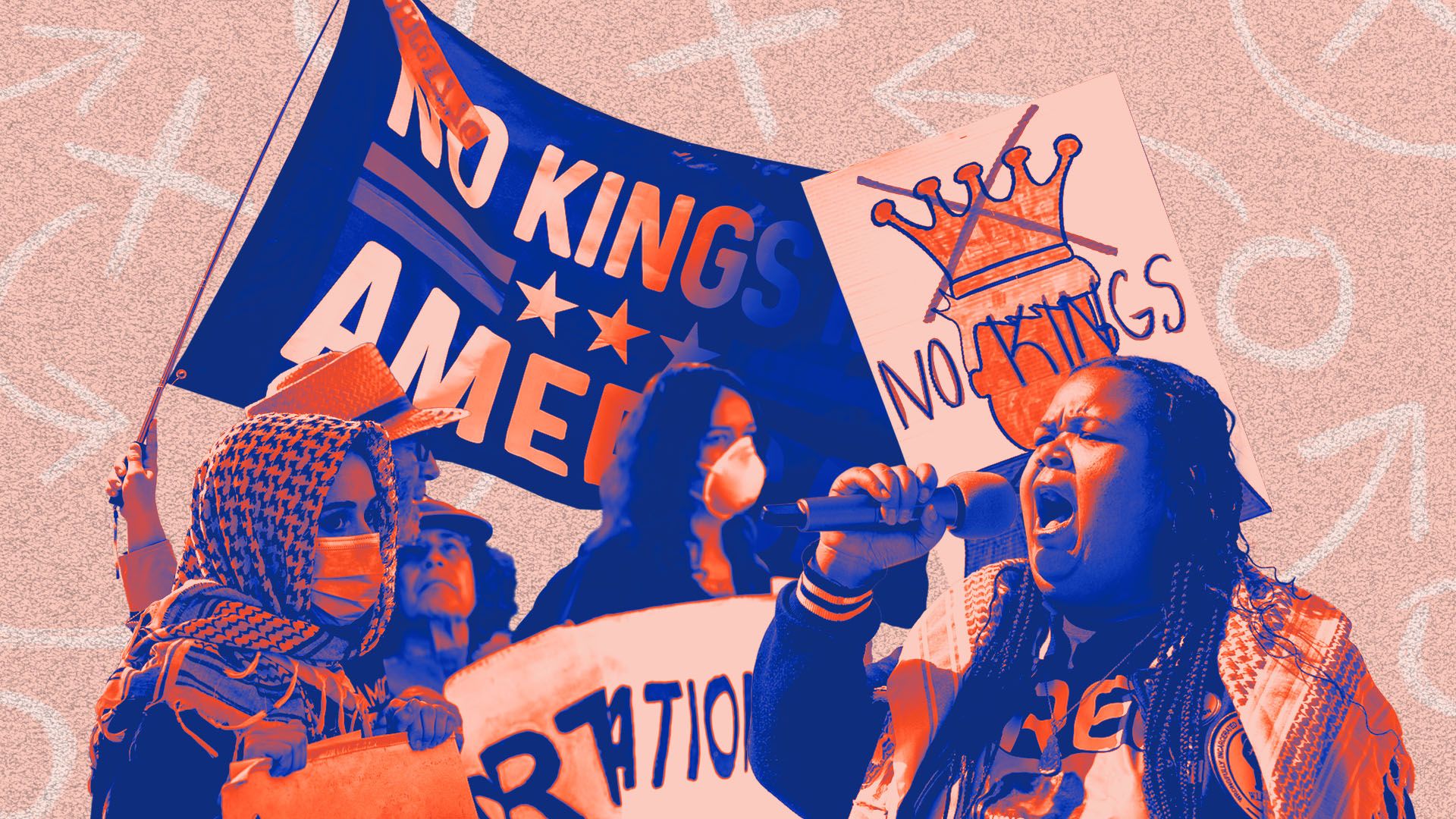
Photo illustration: Sarah Grillo/Axios. Photos: Jeff Kowalsky/AFP, David McNew, Daniel Knighton, and Christopher Mark Juhn/Anadolu via Getty Images
Millions are expected to protest nationwide this weekend for "No Kings Day," raising questions about how to demonstrate safely amid President Trump's law enforcement crackdowns.
The big picture: While most "No Kings" protests in June were peaceful, scattered incidents of violence in Los Angeles, Salt Lake City and Culpeper, Virginia have renewed focus on protest preparation and demonstrators' rights.
Advocacy experts and protest organizers advised demonstrators take these safety precautions.
Before you go:
Create a plan and several alternatives in the event of an emergency, psychotherapist Naomi Zikmund-Fisher told Axios via email. She is a legal observer and board member of the Detroit and Michigan National Lawyers Guild chapter.
- Study the protest route, and organize transportation to and from the event.
- Stick with a group and set a meet-up location if you get separated.
Pack essential supplies for the day in a suitable bag.
- Water, snacks, ID, medications and cash should be readily available.
- Wear non-distinctive clothing to avoid being easily identified.
- Don't bring anything you wouldn't want on you if you were arrested.
Consider surveillance precautions and how you want to safeguard your identity.
- Leaving your phone at home is the best way to protect privacy and prevent surveillance tracking.
- If you need to bring your device, keep it powered off throughout the protest.
- Disable biometric features like FaceID to prevent law enforcement from accessing your device.
- Download encrypted communication apps to avoid messages or calls being tracked.
Know your rights to peacefully demonstrate.
- Protesters retain the right to protest in public areas but need to avoid invading private property.
- Extra precautions should be taken around government facilities and protesters should pay attention to warnings from law enforcement officers or government officials, Zikmund-Fisher said.
- She added that protesters need to decide their own risk tolerance for going against orders of law enforcement officials before a protest.
- Write down emergency numbers on your body or a slip of paper in the event you are detained.
Lean on your community for additional information and assistance.
- ACLU Chief Political and Advocacy Officer Deirdre Schifeling shared in a "No Kings" press conference Thursday that the ACLU prepared tens of thousands of protesters for "No Kings" and will have on-site resources accessible.
- "We're proud that no kings will have know your rights materials available at events in ten languages, and this weekend, we will distribute millions of cards reminding people that the Constitution protects their freedom to protest peacefully," she said.
While protesting
Always be aware of your surroundings.
- Pay attention to suspicious behavior, unusual activity, packages and vehicles, and take note of escape routes.
- "The best practice is "see something, say something," Human Rights Campaign National Press Secretary Brandon Wolf told Axios.
- "Let an emergency contact know where you will be, make a plan to share status updates with them periodically, and alert event staff if any safety issue arises."
- Wolf said protesters should avoid engaging with agitators at all costs and use de-escalation techniques if necessary.
If you're exposed to tear gas or pepper spray:
- Protect your face and reduce exposure by wearing a face mask, goggles or a wet bandana over your nose and mouth.
- Avoid inhaling, and instead rinse your mouth and blow your nose to clear irritants.
- Do not rub your eyes. Flush them with a mix of half liquid antacid (aluminum hydroxide or magnesium hydroxide only) and half water.
If you're detained or arrested:
- Ask the police if you are free to go. If they say no, don't answer any questions without a lawyer present, except for possibly stating your name and showing your ID, Zikmund-Fisher said.
- She added that whether you are required to show identification to law enforcement varies by state, but not doing so will almost always escalate a situation.
- If you're inclined to record police interactions or arrests, Zikmund-Fisher said to be aware that capturing footage may anger officers, so it's best to do so from a safe distance and immediately back up the recording on another private, password-protected device.
What they're saying: "Having the right to do something does not mean others, including law enforcement and other government agencies, won't try to stop you from doing it," Zikmund-Fisher said.
- "Even if they're doing something they are not supposed to do, they always CAN," Zikmund-Fisher added.
Go deeper: What to know about Oct. 18 "No Kings" protests
Editor's note: This story was corrected to show Naomi Zikmund-Fisher is a psychotherapist (not an attorney).
