How to protect your legal rights at a protest

Add Axios as your preferred source to
see more of our stories on Google.
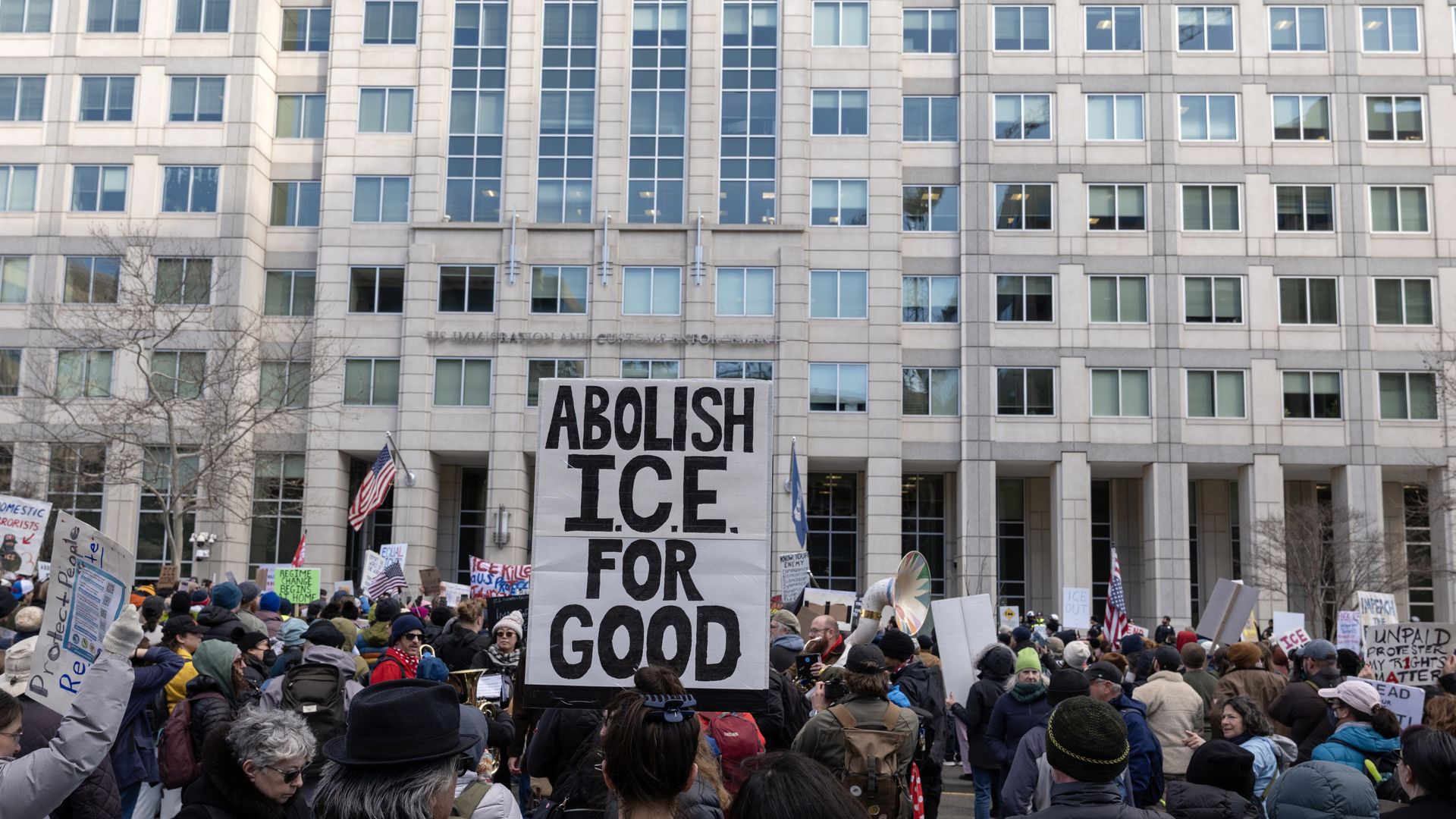
Protesters on Jan. 11 in Washington, D.C. Photo: Probal Rashid/LightRocket/Getty Images
The Trump administration has drawn record-setting protests nationwide, prompting millions of Americans to learn how to safely and legally exercise their right to demonstrate.
Why it matters: The right to assemble and demonstrate is covered by the First Amendment, but there are still legal limits on protests that participants need to be aware of, particularly when tensions are high.
- Several organizations are planning mass walkouts and demonstrations Tuesday to mark the anniversary of President Trump's inauguration.
- Some fundamental rights apply regardless of where you live, but demonstrators should review local laws before protesting, Maribel Hernández Rivera from the American Civil Liberties Union tells Axios.
- Rules around face coverings, recording law enforcement without audio and whether individuals must identify themselves to law enforcement can vary by location, she said.
Here's what to know about your legal right to protest.
Where can you protest legally?
Protestors should safeguard themselves by staying on public property, which includes streets, sidewalks, parks and outside government buildings, as long as entrances are't blocked.
- Blocking traffic is one of the most common reasons protestors are arrested, Kylah Clay, national secretary of the National Lawyers Guild, tells Axios.
- Demonstrators should also avoid engaging with agitators, which can escalate situations.
Can you film during protests?
In public spaces, protesters may photograph or videotape anything in plain view, including police activity.
- Rivera said police have targeted individuals recording with phones but said it's harder for one person to be singled out if others are also recording.
- Rivera suggests using a separate phone for protests, setting a six-digit passcode instead of fingerprint or Face ID features, using encrypted messaging apps and avoiding social media posts about protests during or after events.
- While turning your phone to airplane mode can prevent tracking in the moment, devices often store location data that could be accessed later, she added.
Interacting with law enforcement
If stopped by an officer, ACLU advises protesters to remain calm, keep their hands visible and follow directions to avoid escalating the situation.
Zoom out: Protesters should ask whether they're free to go and leave calmly if the answer is yes.
- If an officer places you under arrest, you have the right to ask why and to remain silent. You should not disclose information or sign anything until a lawyer is present, Clay said.
- Protesters do not have to consent to having themselves or their belongings searched, and officers cannot confiscate or demand access to footage on a phone without a warrant.
- Clay also advises arrestees to avoid accepting beverages or cigarettes from law enforcement, which can be used to collect DNA.
What to do if you believe your rights have been violated
If you believe your rights — or the rights of others — were violated, try to remember the officer's badge number, patrol car number and the agency they work for, Clay said.
- Gathering contact information from witnesses and documenting any injuries can be used to file a written complaint.
- When documenting police activity, focus on what law enforcement is doing, avoid sharing identifying details of individuals who could be harmed and collect contact information for families or lawyers rather than spreading footage online, Clay added.
- "It's going to be up to you individually to know what your rights are and weigh those risks," Clay said.
Go deeper: "No Kings" protest: What to know about your rights, safely protesting
