Salt Lake City's air quality is degrading


Add Axios as your preferred source to
see more of our stories on Google.
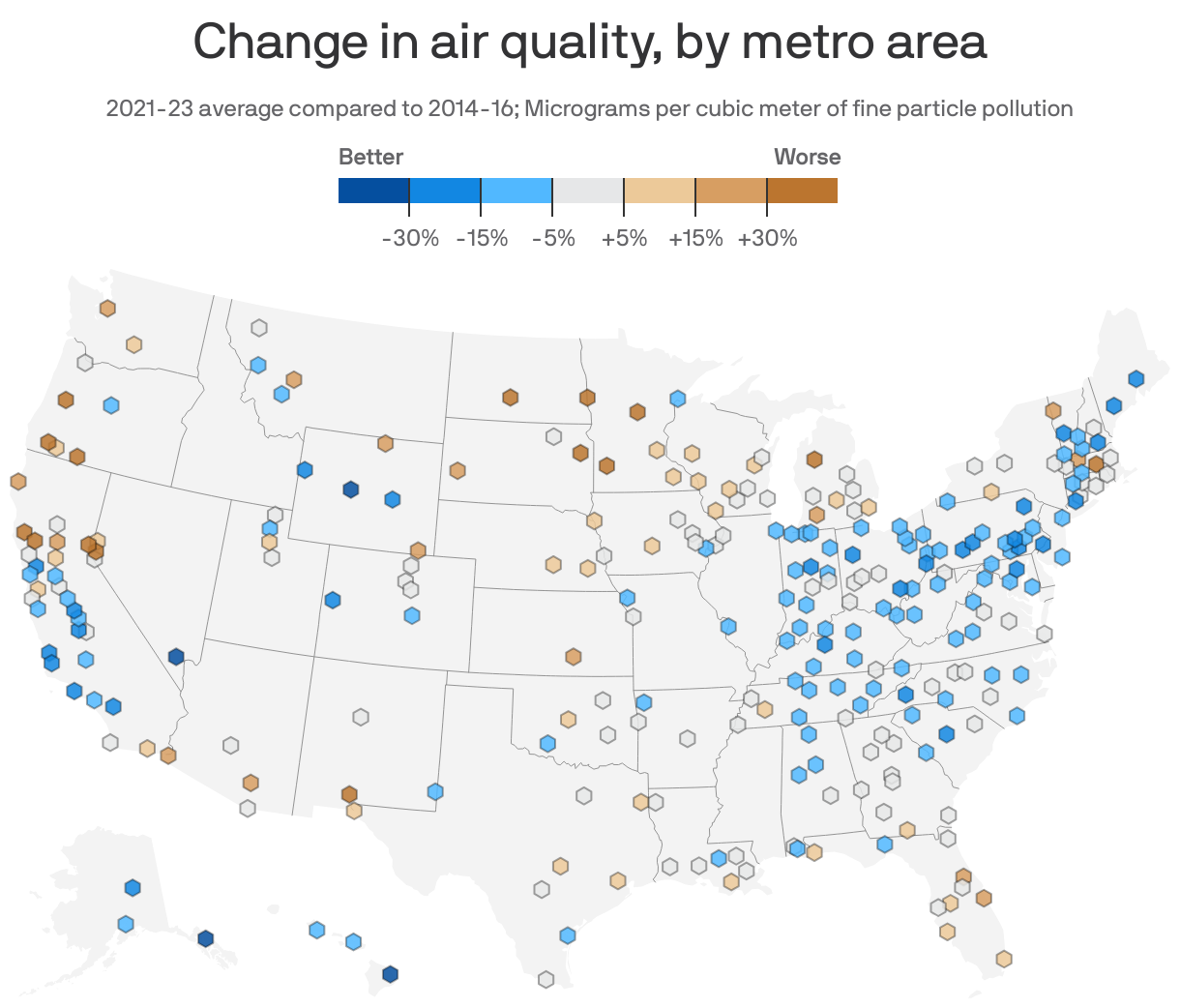
Air quality in Salt Lake City is getting worse, according to year-over-year data.
Why it matters: Long-term exposure to poor air quality is harmful to our health.
By the numbers: The average percentage of fine particle pollution in the Salt Lake City metro area increased about 6% between 2014-2016 and 2021-2023.
The big picture: Tracking fine particulate matter (PM2.5) is a helpful indicator of air pollution and a major factor in air quality index (AQI) scores, but it doesn't account for all variables. So air pollution can be worse than it appears on your weather app.
Zoom in: Along the Wasatch Front, mobile sources, including cars, trucks, airplanes and semitrailers, are a significant source of air pollution.
- Oil refineries, wildfire smoke and winter inversions also contribute to the problem.
- Nationally, Salt Lake City was the ninth-worst city in the U.S. for ozone pollution and the 19th-worst city for short-term particle pollution in 2024, per the American Lung Association.
Zoom out: A growing body of research shows that polluted air is connected to poor reproductive outcomes, increased dementia risk, and more asthma attacks and other respiratory health effects.
To stay safe, air quality experts recommend checking your local AQI, and also trusting your nose. If you smell smoke — even if the AQI is "green" — limit your time outside.