How wildfire smoke impacts fertility patients

Add Axios as your preferred source to
see more of our stories on Google.
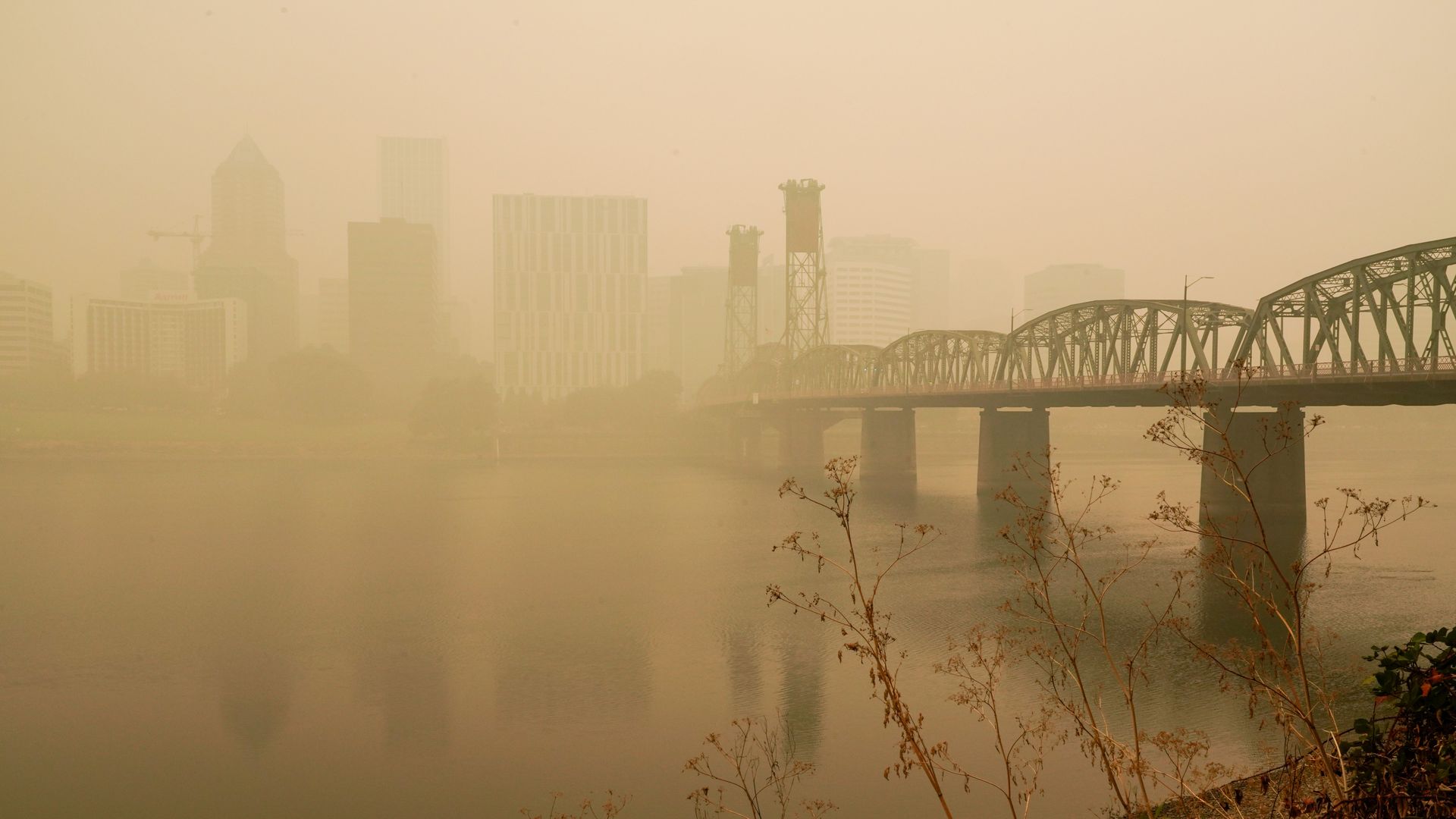
Researchers found that smoke from the 2020 Labor Day fires affected IVF patients. Photo: Rebecca Smeyne/Bloomberg
Unhealthy air quality due to wildfire smoke can negatively impact those receiving fertility treatment, according to a study from Oregon Health & Science University.
Why it matters: Human-caused climate change is leading to more severe and longer-lasting wildfire seasons across the West, while a growing body of research suggests exposure to harmful air pollution can lead to poor reproductive outcomes.
What they're saying: "I worry about how this will continue to affect not only patients undergoing fertility treatments, but all individuals who are trying to conceive," Molly Kornfield, a professor at the OHSU Center for Women's Health and study's lead author, wrote in a press release about January's study.
Driving the news: Much of Oregon — including eastern and southern parts of the state where large wildfires are currently burning — is under a moderate to unhealthy air quality advisory.
Context: Researchers connected with 69 patients who were undergoing in vitro fertilization or ovarian stimulation within six weeks of Oregon's 2020 Labor Day wildfires — when the skies were orange and the state's air quality was the worst in the world.
- The air quality index reading in Portland, where OHSU's fertility lab is located, was off-the-charts hazardous during that period, peaking at 516.
Between the lines: During fertility treatment, patients receive hormone injections for two weeks to stimulate egg production.
- Once the eggs are retrieved, they are injected with sperm and grown into blastocysts — the many-cell embryos that develop from a fertilized egg that are then frozen or placed into a uterus for pregnancy.
- Over 238,000 patients in 2021 received some kind of fertility treatment, according to the Centers for Disease Control and Prevention.
What they found: The patients who were exposed to wildfire smoke yielded fewer blastocysts than the 44 patients who did not have wildfire smoke exposure.
- IVF patients usually need multiple embryos — and embryo transfers — to ensure just one healthy baby.
What's next: OHSU researchers plan to continue research on how wildfire-polluted air impacts miscarriage rates, sperm count and quality, plus pregnancy outcomes.