How wildfire smoke impacts your health

Add Axios as your preferred source to
see more of our stories on Google.
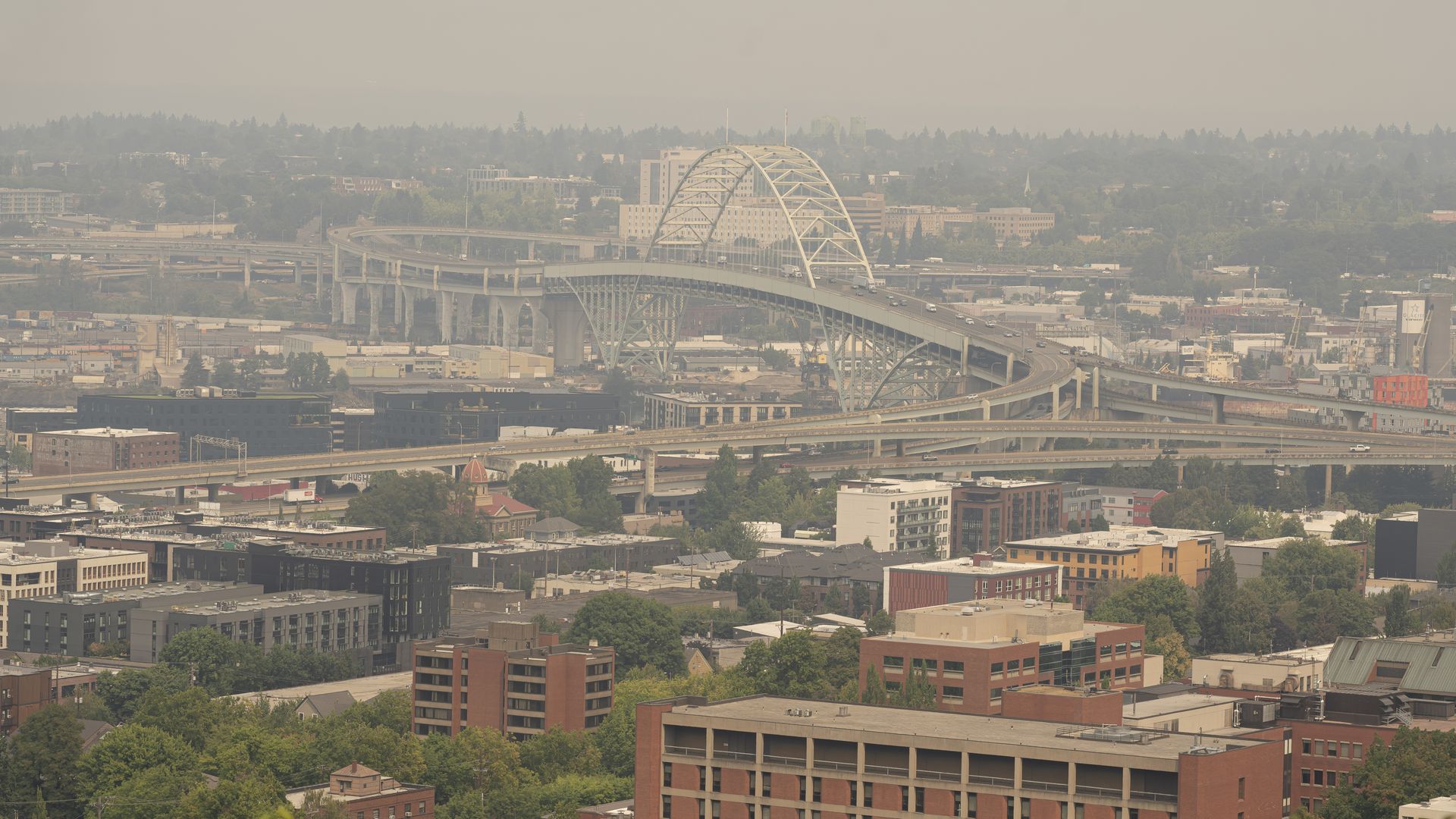
Wildfire smoke lingering downtown in 2021. Photo: Nathan Howard/Getty Images
West Coast residents are well aware of the impact wildfire smoke can have on our health. But when smoke enveloped the East Coast from fires in Canada last week, it brought new attention to just how devastating wildfires can be — even if they're burning hundreds of miles away.
Why it matters: Breathing in unhealthy levels of smoke and other air pollution can increase a person's risk of developing lung and heart conditions, according to the Environmental Protection Agency.
- It can also exacerbate pre-existing lung and heart conditions and can trigger asthma and heart attacks.
- Air pollution contributes to almost 11,000 deaths in the U.S. annually, according to a 2021 estimate, while a 2022 study estimated that it contributed to at least 1.8 million excess deaths in 2019 globally.
Flashback: Over Labor Day weekend in 2020, when the city's sky turned orange and hazy due to the Lionshead and Riverside fires, the air quality index reading in Portland was literally off-the-charts hazardous, peaking at 516.
How it works: Air pollution comprises solid and liquid particles, called aerosols, from many different sources — like vehicle exhaust or emissions from industrial facilities — that become suspended in air.
- The main component of wildfire smoke is particulate matter less than 2.5 micrometers (PM2.5) in diameter, which is far smaller than the diameter of human hair and fine beach sand.
- Particles less than 10 micrometers (PM10) in diameter are the most concerning air pollutants. They can be inhaled into the deepest part of the lungs and can enter a person's bloodstream, according to the EPA and the California Air Resources Board.
By the numbers: PM2.5 and PM10 are two of the five major pollutants that determine an area's air quality, which is reported using the EPA's air quality index (AQI).
- Any value above 100 is considered unhealthy, especially for sensitive groups of people, such as those with lung disease, older adults, children and teenagers and people who are active outdoors.
- At levels between 151 and 300, everyone is recommended to either reduce or avoid intense activities outdoors, while values between 301 and 500 are considered "hazardous" and everyone should avoid all physical activity outdoors.
The bottom line: In part due to climate change, wildfire season across the West Coast has become longer, hotter and drier, resulting in devastating damage to public land and private property and increasing concerns about the long-term impacts of diminished air quality.