Utah Republican Congressmen Lee and Curtis tout crypto freedom


Add Axios as your preferred source to
see more of our stories on Google.
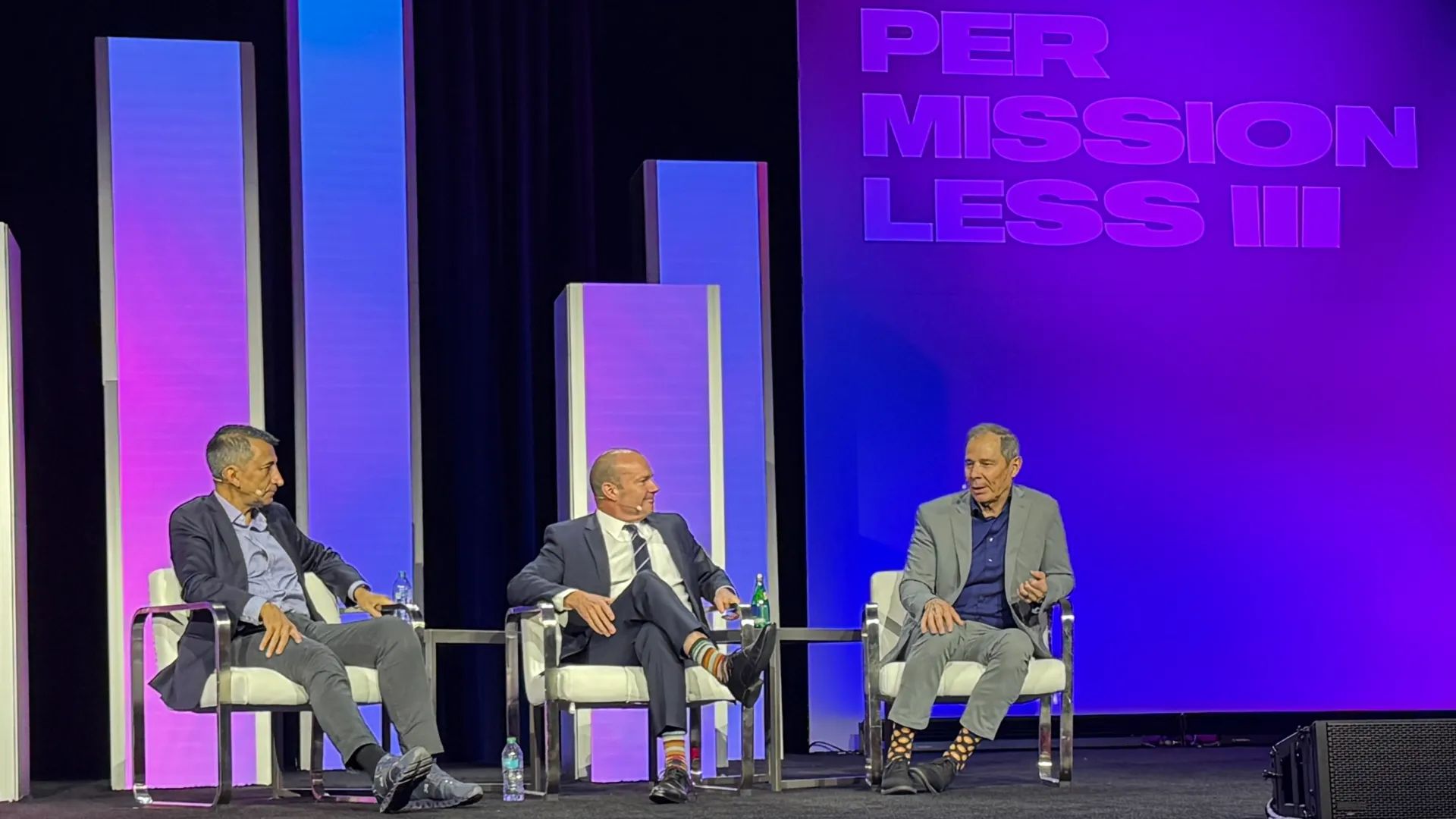
Left to right: Faryar Shirzad, chief policy officer at Coinbase; Sen. Mike Lee (R-Utah) and Rep. John Curtis (R-Utah), at Permissionless III, a cryptocurrency conference, in Salt Lake City on Friday. Photo: Brady Dale/Axios
Utah Sen. Mike Lee and Rep. John Curtis, both Republicans, are rallying the state's cryptocurrency scene with arguments that regulation treats investors as criminals.
Why it matters: Cryptocurrency has become an election issue across the nation this year — in part because former President Trump made it an issue.
- Meanwhile, the industry has spent well over $100 million in races nationwide.
Driving the news: Lee and Curtis took the stage Friday at an industry event in Salt Lake, arguing that crypto regulation must not go so far that it stifles innovation in Utah's tech and financial sectors.
- "Those of you who know Utah, we pride ourselves on being very innovative," Curtis, who is running to replace Sen. Mitt Romney, said at the Permissionless III conference downtown. "I think innovation is in Utah's DNA."
By the numbers: Utah is in the top 10 states for percentage of the population that owns cryptocurrency, according to Coinbase.
What they're saying: Curtis and Lee both characterized crypto regulation as financial surveillance of citizens, with law enforcement treating all citizens as potential criminals.
- "Instead of coming after you, we should be your protectors," Curtis said.
Reality check: So far, Congress has passed only one piece of legislation that directly impacts the cryptocurrency industry — and it would have loosened rules for crypto, rather than tightening regulation.
- President Biden vetoed the measure in May.
Threat level: Consumers have lost more than $1 billion in frauds and scams involving cryptocurrency, according to the FTC.
The big picture: Lee, an attorney who previously clerked for U.S. Supreme Court Justice Samuel Alito, won multiple applause breaks for claims that fintech regulation is a pretext for invasive governance.
- "Our deprivation of privacy has become more evident and more of a pressing concern in the last few years in the financial services industry [than] in any other era or any other period that I can think of," Lee told the room.
- He said cryptocurrency allows people to exchange money without using traditional platforms such as banks and payment cards, where transactions can be scrutinized by those companies and by the state.
The latest: Lee spoke to several pieces of legislation that he's introduced in Congress to curtail what he sees as government overreach.
- He specifically boosted his REINS Act, which he says would limit crypto regulation by requiring congressional approval for rule changes by federal agencies.
What we're watching: As this congressional session comes to a close, there's talk of legislation clarifying which agencies have authority over certain kinds of cryptocurrencies.
- Lawmakers also are examining proposals dealing with tokens used to represent dollars (stablecoins) and other nation-state currencies.
- However, cryptocurrency will most likely be deferred to the next Congress.