The Triangle is one of the country's hottest spots for retirees since the pandemic



Add Axios as your preferred source to
see more of our stories on Google.
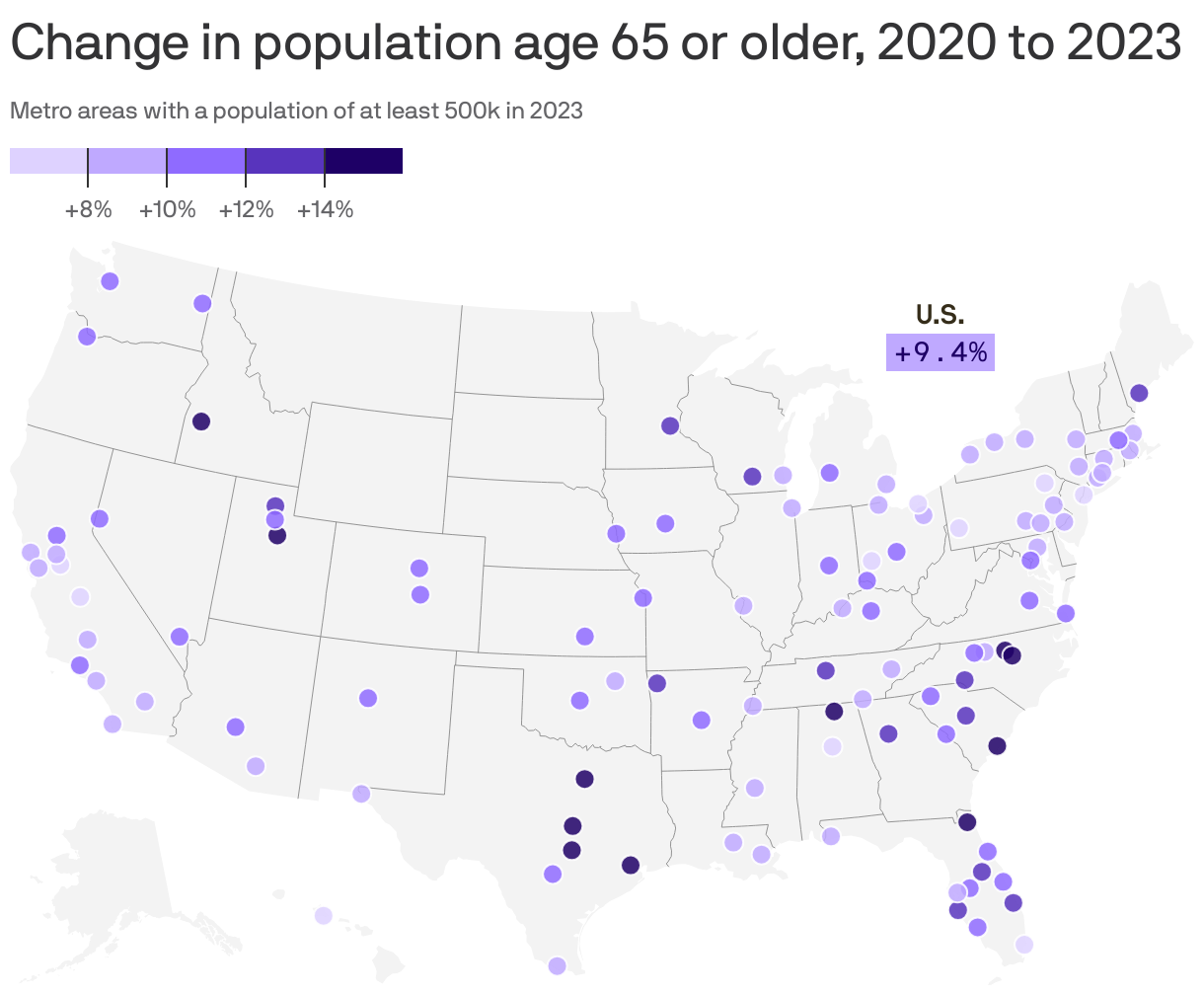
The Triangle has experienced one of the largest surges in retirement-age residents in the country since the pandemic, according to new data from the U.S. Census Bureau.
Why it matters: The growth in residents aged 65-plus places pressures on services targeted toward seniors, including health care. It's also shaping the real estate market, with some seniors relocating after selling homes in more expensive markets.
- And it's driving more demand for affordable housing for senior residents, with Chapel Hill, Wake County and Durham all adding more affordable units for that demographic.
The big picture: The trend reflects a broader national phenomenon. America's overall 65-plus population rose 9.4% to about 59.2 million people from 2020 to 2023, per the Census Bureau.
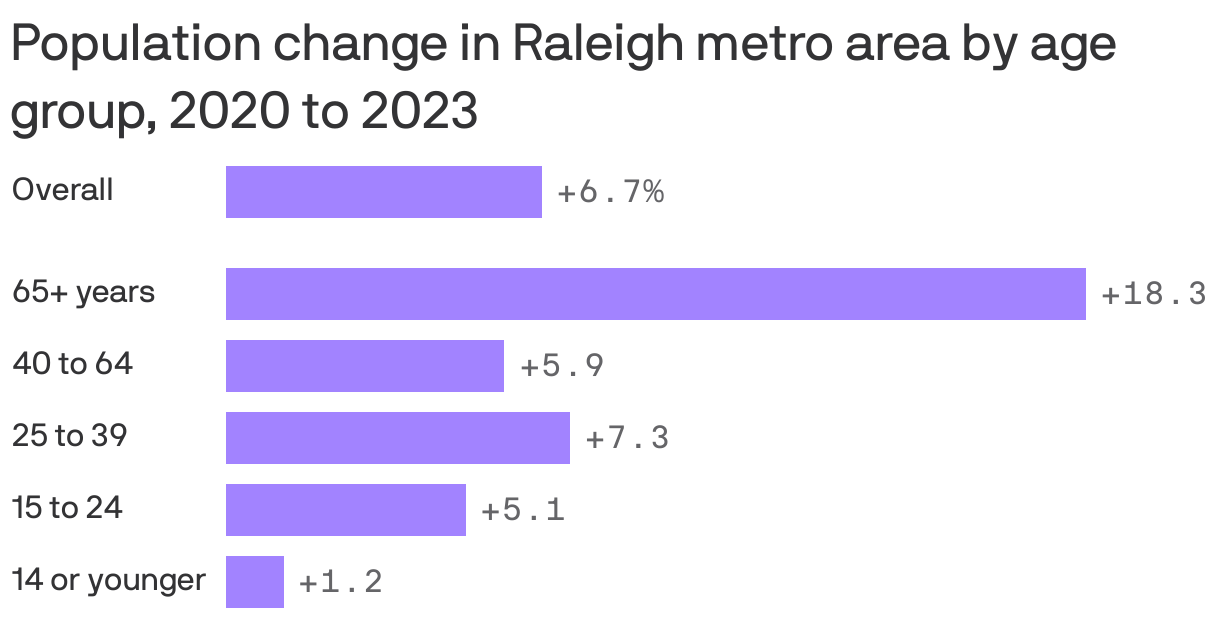
Between the lines: Retirees packing up and relocating are likely driving at least some of the change in cities with especially notable 65-plus growth, like Raleigh (+18.3%), Austin (+17.3) and Houston (+15.3%).
- Raleigh has also seen strong growth in its young population, making it one of the overall fastest-growing areas in the country.
- In fact, many retirees move here to be closer to their adult children and grandchildren.
Zoom in: The growth in older residents is leading to a big uptick in the construction of communities targeted to those 55 and up, ABC11 reported.
- Orange County estimates that its population of people 60+ will grow 43% by 2041, and will be 1.76 times larger than the population of people aged 0-17.
- A big draw for many retirees relocating to the area is its relative affordability and access to high quality hospitals, both in the UNC Health system and at Duke University.
- The ratio of doctors to residents in the Triangle is one of the highest in the country.
What they're saying: "While some metro areas saw increases in their youth population and many saw gains in working-age populations, what's particularly remarkable is the near-universal increase in the older population for metro areas across the country," said Lauren Bowers, chief of the Census Bureau's Population Estimates Branch, in the agency's analysis.