
Don't call it downtown: Meet the West End

Add Axios as your preferred source to
see more of our stories on Google.
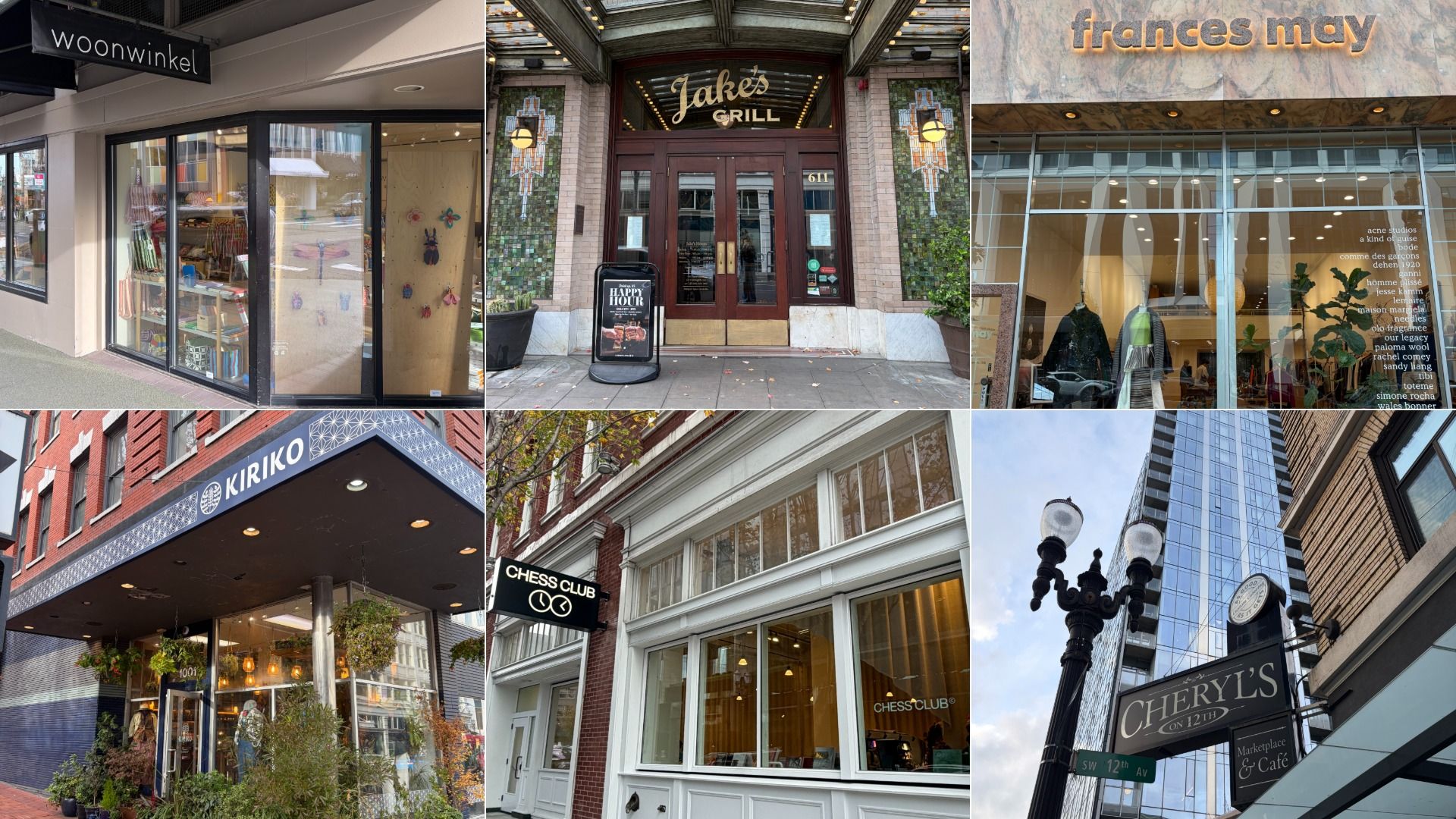
A little old, a little new, a lot of buzz. Photos: Meira Gebel/Axios
A pocket of downtown Portland is buzzing with new restaurants, trendy retailers and fresh energy, bringing more foot traffic to an area long anchored by neighborhood stalwarts.
- But did you know this area — from Burnside to Market and the Park Blocks to I-405 — has a name? Meet the West End.
Why it matters: The West End has existed in planning documents and development circles for decades, but it's never quite caught on with everyday Portlanders. Now, the area's growing popularity could finally make it stick.
- "It's more of a thing now than it ever was," Randy Gragg, a longtime architecture critic and urbanism writer, told Axios.
- "There's enough of a neighborhood there that it probably needs a name, and why not this one?"
State of play: Today, the West End is a mix of old and new.
- A little slice of Japan: Japanese-inspired businesses have become particularly concentrated here, including Kokoro, Mako Matcha, Sushi Fukami, Tanaka, Hachi and Ramen Ryoma.
- The newbies: Chess Club, Dolly Olive, the Ritz-Carlton's Flock food hall, Toasted S'mores Bar, Shirtzenpantz and Stumptown's 11W location are among the newest additions.
- The OGs: Jake's Grill, Cheryl's on 12th, Mucca Osteria, Multnomah Whiskey Library, Nong's Khao Man Gai and Frances May have been drawing Portlanders to these blocks for years.
How the West End got its name, though, remains "a bit of a mystery," per Aster Bloem, a city planning spokesperson. Bloem theorized it's likely "just a geographic reference that was used for planning purposes."
Flashback: Once a largely residential quarter of downtown, this stretch became even more isolated from neighboring Goose Hollow when I-405 was carved through the central city in the 1960s.
- By the late 1990s, West End property owners, businesses and city agencies came together to discuss how to unlock the neighborhood's economic potential, which culminated in a series of zoning amendments adopted by the city in 2002.
- Around the same time, the Portland Streetcar was being built along Southwest 10th and 11th avenues, the Central Library underwent a major renovation and Director Park was in the works.
Yes, but: Those early public investments paid off.
- Property owners renovated storefronts, architecture firms like ZGF and Skylab moved in, and developers like Project and Downtown Development Group helped shape the area's identity in the early aughts.
- The goal, Gragg said, was to bring people from Powell's and the Brewery Blocks across Burnside.
What's next: The West End could soon become an "anchor" for downtown's wider revival, Jeff Kovel, founding principal at Skylab, told Axios.
- His firm is working with nonprofit People's Tributary on a proposal to connect the West End to a future revamped waterfront along Southwest Harvey Milk Street, building on the neighborhood's existing momentum.
- "To really revitalize downtown we need a focused stream of energy to build on rather than isolated islands and pockets around the city," he said.
The bottom line: While developers and realtors have embraced the West End name to market this swath of the city, many Portlanders — including some business owners I spoke to — still just call it downtown.
⬇️ Tell us your thoughts in the survey below.