Oregon paid an estimated $670M in Trump's rejected tariffs


Add Axios as your preferred source to
see more of our stories on Google.
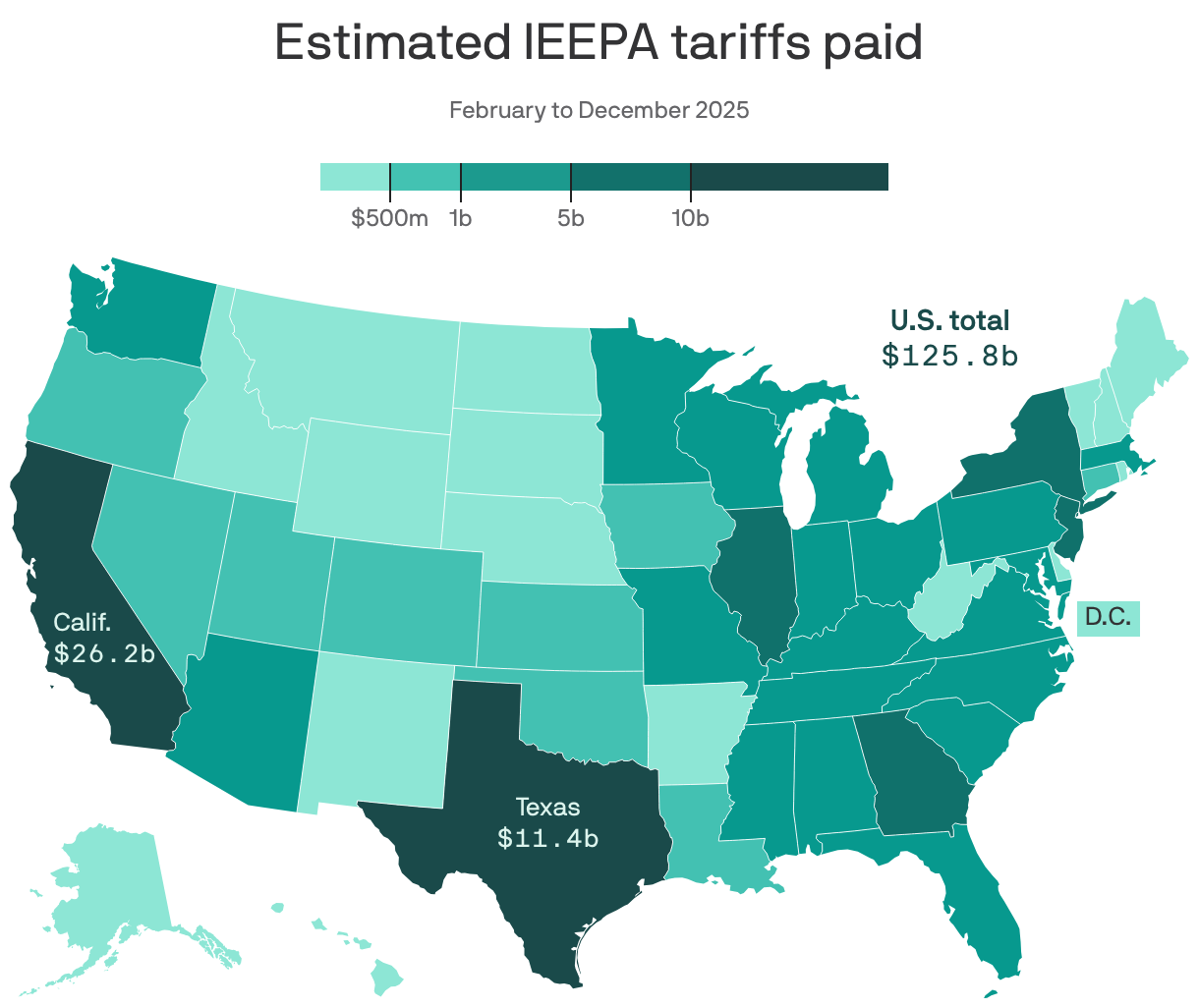
Roughly $670 million is now potentially up for grabs in Oregon after the Supreme Court struck down a swath of President Trump's tariffs on Friday, according to the Trade Partnership Worldwide economic research firm.
Why it matters: Those tariffs, reversed in a case led by Oregon Attorney General Dan Rayfield, likely made all kinds of stuff more expensive as businesses passed higher costs onto everyday Americans.
- Yes, but: The ruling could now lead to a chaotic refund process — and it's unclear who gets to pocket that cash.
The big picture: The sweeping global tariffs overturned by the Supreme Court were instituted under a previously untested law, the International Emergency Economic Powers Act (IEEPA) — but they don't make up the entirety of Trump's tariff agenda.
- Trump responded to the ruling by saying he would sign an executive order to impose a blanket 15% tariff on all nations under section 122, which allows him to impose tariffs of up to 15% for 150 days to address trade deficits or a dollar crisis.
State of play: The overturned IEEPA tariffs mean nearly $126 billion is now in limbo across America, according to Trade Partnership Worldwide, based on trade from February to December 2025.
- That impact was largest for some of the biggest states, with California leading the way with $26 billion paid in IEEPA tariffs.
What they're saying: "The President may be an incredibly powerful person, but he does not get to unilaterally sit in his office and raise taxes hidden as tariffs on all Americans," Rayfield said in a statement on social media.
What's next: The Supreme Court ultimately left the question of refunds up to the Trump administration in its ruling.
- "The Court says nothing today about whether, and if so how, the government should go about returning the billions of dollars that it has collected from importers," Justice Brett Kavanaugh wrote in his dissent.
The bottom line: With Trump's new tariffs set to go into effect Tuesday, Rayfield said his office "will be watching incredibly closely to make sure that he follows the law and he does them as Congress intended."