Fire weather days surge in Oregon

Add Axios as your preferred source to
see more of our stories on Google.
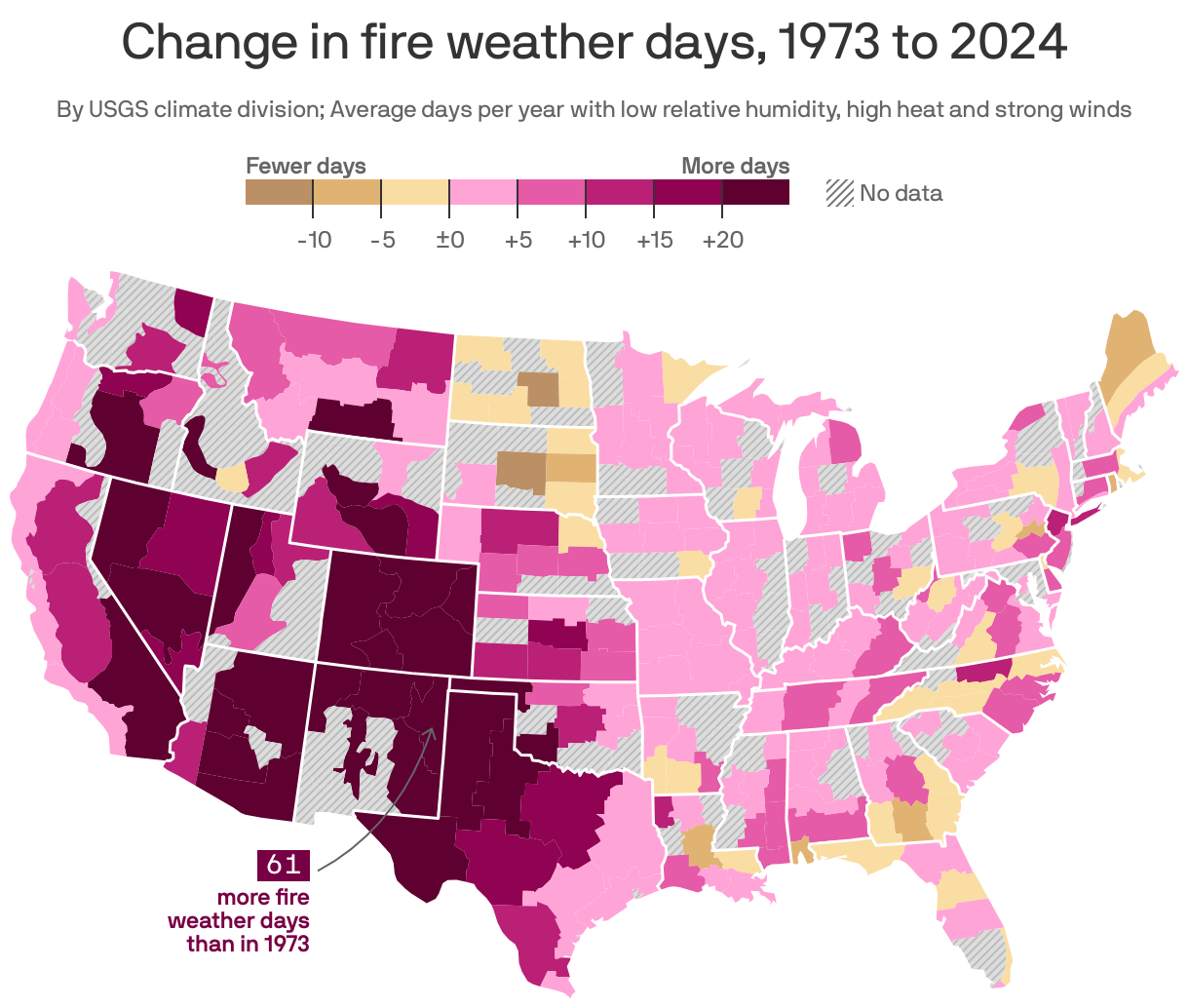
Hot, dry and windy weather that helps wildfires spread is becoming more common in parts of Oregon and across much of the U.S. amid climate change, a new analysis finds.
Why it matters: While the vast majority of fires in the state are human-caused, "fire weather" can give them the push they need to grow.
- Extreme wildfire events more than doubled in frequency and magnitude globally over the past two decades, a 2024 study found.
Driving the news: The number of fire weather days across Oregon rose by 9 days on average between 1973 and 2024, per an analysis from Climate Central, a research group.
- North Central Oregon (Wasco, Wheeler and Morrow counties) and South Central Oregon (Deschutes, Harney, Lake and Jackson) saw the biggest increases, with an extra 18 days and 23 days of fire weather, respectively.
The intrigue: Oregon's most destructive fires have historically occurred in wooded areas away from major metros, but climate change may significantly increase their likelihood in the future.
- Southern California's shocking fires in January served as a painful reminder that a perfect storm of poor conditions could lead to catastrophic blazes in urban areas — something Portland-area firefighters are preparing for.
How it works: Climate Central's analysis defined a "fire weather day" as one with temperatures of at least 45°-55°F (depending on the season), relative humidity within 5% of regional thresholds, and sustained wind speeds of 15mph or more — all happening simultaneously during at least two hourly measurements on a given day.