How Supreme Court ruling on homelessness affects Portland

Add Axios as your preferred source to
see more of our stories on Google.
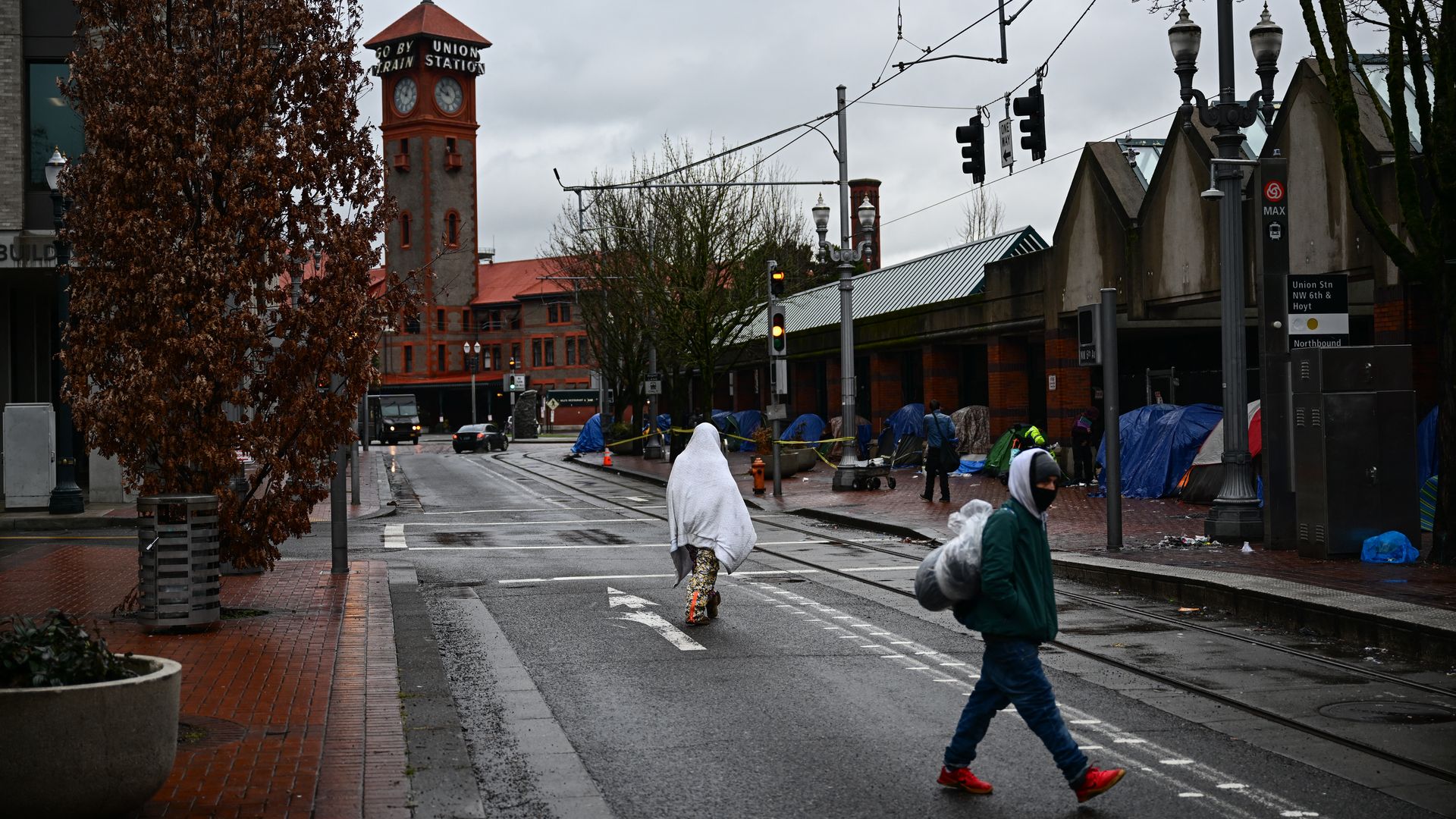
The Supreme Court ruled in favor of the urban camping ban in Grants Pass. Photo: Patrick Fallon/AFP via Getty Images
Portland is unlikely to be immediately impacted by a Supreme Court ruling that paves the way for more restrictive laws targeting outdoor camping.
Why it matters: While the court's Friday decision in favor of Grants Pass' 24/7 urban camping ban could embolden homelessness policies across the country, Oregon cities still have to follow a state law passed in 2021 that requires any restrictions on those living outside to be "objectively reasonable."
Driving the news: Portland is set to begin enforcing its outdoor camping ban Monday, which allows people to camp outdoors on public property only if the person does not have the "means to acquire reasonable alternate shelter," like in a city- or county-run site.
- It also restricts "activities" such as blocking pedestrian right-of-ways, building fires, digging into the ground and selling bicycles or car parts.
- Enforcement will focus on camps presenting "the greatest health and safety risks," according to the ordinance.
- Repeat violators face a maximum $100 fine or up to seven days in jail — or both, though the ordinance encourages the district attorney to divert offenders to treatment centers instead.
What they're saying: In a statement, Portland Mayor Ted Wheeler said that he hopes the SCOTUS decision compels state lawmakers to revisit the current law.
- "We hope the Legislature will see this opportunity to consider the tools cities truly need to manage public camping, provide sufficient shelter, and keep our streets safe and clean."
Catch up quick: In 2018, Oregon Law Center sued Grants Pass on behalf of its unhoused population on the basis that its policies of ticketing and jailing those who break municipal code violates the Eighth Amendment's cruel and unusual punishment clause.
- According to Grants Pass' city code, it is illegal to sleep in public parks, including sidewalks and parking lots, or to use sleeping materials to set up temporary living space.
- Those found guilty more than twice in one year face up to 30 days in jail and a $1,250 fine. The city said in a filing its "modest" fines and "short" jail times were justified.
Zoom in: In an opinion published Friday, Justice Neil Gorsuch, on behalf of the majority, agreed with the city, writing: "Homelessness is complex. Its causes are many. So may be the public policy responses required to address it."
- In a dissent, Justice Sonia Sotomayor wrote, "Sleep is a biological necessity, not a crime," and called the Grants Pass law "unconscionable and unconstitutional."
- Grants Pass Mayor Sara Bristol told USA Today that she is relieved by the court's decision and that the city "will be able to reclaim our city parks for recreation."
Between the lines: Bristol said the city will review the high court's decision along with state law to determine next steps.
The other side: Ed Johnson, Oregon Law Center's director of litigation who filed the suit, told Axios he's disappointed in the court's decision, but,"the solution to our homelessness crisis is more affordable housing."
- Jessica Vega Pederson, Multnomah County chair, said in a statement that the ruling doesn't change the reality on the streets: "People still need places to stay warm and dry and ultimately leave homelessness. "