U.S. Supreme Court upholds camping ban, settling uncertainty on San Diego's law

Add Axios as your preferred source to
see more of our stories on Google.
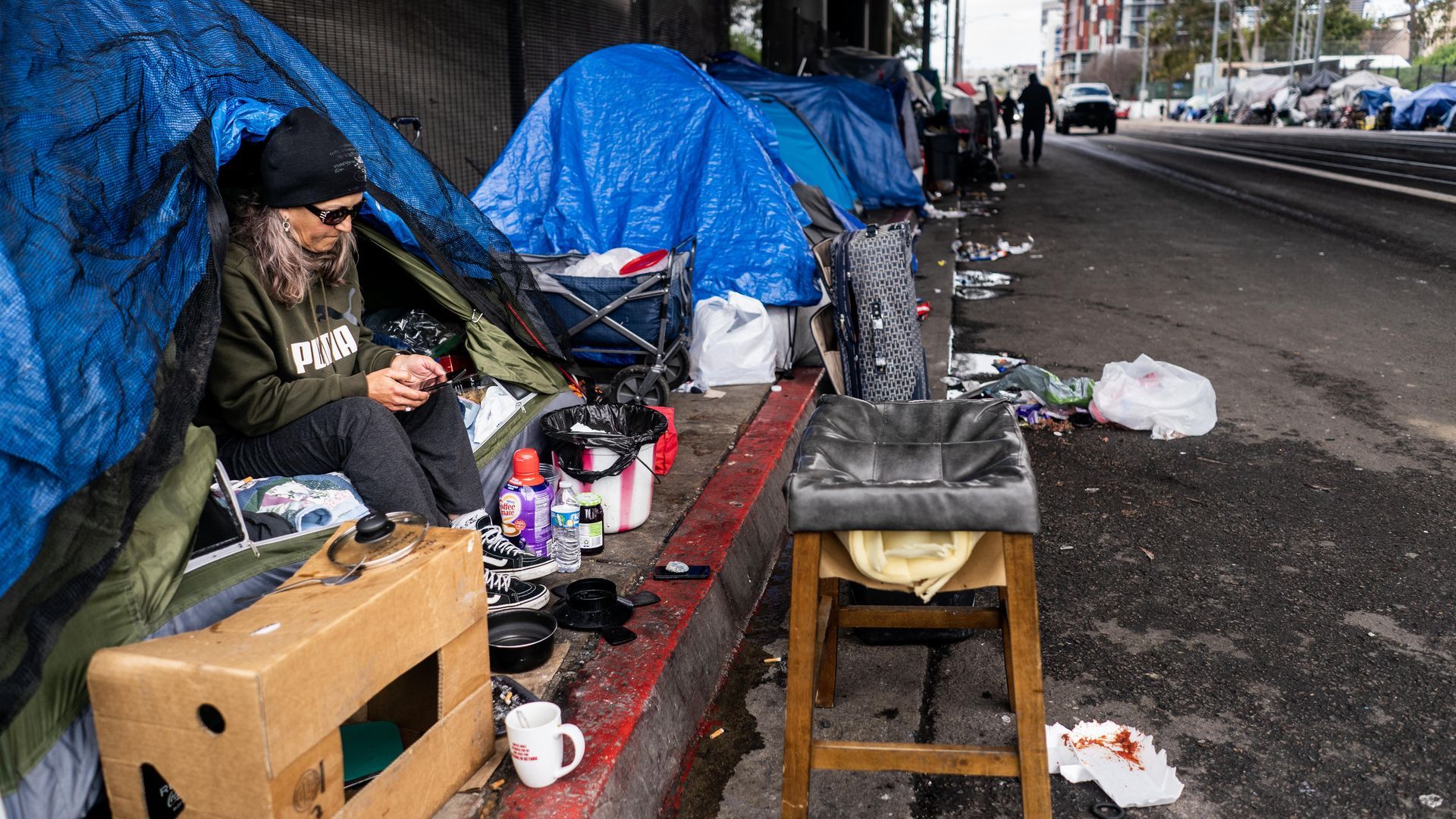
A homeless encampment in downtown San Diego last year. Photo: Melina Mara/The Washington Post via Getty Images
The U.S. Supreme Court ruled Friday that bans against homeless people sleeping outdoors, even when shelter space is unavailable, are not cruel and unusual.
Why it matters: The ruling opens the door for cities to pursue similar policies — or expand existing ones — that advocates for the unhoused argue criminalize homelessness.
Driving the news: The 6-3 SCOTUS majority sided with the Oregon town of Grants Pass in a 2018 lawsuit filed on behalf of the city's homeless population.
- The city banned people from sleeping in parks or using sleeping materials to set up living spaces, allowing police to ticket or arrest violators.
- The decision overturned a ruling from the 9th U.S. Circuit Court of Appeals, based in San Francisco, which said public sleeping bans when shelter bans are not available violate the Eighth Amendment's prohibition of cruel and unusual punishment.
The latest: San Diego Mayor Todd Gloria said he has no plans to change the ordinance the city adopted last year, which bans camping at all times near "sensitive" areas like schools, shelters and parks, and anywhere else if shelter is available.
What they're saying: "This ruling brings much-needed clarity to how the city can enforce our laws against unsafe encampments; however, it will not change our strategy on homelessness," Gloria wrote in a statement.
- His spokesperson, Rachel Laing, said the ordinance is not intended to be punitive or to turn jails into de facto shelters, but to encourage residents to use shelter and keep certain areas clear.
- California Gov. Gavin Newsom issued a statement praising the ruling. "This decision removes the legal ambiguities that have tied the hands of local officials for years and limited their ability to deliver on common-sense measures to protect the safety and well-being of our communities," he said.
Zoom in: San Diego County district attorney Summer Stephan argued in a brief to the Supreme Court that the lower court's ruling it was reviewing had created "uncertainty about the validity" of San Diego's law.
- A day before the ruling, Escondido adopted its own camping regulations similar to San Diego's.
The other side: Jennifer Hark Dietz, CEO of homeless services provider PATH, said in a statement the ruling "is devastating and will have disastrous consequences for unhoused individuals across the country, including the 181,000 people experiencing homelessness in California."
The bottom line: San Diego homelessness continued to increase last year, even while it plummeted downtown.
- 826 people were counted downtown in May, down from 2,104 one year earlier, according to the Downtown Partnership's monthly count.
- Downtown is disproportionately home to areas in which encampments are never allowed under the city ordinance.
- Nonetheless, the region's homeless population rose by 3% last year, while the unsheltered population in the city increased by 6%.