How Oregon's wildfire season is shaping up this year

Add Axios as your preferred source to
see more of our stories on Google.
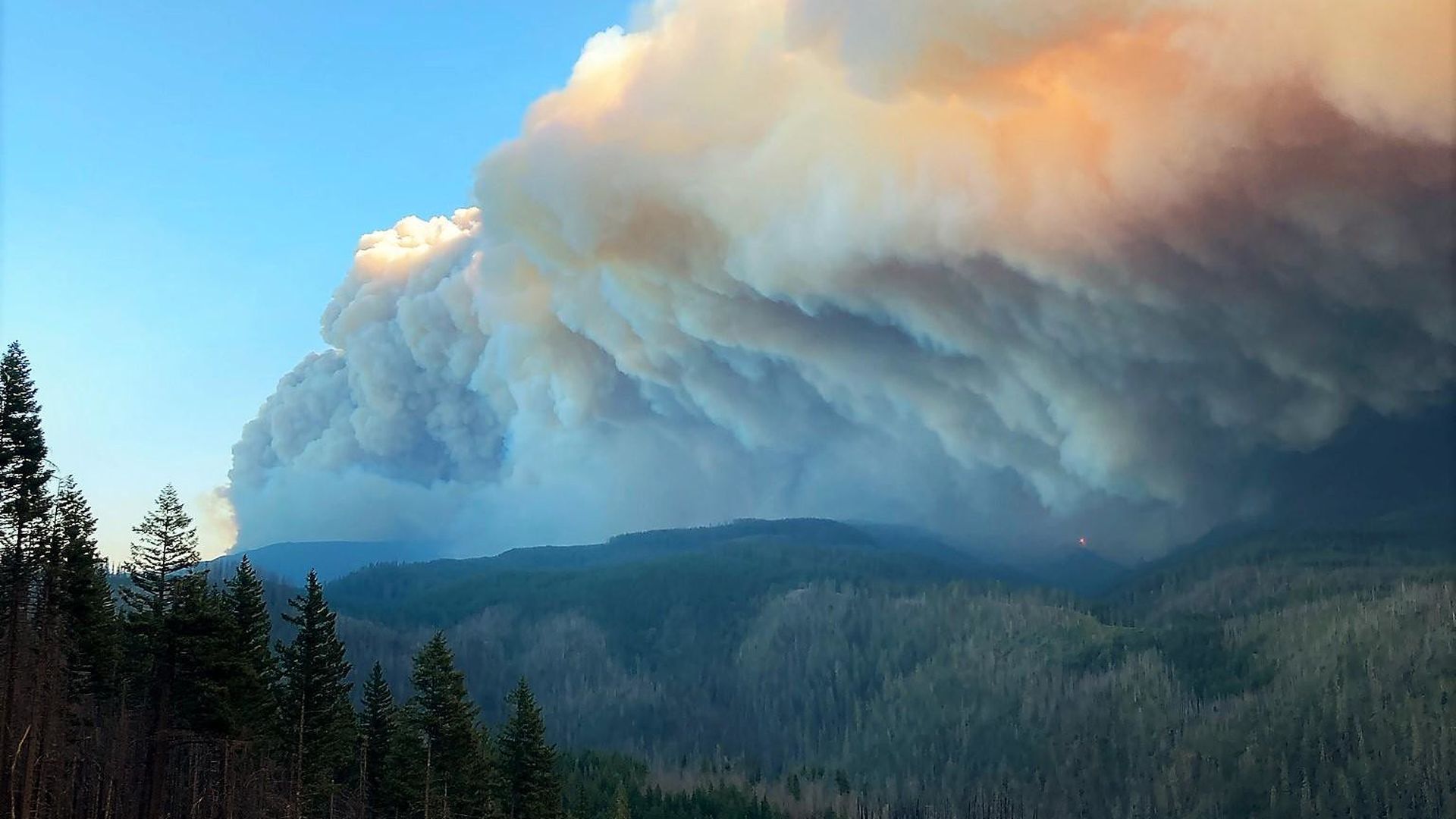
Smoke from the Riverside Fire in 2020 contributed to orange skies over Portland. Photo: Courtesy of U.S. Forest Service
A warmer and drier spring is fueling an elevated risk of wildfires this summer in southeast Oregon and western Washington, according to federal and state authorities.
Why it matters: Wildfires across the Pacific Northwest have become stronger and burned longer in recent years in part due to climate change. And even if the flames are isolated to one area, harmful smoke can travel hundreds of miles.
Threat level: Southeast and central Oregon experienced less-than-average rainfall this past winter and spring. Coupled with a projected weak monsoon season this July, re-emergence of drought conditions is likely, Larry O'Neill, Oregon's state climatologist, told Axios via email.
- Meanwhile, Washington issued a statewide drought declaration following "both below-normal mountain precipitation and above-normal temperatures" this spring.
Between the lines: A study conducted after the devastating 2020 Labor Day wildfires found a strong correlation between below-normal spring precipitation levels and warmer temperatures with the incidence of large wildfires.
What they're saying: Dry, hot east wind events, though, are the ultimate "wildcard for wildfire activity," according to O'Neill.
- "It is impossible to predict when or if they will occur, but the fuels and landscape will be dry enough for such an event to be potentially impactful."
Zoom in: Two large wildfires already have broken out in Oregon this year.
- Lightning caused over 6,300 acres to burn just outside of Crater Lake National Park in Chemult in April.
- Officials from the Northwest Interagency Coordination Center are still determining the cause of another smaller fire last month near Silverlake.
The big picture: While the rest of the country may see a record-breaking heat wave this week, it will largely skip the Pacific Northwest, Rebecca Muessle, a meteorologist at Portland's National Weather Service office, said.
- "But we aren't out of the woods," she told Axios. "Some parts of Oregon will be under moderate heat risk on Thursday and Friday" as temperatures are predicted to reach up to 90° and dry up vegetation quickly.
The bottom line: Humans cause the majority of wildfires in the state. That's why Oregon Department of Forestry recommends those people living in more urban areas pay attention to local fire restrictions and get their cars serviced before traveling this summer.
- "Faulty parts and tow chains can throw sparks into dried grass as you're driving and can start a fire without the driver even knowing," Jessica Neujahr, a forestry spokesperson, told Axios.
- If you build a fire in a designated area or fire ring, ensure it is cold to the touch before leaving.