Portland community college enrollment inches up


Add Axios as your preferred source to
see more of our stories on Google.
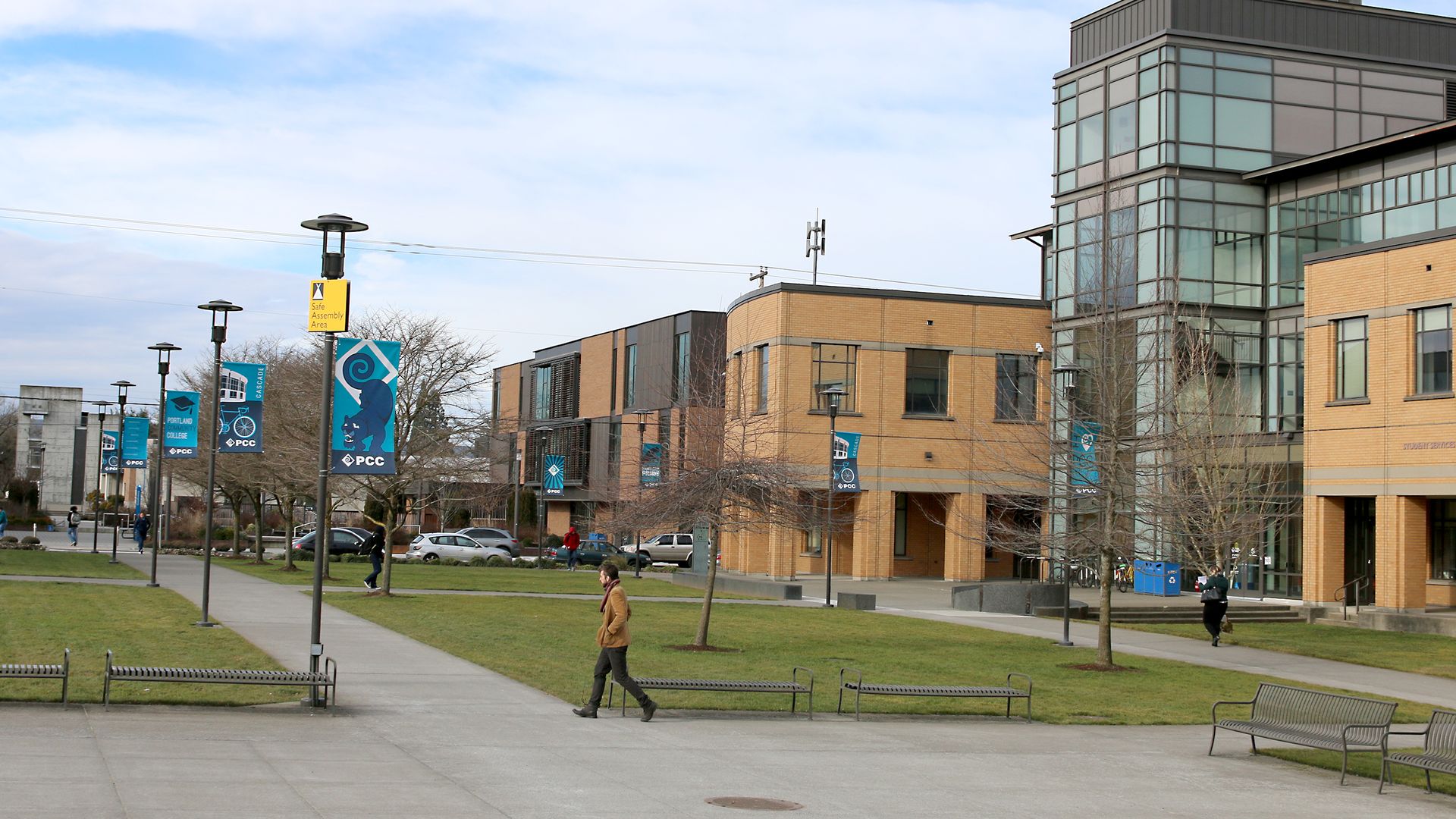
Portland Community College's Cascade campus. Photo: Courtesy of Portland Community College
As Portland-area high school seniors prepare to graduate next week, many are planning to continue their education at community colleges near home.
Why it matters: After dropping for years, U.S. community college enrollment, buoyed by younger students and fresh interest in job-related programs, rose this spring for the first time in more than a decade, according to new data from the National Student Clearinghouse Research Center.
For example, Portland Community College experienced a slight bump in enrollment (0.1%) this spring term versus last. But this term's enrollment, 25,957, is down from spring 2019's enrollment of 33,442 — a 23% decrease.
Meanwhile, Clark College in Vancouver saw an even larger drop in enrollment — 38% — from 2019 to 2023.
What they're saying: "We’ve been slower to see any enrollment gains than some of our peer institutions," Ryan Clark, associate vice president for enrollment management and strategy at PCC, tells Axios.
- "The Portland metro area has a unique set of challenges with high cost of living, competitive employment opportunities, and other community colleges within close proximity."
Driving the news: The high cost of college, economic anxiety and the hot labor market may be leading students to reconsider how to get the most bang for their buck with postsecondary degrees.
- "I think that students are increasingly looking towards programs and majors that they can see, and easily see, a direct link to the workforce," Doug Shapiro, the executive director of the National Student Clearinghouse Research Center, said on a call with reporters.
Zoom in: Years of steep declines hit community colleges across the country. Public two-year college enrollment rose 0.5% this year after falling 8.2% and 10.1% in 2022 and 2021.
- The majors at two-year institutions that saw increases this spring include computer and information sciences and support services (9.7%), mechanic and repair technologies/technicians (8.2%), personal and culinary services (9.7%) and transportation and materials moving (11.8%).
By the numbers: Overall postsecondary enrollment still lags heavily behind pre-pandemic levels.
- Enrollment in bachelor's degree programs fell 1.4% this spring, compared to a 0.4% drop in associate degree program enrollment.
- While the pandemic accelerated the trend of declining college enrollment, undergraduate enrollment stabilized during the spring, dropping just 0.2%.
State of play: The labor market, which added 253,000 jobs in April, is going strong, potentially incentivizing young Americans to forgo college and its costs and get into the workforce while it's hot, Shapiro said.
- "The opportunity costs seem to be continuing to increase for students at all levels," he said, adding that postsecondary institutions need to adapt to the changing needs of students.