Mayes will send fake electors case back to grand jury after appeal fails

Add Axios as your preferred source to
see more of our stories on Google.
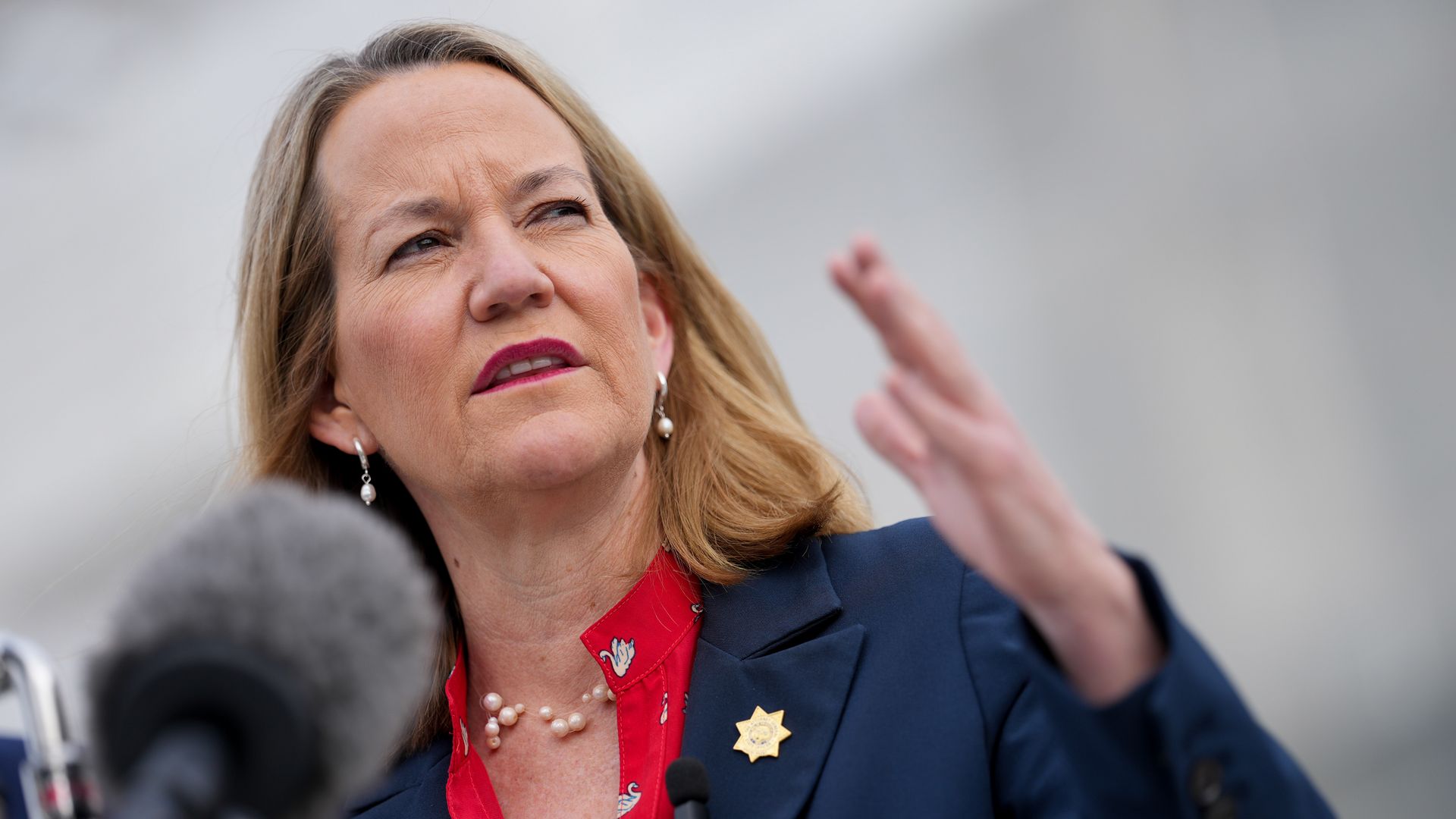
Arizona Attorney General Kris Mayes will send the 2020 fake electors case back to a grand jury after the state Supreme Court refused to hear her appeal of a lower court ruling dismissing the case. Photo: Eric Lee/Bloomberg via Getty Images
Attorney General Kris Mayes must restart her case against the 2020 fake electors after the Arizona Supreme Court rejected a key appeal.
Why it matters: The alleged crimes occurred almost six years ago, and the case will now drag on even longer and loom over this year's AG race.
Driving the news: The Supreme Court denied Mayes' request to overturn a lower court's dismissal of charges against the 11 Republican electors and seven other alleged co-conspirators.
- A judge ruled last year that the AG's Office must take the case back to a grand jury because prosecutors never provided jurors with the text of an 1887 law that the defendants say shows their innocence.
- That left Mayes with two choices: start over or end the high-profile case.
What's next: Mayes will send the case back to a grand jury, spokesperson Richie Taylor told Axios Thursday.
- He said he couldn't comment on how long the process might take.
- The original indictments came about a year after the AG's Office launched its investigation.
The intrigue: The legal blow comes as Mayes faces a tough reelection fight and could turn the fake electors case into a campaign issue, testing voters' appetite for continuing the politically charged case.
- Republican candidates Rodney Glassman and Warren Petersen, who are fighting for the GOP nomination in the July 21 primary, have both said they'll drop the case if elected.
Catch up quick: A grand jury in 2024 indicted the 11 Republican electors — including then Arizona GOP chair Kelli Ward, Turning Point Action COO Tyler Bowyer, state Sen. Jake Hoffman and then-state Sen. Anthony Kern — on nine felony counts for conspiracy, fraudulent schemes and artifices and forgery after they cast elector votes falsely asserting that Donald Trump won Arizona in the 2020 election.
- Seven alleged co-conspirators were indicted as well, including Rudy Giuliani and Trump's former White House chief of staff Mark Meadows.
Elector Loraine Pellegrino pleaded guilty in 2024 to one misdemeanor charge of filing a false instrument, getting three years probation, from which she was released nearly two years early.
- The AG's Office in December reached an agreement to drop the charges against elector Jim Lamon. He agreed to provide specific emails to prosecutors, but didn't plead guilty to any charges and wasn't required to cooperate in the case.
- Mayes also dropped charges against former Trump attorney Jenna Ellis after she signed a cooperation agreement and agreed to testify.
- Those agreements still stand, and the AG's Office won't seek new charges against the three former defendants, Taylor told Axios.
What they're saying: Attorney Andrew Pacheco, who represents Bowyer, told Axios that the Supreme Court's decision was "exactly right" and that Mayes should drop the case.
- "It never should have been brought in the first place because Tyler Bowyer did nothing wrong," he said.