AG Kris Mayes wavers on Arizona fake electors case


Add Axios as your preferred source to
see more of our stories on Google.
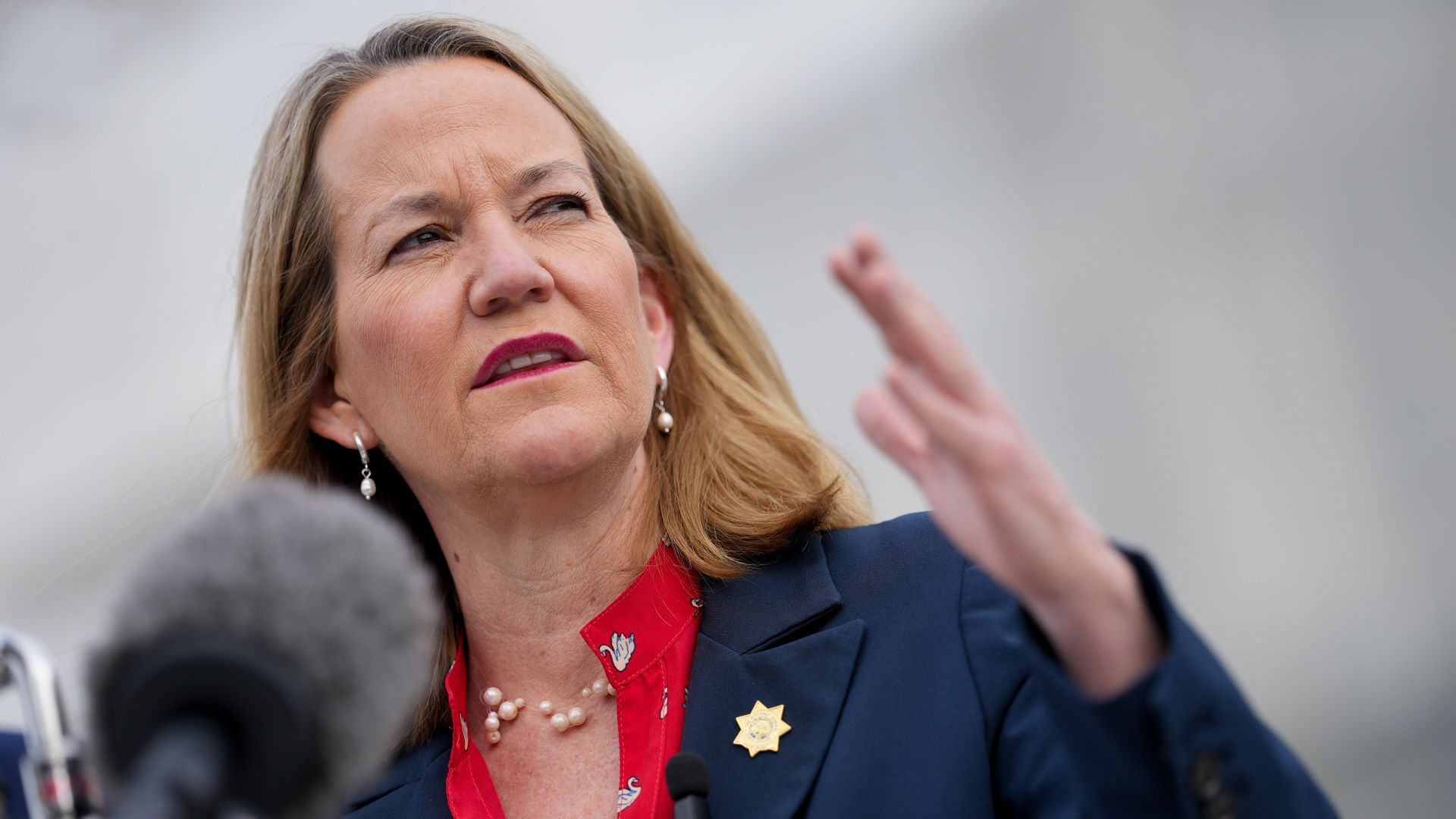
Arizona Attorney General Kris Mayes has until Nov. 21 to decide how to proceed in the fake electors case. Photo: Eric Lee/Bloomberg via Getty Images
Arizona Attorney General Kris Mayes signaled that she may drop her prosecution against the so-called "fake electors" who submitted votes falsely claiming that Donald Trump won the state in 2020 — a case she initially said she brought because she would "not allow American democracy to be undermined."
Why it matters: Mayes has repeatedly said the case is essential to upholding the rule of law — but it's dragged on for years and now threatens to become a political problem as she ramps up for reelection.
What they're saying: Mayes didn't directly answer 12 News political reporter Brahm Resnik when he asked about her plans for the case, but said her office is "still assessing that" during an episode of "Sunday Square Off" taped last Friday.
- "The one thing I do know for sure… is that I am so proud of the prosecutors and the investigators in the Attorney General's Office, and I'm proud of the work we did on this case," she said, adding, "I certainly don't want to give it up. It is certainly not something that I want to do."
- A Democratic and Republican consultant who witnessed the interview told Resnik that Mayes' comments sounded like she intended to drop the case.
The intrigue: That's a far cry from the assertive and confident tone Mayes has struck in the past while talking about the case.
- Dropping the case now would come as a major blow.
Richie Taylor, a spokesperson for the AG's office, declined to comment on Mayes' plans.
Catch up quick: Shortly after taking office in 2023, Mayes launched an investigation into the 11 Arizona Republicans who signed documents falsely claiming former President Trump won the state in 2020.
- In April 2024, she secured a grand jury indictment against the electors and seven others who were involved, including Trump's former personal attorney Rudy Giuliani and former campaign attorney Jenna Ellis.
- Yes, but: Earlier this year, Maricopa County Superior Court Judge Sam Myers ruled that Mayes must re-present the case to a grand jury because her team never provided jurors with the text of the Electoral Count Act of 1887 — the law that electors believe proves their innocence.
- An Arizona Court of Appeals panel in September declined to hear Mayes' appeal.
State of play: Mayes has until Nov. 21 to appeal the ruling to the Arizona Supreme Court or the matter will be dismissed.
The latest: Trump on Sunday pardoned 77 people, including all 18 defendants in the Arizona case, who were accused of attempting to overturn his 2020 loss to Biden.
- The pardons don't apply to state-level charges like the ones the Arizona defendants are facing.
- None of the pardoned people face any federal charges.
Flashback: Loraine Pellegrino, one of the 11 electors, pleaded guilty last year to one misdemeanor charge of filing a false instrument.
- She received three years of probation, from which she was released nearly two years early in October.
- The Attorney General's Office dismissed charges against Ellis, a former attorney for Trump who was charged in the case, after she signed a cooperation agreement last year and agreed to testify against her former co-defendants.
- Pellegrino's attorney Joshua Kolsrud declined to comment, and an attorney for Ellis couldn't be reached.