How immigrants contribute to Arkansas' health care workforce


Add Axios as your preferred source to
see more of our stories on Google.
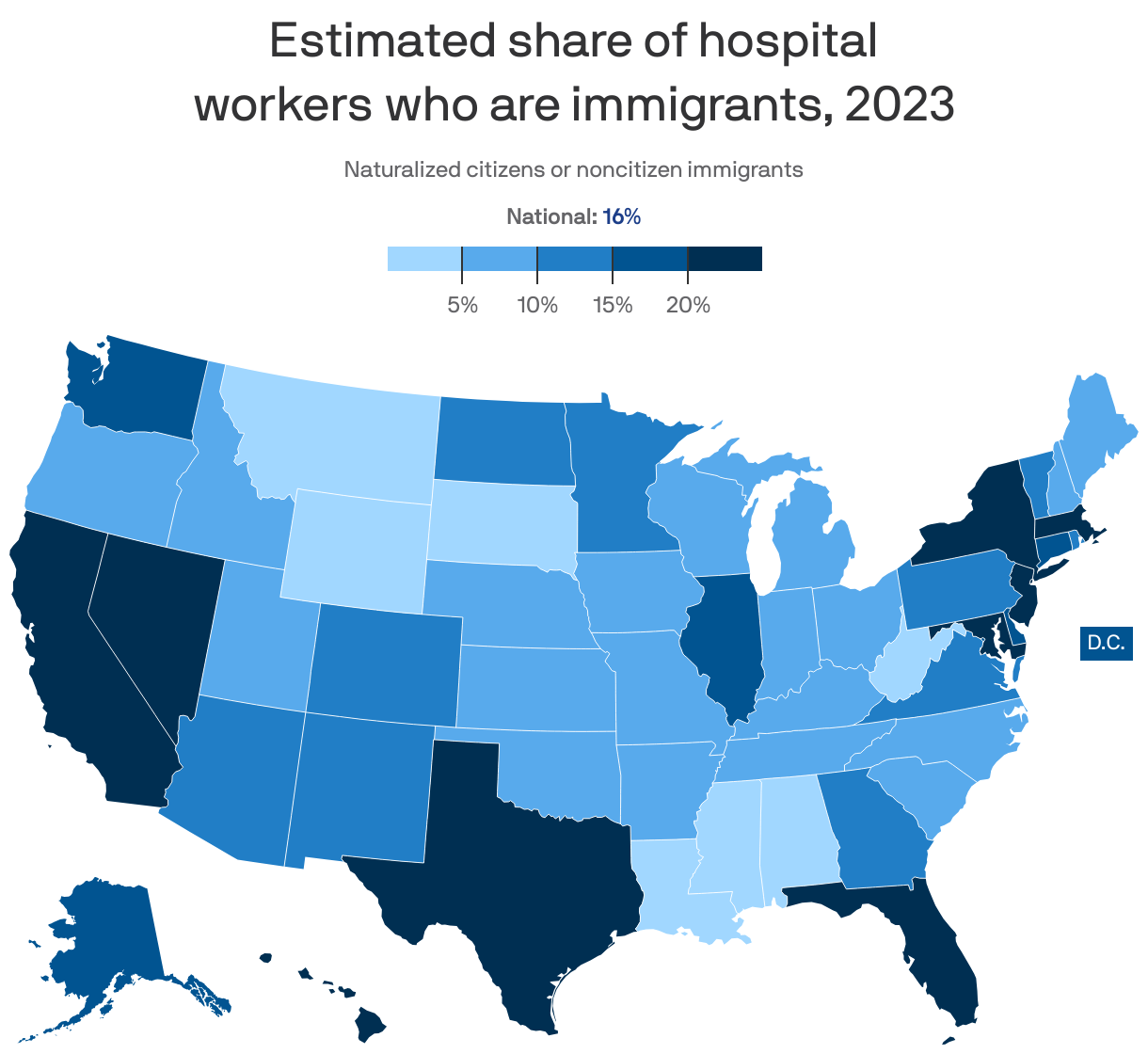
Immigrants make up a lower share of Arkansas' health care workforce than in most states, but the nation's hospitals still rely heavily on an immigrant workforce, per census data analyzed by KFF.
Why it matters: It's a pivotal moment for the nation's hospitals.
- The health care industry is facing a double challenge — a White House immigration crackdown that could translate to worker shortages and the "big, beautiful bill," which pulls back federal health care spending.
- Meanwhile, an aging population will require more care.
Zoom in: About 5% of health care workers in Arkansas are immigrants, and Northwest Arkansas has a growing need for health care workers to meet growing demand as the nation sees a shortage.
By the numbers: Nationwide, 16% of hospital workers are immigrants — roughly in the line with the share of the workforce that's foreign-born.
- More populous states have higher numbers — 32% in California, 29% in New York and New Jersey, and 27% in Florida.
The intrigue: There are already shortages of doctors in certain areas and within certain specialities, as well as an overall workforce shortage. Reducing the number of immigrants in the U.S. could make that worse.
- And it's not just physicians. Immigrants account for a high share of the cleaning and maintenance staff in hospitals — close to 30%.
- "If there aren't enough workers, hospitals may need to limit services," says Scott Hulver, a policy analyst at KFF.
State of play: Hospitals are one of the big losers from the new spending bill, taking a major hit from Medicaid cuts and changes to the Affordable Care Act, report Axios' Peter Sullivan and Victoria Knight. Millions are likely to lose their health insurance.
- This will mean more uninsured people and more uncompensated care.
The bottom line: Since the passage of the ACA in 2010, more people have had access to health care and the industry exploded, hiring surged, and more workers were in demand.
- Now momentum is moving in the opposite direction.