New Orleans hits 110°F heat index and it's just the beginning

Add Axios as your preferred source to
see more of our stories on Google.
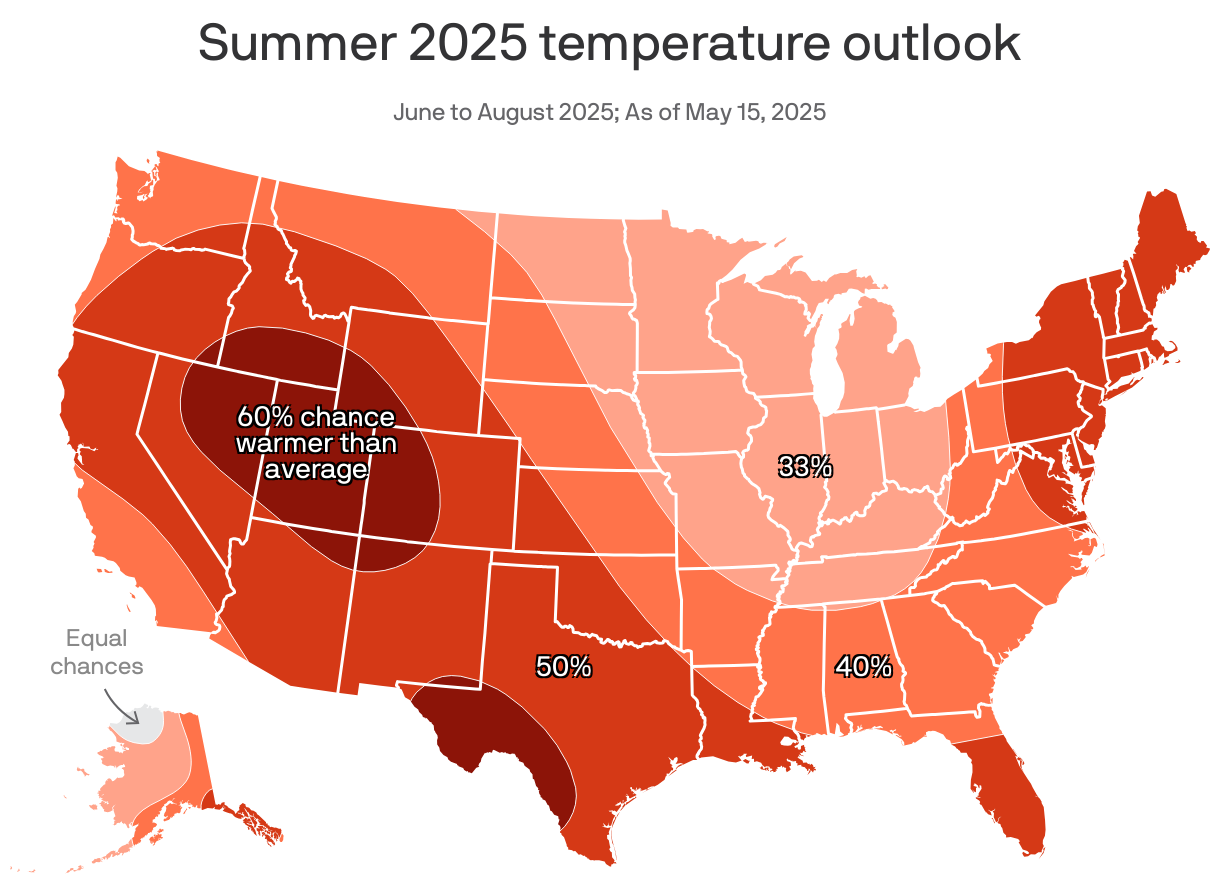
This summer has a 50% chance of being hotter than average in New Orleans and most of Louisiana, according to the National Weather Service's Climate Prediction Center.
Why it matters: Extreme heat is a major public health threat. It also threatens the reliability of the power grid.
The big picture: New Orleans over the weekend had its first heat advisory of the season.
- New Orleans tied the high temp record on Saturday of 95°F. The "feels like" temp was 110°F at the airport and lakefront, according to the National Weather Service in Slidell.
- Temperatures are expected to be in the high-80s and low-90s all week, with daily thunderstorms possible, NWS says. The cloud cover should keep the "feels like" temp around 108°F.
Yes, but: This is just the start. July and August are historically the hottest months of the year in New Orleans.
Threat level: The heat has already been deadly this year. A toddler died Sunday in Hammond after being left in a hot car for more than nine hours, authorities say.
- Last year, 51 people died in Louisiana from heat-related causes, according to the state health department.
How to protect yourself: If you are outside in the heat, drink plenty of water, wear lightweight clothes, apply sunscreen and take frequent breaks in the shade or AC, officials say.
- Make sure pets are have shelter and water, and check on elderly neighbors.
- More heat safety tips.
Summer's getting hotter
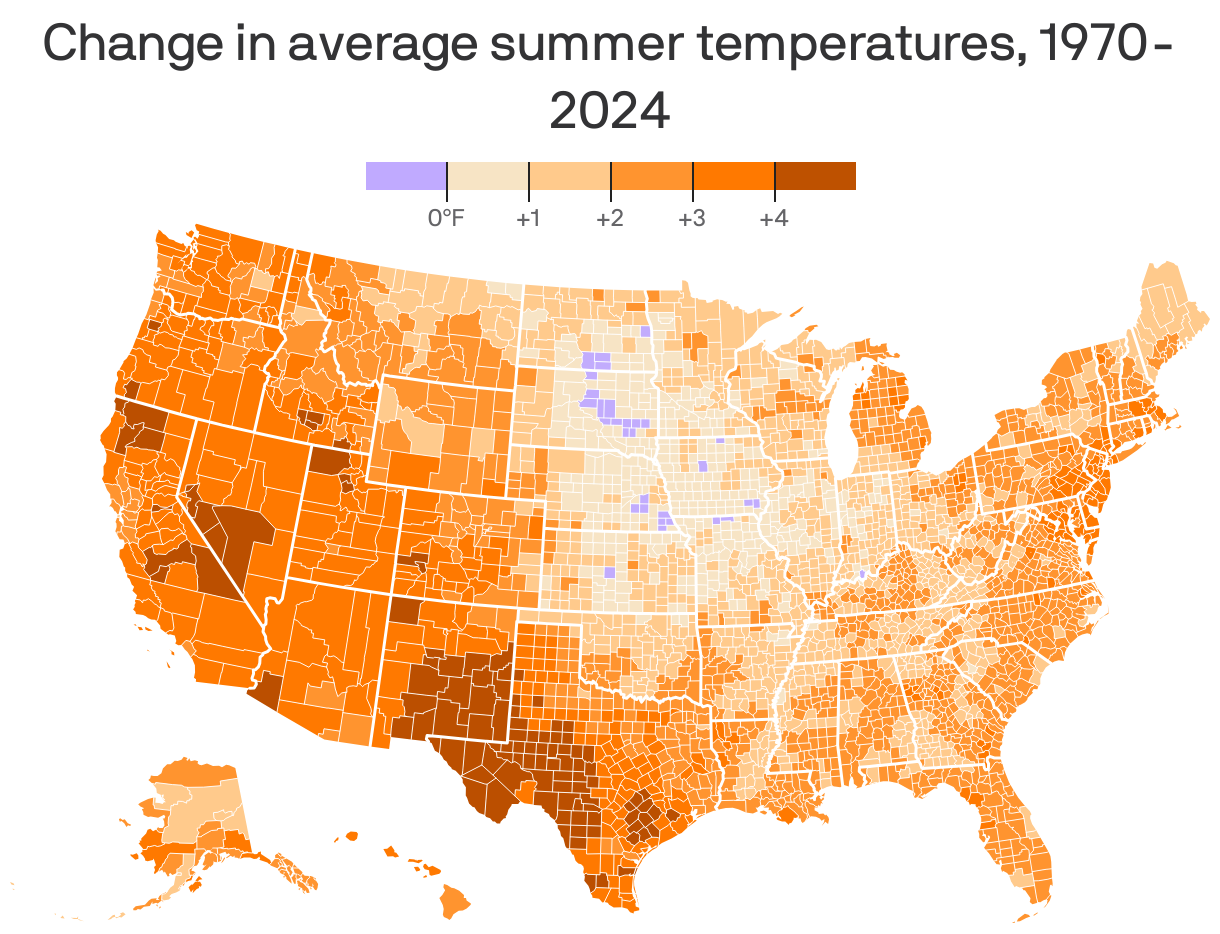
Zoom out: Like most of the country, summer has been getting hotter in New Orleans over the past 50 years, a recently updated analysis found.
- The average summer temperature in New Orleans is now 4°F hotter than it was in 1970, according to Climate Central, a nonprofit climate research and communications group, using NOAA data through 2024.
Zoom out: On top of rising overall temperatures, New Orleans is the among the worst "heat island" communities among all major U.S. metros, according to Climate Central.
- 77% of New Orleanians live in urban heat island neighborhoods, the group says.
- New Orleans can be more than 8°F warmer than surrounding tree-covered communities, mostly due to a lack of permeable surface. Go deeper.
How to cool off
What to do: We can't change the weather, but we can work around it.