America's summers keep getting warmer

Add Axios as your preferred source to
see more of our stories on Google.
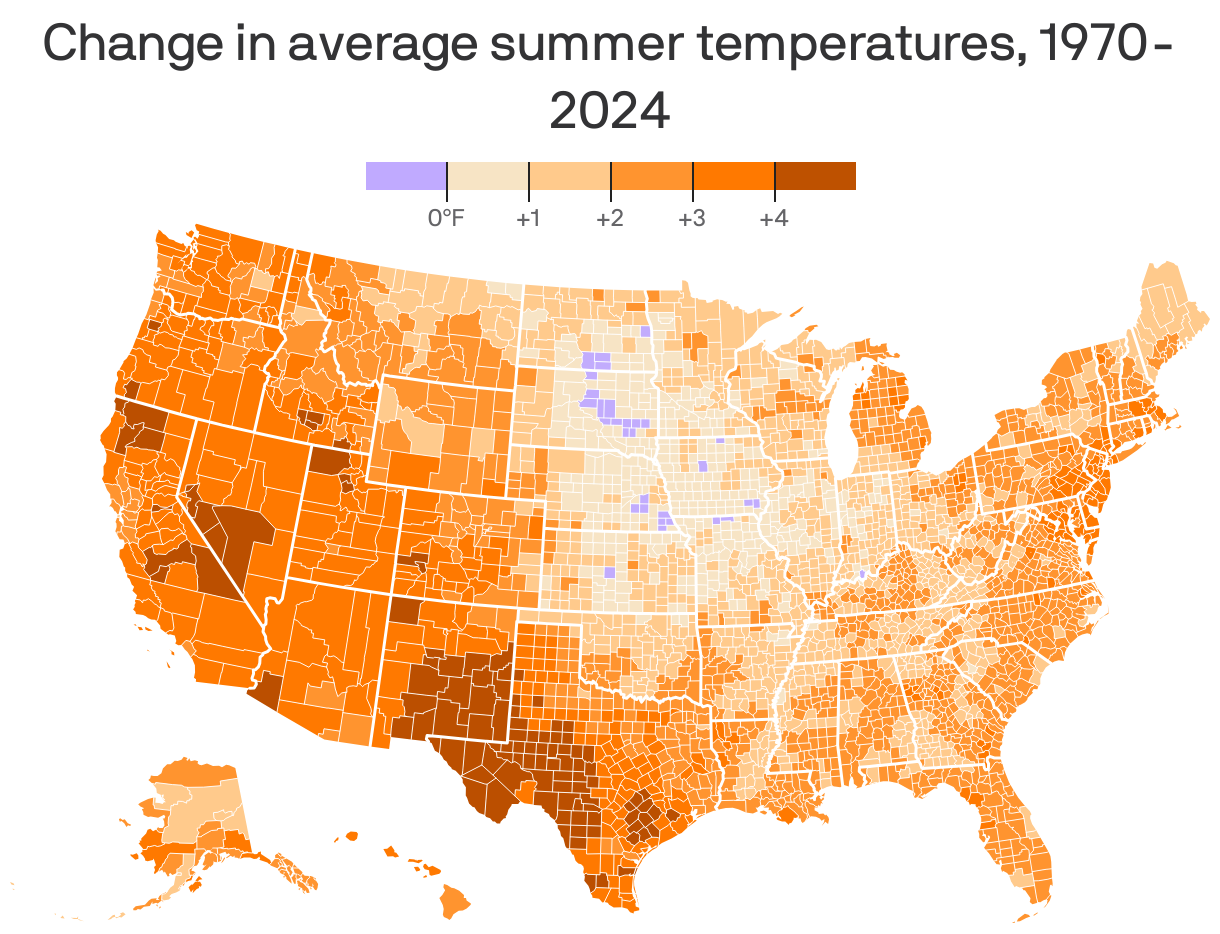
Summers are getting warmer nearly nationwide, a recently updated analysis finds.
Why it matters: Hotter summers are one of the most tangible ways we're experiencing climate change — and they're a health risk for vulnerable groups like children, pregnant women, the elderly and homeless people.
Driving the news: Average summer temperatures between 1970 and 2024 rose in 97% of the 242 cities analyzed in a new report from Climate Central, a climate research group.
- Among those cities, summers are now 2.6°F hotter on average.
- The analysis uses NOAA data and defines "summer" as June through August.
Zoom in: Reno, Nevada (+11.3°F), Boise, Idaho (+6.3°F), and El Paso, Texas (+6.2°F) saw the greatest rise in average summer temperatures between 1970 and 2024.
Stunning stat: Over 60% of the cities analyzed now have at least two more weeks' worth of hotter-than-normal summer days compared to 1970.
Between the lines: Many cities suffer from "heat islands" — areas of especially high temperatures caused by roads, parking lots, buildings and other heat-trapping features.
- Heat islands tend to be more common in low-income neighborhoods and ones with predominantly Black and Latino residents, researchers have found.
The latest: Some cities have been hiring "chief heat officers" and taking steps to keep streets cooler, like planting more trees and using reflective road coatings.
What's next: Summer 2025 is likely to be hotter than normal for much of the country, per the National Weather Service's seasonal outlook.
