New Orleans is one of the country's allergy capitals


Add Axios as your preferred source to
see more of our stories on Google.

Illustration: Natalie Peeples/Axios
New Orleans is the second-worst place to live in the U.S. in terms of seasonal allergies, according to new data.
Why it matters: We're currently in the midst of "The Pollening" in south Louisiana.
The big picture: The worst cities are concentrated in the South and the East Coast, the Asthma and Allergy Foundation of America says.
- Wichita, Kansas, came in first for the third consecutive year.
- Baton Rouge ranked No. 14. See the full list.
Between the lines: New Orleans ranked worse than average for pollen counts and over-the-counter medicine use but better than average for availability of health care professionals who specialize in allergies.
Threat level: Recent pollen counts in New Orleans have been among the highest in the country as the region approaches the seasonal peak, according to Pollen.com.
- Pollen-related allergies are what many people call "hay fever."
- Allergy symptoms vary by person, but they can include a runny nose, a stuffy nose, coughing, sneezing, watery eyes and nasal congestion.
- Seasonal allergies often make asthma symptoms worse, too.
Zoom out: The New Orleans metro has four main allergy irritants, says Anna Timmerman, an LSU AgCenter assistant horticultural agent for St. Bernard Parish.
- Tree pollen is the primary offender at the start of the season with live oaks, pine, pecan, tallow, elm and cedar trees, she previously told Axios.
- Next up is ragweed, grass and mold.
- Ligustrum is a widely used ornamental shrub and causes allergy problems for some people. Magnolias, jasmine, gardenias and other blooming ornamentals usually don't bother people, she said.
Zoom in: New Orleans leapfrogged up the rankings, mainly due to climate change, according to Kenneth Mendez, the president and CEO of the allergy foundation.
- Last year, New Orleans was ranked No. 34, based on 2023 data.
- He said New Orleans had a much higher weed pollen season in 2024, possibly due to increased moisture from Hurricane Francine, which made landfall in September.
- November was also the warmest on record in Louisiana, he said, which would have extended the growing season.
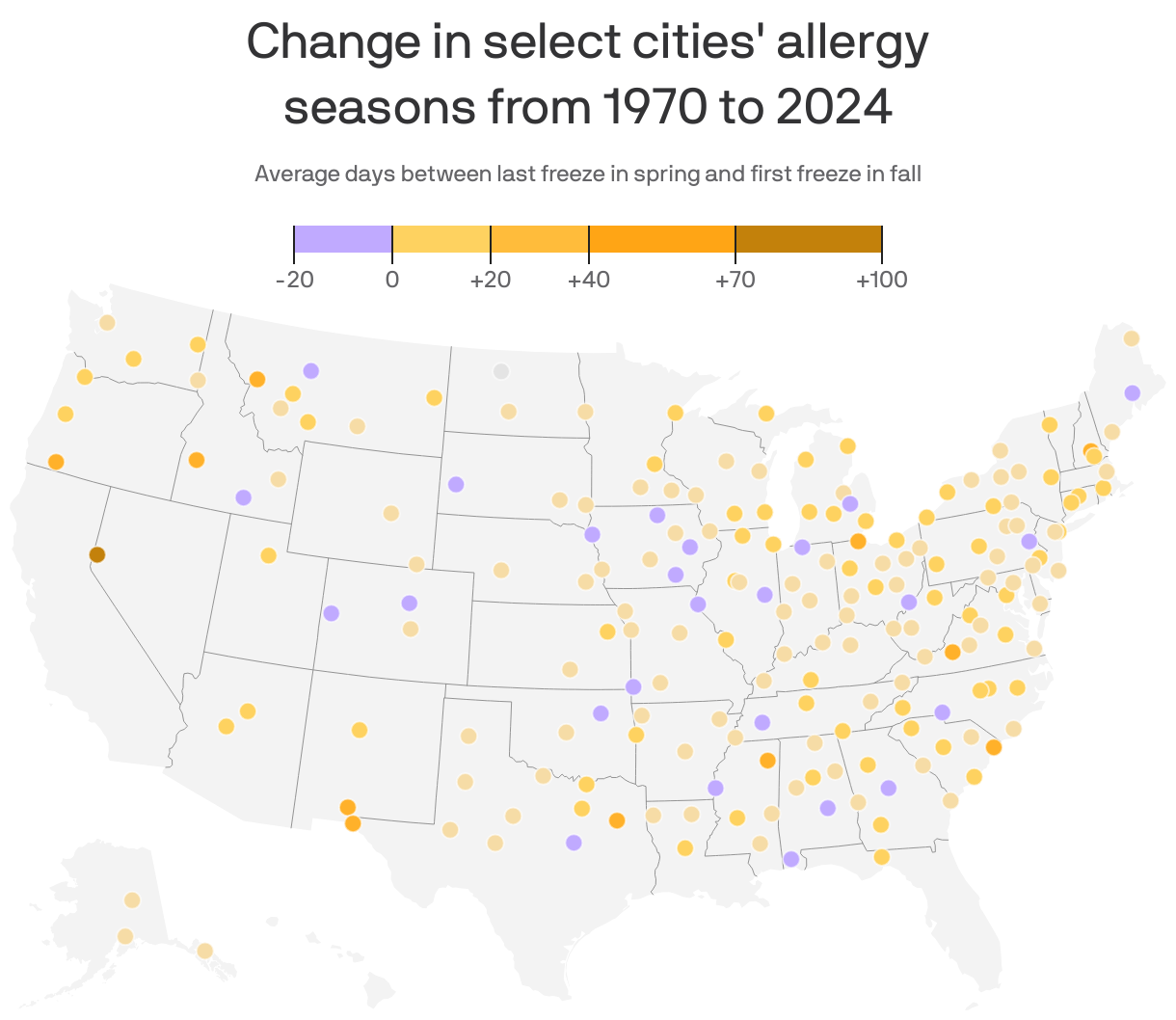
State of play: Most major U.S. cities are suffering from longer allergy seasons amid human-caused climate change, according to new analysis from Climate Central.
- "Climate change makes pollen seasons not only longer, but also more intense due to heat-trapping pollution," per Climate Central's report.
- "Higher levels of planet-warming CO2 in the air can boost pollen production in plants, particularly in grasses and ragweed."
How it works: To rank allergy capitals, the foundation looked at year-round pollen counts, over-the-counter allergy medicine use and availability of board-certified allergists/immunologists in the 100 most populated U.S. metros.