Allergy season is getting longer. Blame climate change

Add Axios as your preferred source to
see more of our stories on Google.
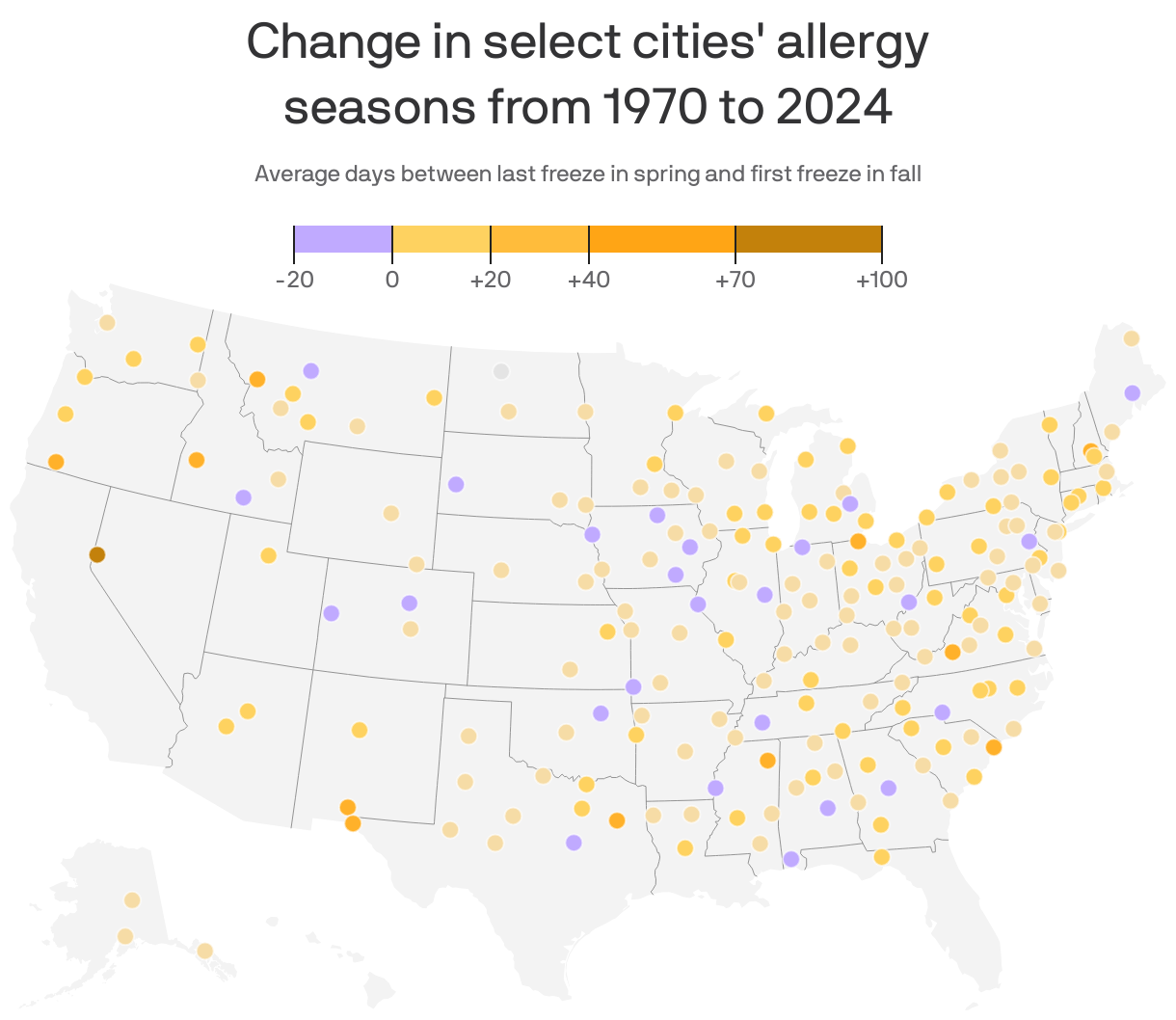
Most major U.S. cities are suffering from longer allergy seasons amid human-caused climate change, a new analysis finds.
Why it matters: Millions of Americans endure runny noses, itchy throats, and worse health effects each spring allergy season.
Driving the news: The freeze-free growing season lengthened between 1970 and 2024 in nearly 90% of the 198 cities analyzed by Climate Central, a research and communications group.
- Among those cities, the freeze-free season lengthened by 20 days on average.
How it works: Climate Central uses the freeze-free period — the number of consecutive days with minimum temperatures above 32°F — as a proxy for allergy season.
- Above-freezing temperatures allow for better plant growth, and thus the release of more sneeze-inducing pollen.
Zoom in: Reno, Nevada (96 more consecutive freeze-free days from 1970 to 2024); Myrtle Beach, South Carolina (52) and Toledo, Ohio (45) have had some of the biggest increases among the cities analyzed.
- Conversely, the number of consecutive freeze-free days decreased in places like Waco, Texas (-14); Tulsa, Oklahoma (-14), and Denver, Colorado (-8).
Between the lines: "Climate change makes pollen seasons not only longer, but also more intense due to heat-trapping pollution," per Climate Central's report.
- "Higher levels of planet-warming CO2 in the air can boost pollen production in plants, particularly in grasses and ragweed."
Threat level: Nationwide pollen production stands to dramatically increase alongside high CO2 pollution, per a 2022 study highlighted in the report.
The bottom line: Pass the allergy spray, would ya?
