Bloomington's lesbian bar The Back Door last of its kind in Indiana


Add Axios as your preferred source to
see more of our stories on Google.
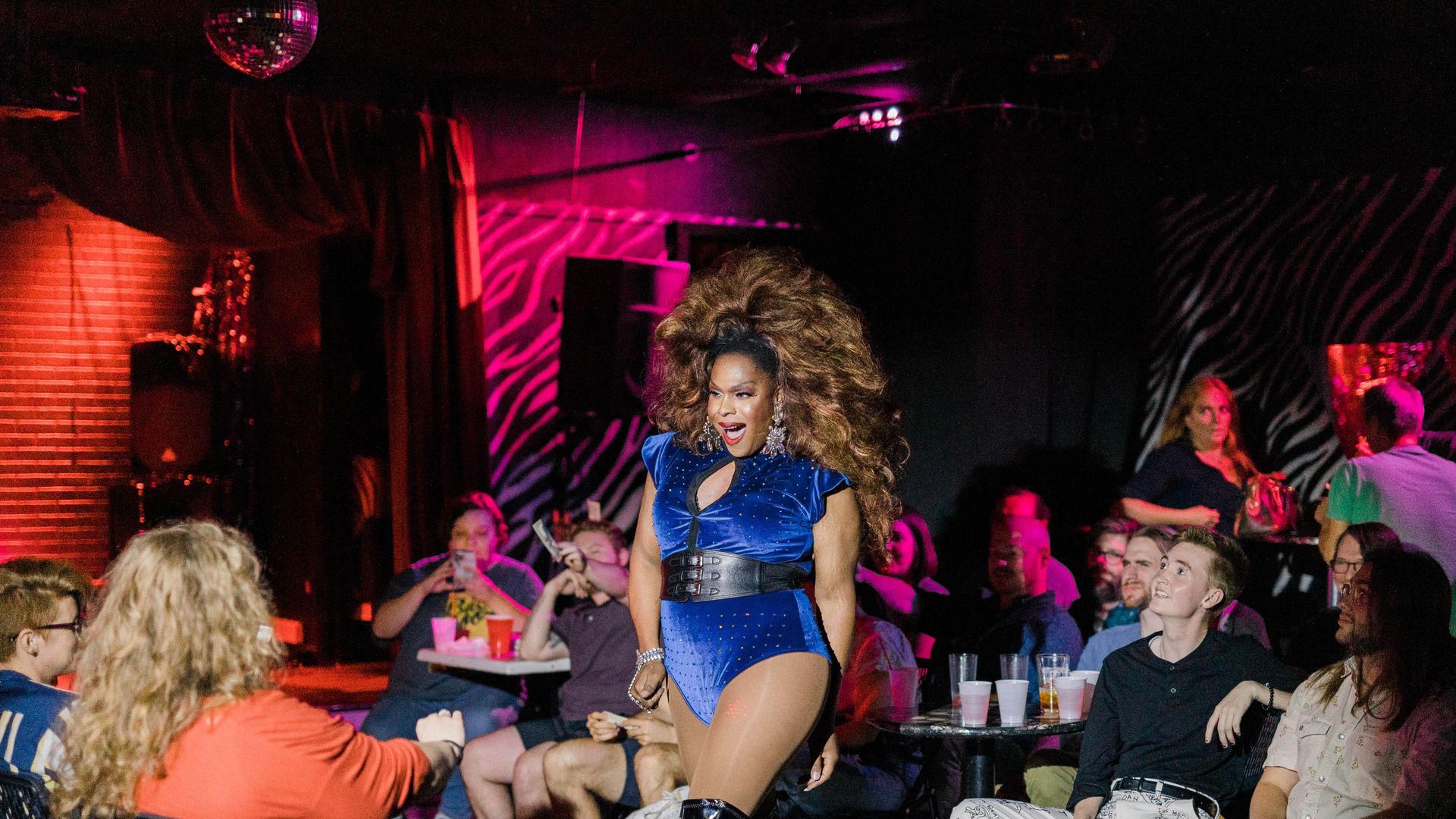
Mocha Debeauté performing at The Back Door. Photo: Garrett Ann Walters/Courtesy of The Back Door
It's a Wednesday, which means one thing at The Back Door, Indiana's only lesbian bar: Open stage — an open mic night, but for drag.
Why it matters: Performers say the bar is a special place where everyone is truly welcome in a state where it's increasingly difficult to be queer.
- "The love and the energy is always there," said veteran performer Thee Lyna Koke. "And that's what I love about it. They treat you as family."
How it works: Anyone can get a spot in the lineup.
- On a recent Wednesday, the stage was shared by Koke, in the running for this year's Miss Gay Indiana, and newcomers like Leila Renee, who did their first open stage performance just a few months ago and is still experimenting with adding makeup and costumes.
- It's not like that at all clubs, Koke said, where it can be harder to get a spot to perform and depends on who you know or how long you've been in the scene.
Details: The Back Door opened in Bloomington a decade ago.
- The bar is lesbian-owned and the last queer bar in the city, though it's open to everyone.
The intrigue: The entrance to the bar is hidden — literally the back door of a building that houses another bar out front — and accessed through an alley.
- That helps keep them under the radar and less exposed to people who may want to cause trouble, bar manager Cale Ulery said.
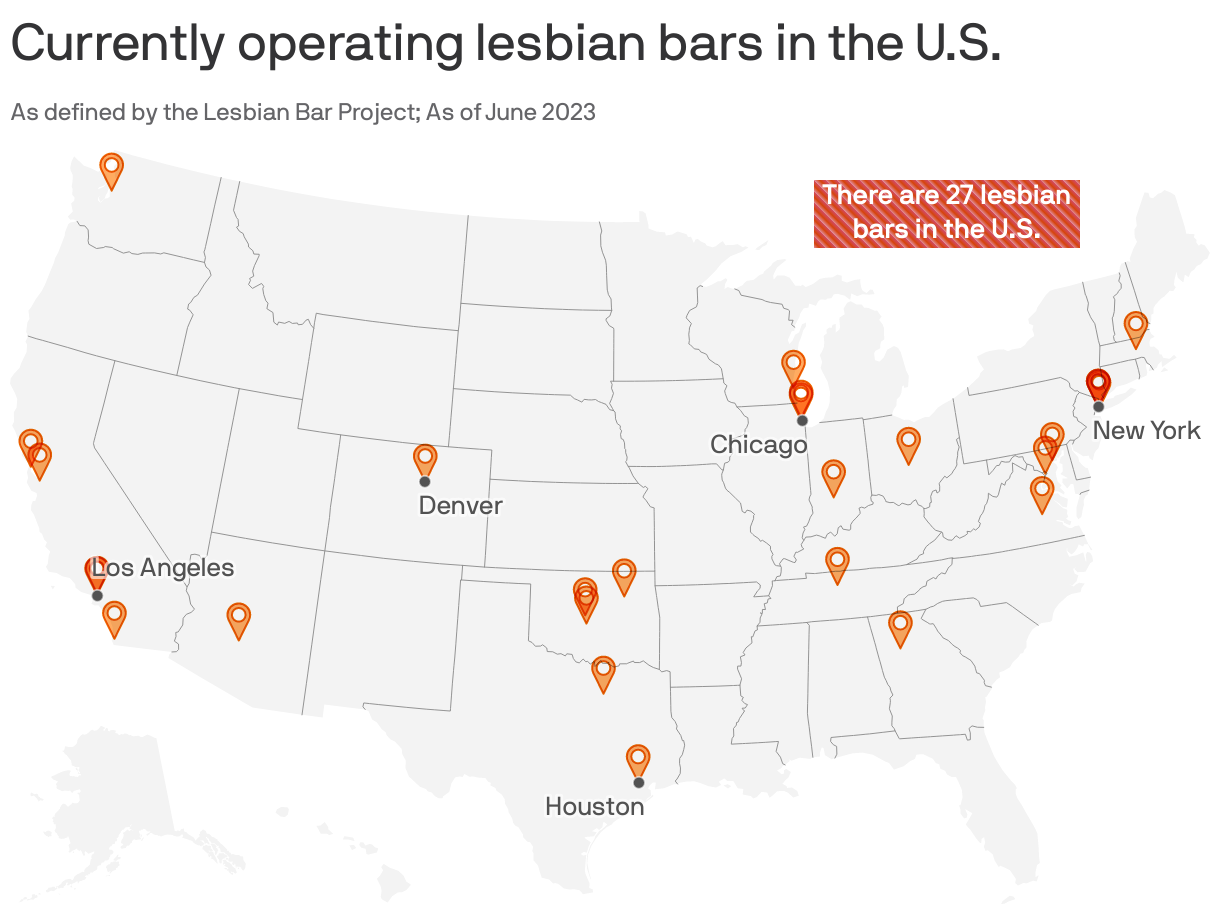
The big picture: The Back Door is one of fewer than 30 lesbian bars left in the country, Axios' Annalise Frank reports.
- America's lesbian bars have been on a decline since the 1980s when there were around 200, per the Lesbian Bar Project (LBP), which documents the few remaining spaces focused on queer women, trans and nonbinary people.
By the numbers: The total number of queer bars fell 37% between 2007 and 2019, from 1,357 to 860, per research from Oberlin College based on business listings.
- The number of lesbian bars has always been smaller but still dropped a greater amount in that time period: 52%, from 31 down to 15.
- LGBTQ+ bars for people of color fell 60%, from 145 to 59.
The big picture: Many factors are behind the drop in lesbian bars in the U.S., including growing online communities, a desire for inclusivity with other LGBTQ+ populations and gentrification.
- Over recent decades, growing acceptance of LGBTQ+ people also led to less need for these bars — a trend now challenged by the country's increasing political polarization.
- Historically, many lesbian bars also excluded women of color and transgender people, and some of those spaces either lost relevance or evolved to a more inclusive clientele.
Between the lines: Even with the difficult climate, lesbian nightlife is still seeing a "resurgence" in some parts of the U.S., LBP co-creator and filmmaker Erica Rose says.
- Between 2019 and 2023, lesbian bars doubled from a 1.7% share of total LGBTQ+ bars to 3.6%, per the same Oberlin research.
State of play: Bloomington is a progressive college town — home to Indiana University — a blue dot in otherwise deep-red Trump country.
- Ulery said the goal is to give people a place where they can be authentically themselves and set aside whatever anxiety the outside world might normally induce.
- "People come here to feel safe," Ulery said.
- Ulery said the bar owners bought the building that houses it so they don't have to worry about losing their space as political tides and sentiments shift.
Of note: Because it's a college town and The Back Door is one of the only dancing bars, complete with disco ball, it attracts a fair share of students, who are often seeing drag for the first time.
- Ulery said students are welcome as long as they're respectful and having fun.
Zoom out: Many performers got their start at The Back Door, honing their persona before booking larger gigs in Indianapolis or Chicago.
- Desiree Bouvier, one of the bar's founding queens, debuted her persona at the bar.
- Last year, she was crowned Miss Capital City and was recently named Miss Naptown Newcomer in Indianapolis.
What's next: Lesbians in cities with few to no spots are innovating. They're popularizing pop-up event companies through social media platforms, like Lesbian Social Detroit — which drew 800 people during Pride Month last year for an alleyway block party in the Motor City's downtown — or semi-monthly dance party GrrlSpot in New Orleans.
- "We're all working towards a common goal," Lesbian Social founder Chelcea Stowers, who wants to eventually open a physical bar and talks with pop-up operators across other states, tells Axios Detroit.
Go deeper: Read dispatches from Axios Local reporters in San Francisco ... Detroit ... Tampa Bay ... Denver ... Columbus.