What happened to San Francisco's lesbian bars


Add Axios as your preferred source to
see more of our stories on Google.
The City by the Bay, despite its role in LGBTQ+ history, has only a few establishments that specifically cater to members of the lesbian and queer community, including newcomer Mother Bar in the Mission District.
Why it matters: Queer people and businesses in some states face an "unprecedented" spike in anti-LGBTQ+ sentiment, per the Human Rights Campaign. These physical spaces historically provided a place for connection away from prejudice.
- The surviving bars want to remain places patrons can authentically be themselves.
State of play: Mother Bar opened this year in part due to nostalgia of the women and femme-centric queer community that once was dominant in San Francisco, owner Malia Spanyol told Axios San Francisco.
- When The Lexington Club shut down in 2015, it left a void in the Mission's lesbian bar scene.
- Of note: El Rio and Jolene's, which opened in 2019, serve as queer dance party venues in the neighborhood. There's also longtime lesbian bar Wildside West in Bernal Heights.
What they're saying: Spanyol, who's lived in the Mission for about 30 years, in part wanted to start Mother Bar because her local haunts "started to not feel as fun and as safe anymore."
- It's becoming harder to find community, she added, rattling off now-defunct queer spots like the Lexington Club, Red Dora's Bearded Lady coffee shop and more.
- "We had places," she said. "You would walk down Valencia Street and you would just see women everywhere, all the time."
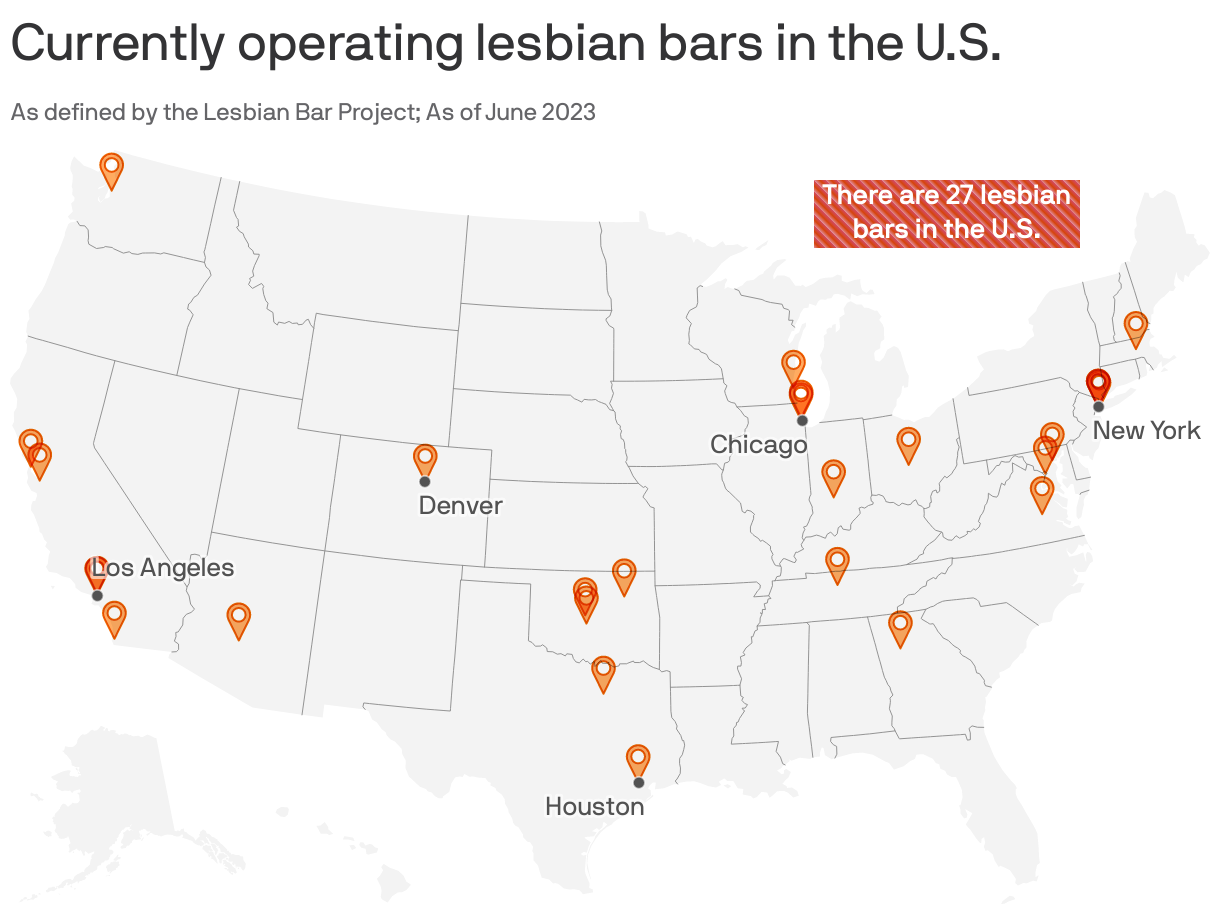
The big picture: Nationwide, lesbian bars have been on a decline since the 1980s when there were around 200, per the Lesbian Bar Project (LBP), which documents the few remaining spaces focused on queer women, trans and nonbinary people.
- Today, there are fewer than 30 lesbian bars left in the U.S., in part due to growing online communities, a desire for inclusivity with other LGBTQ+ populations and gentrification.
Zoom in: Part of the challenge in running a lesbian and queer-centric bar in San Francisco, Spanyol said, is the fact that she's targeting "a sliver of a population."
- "So your audience is really small and your overhead is really high," she said. "Rent is high in the big city."